
Cold Calling vs Cold Email for REI
Cold calling vs cold email for REI starts breaking when the workflow breaks
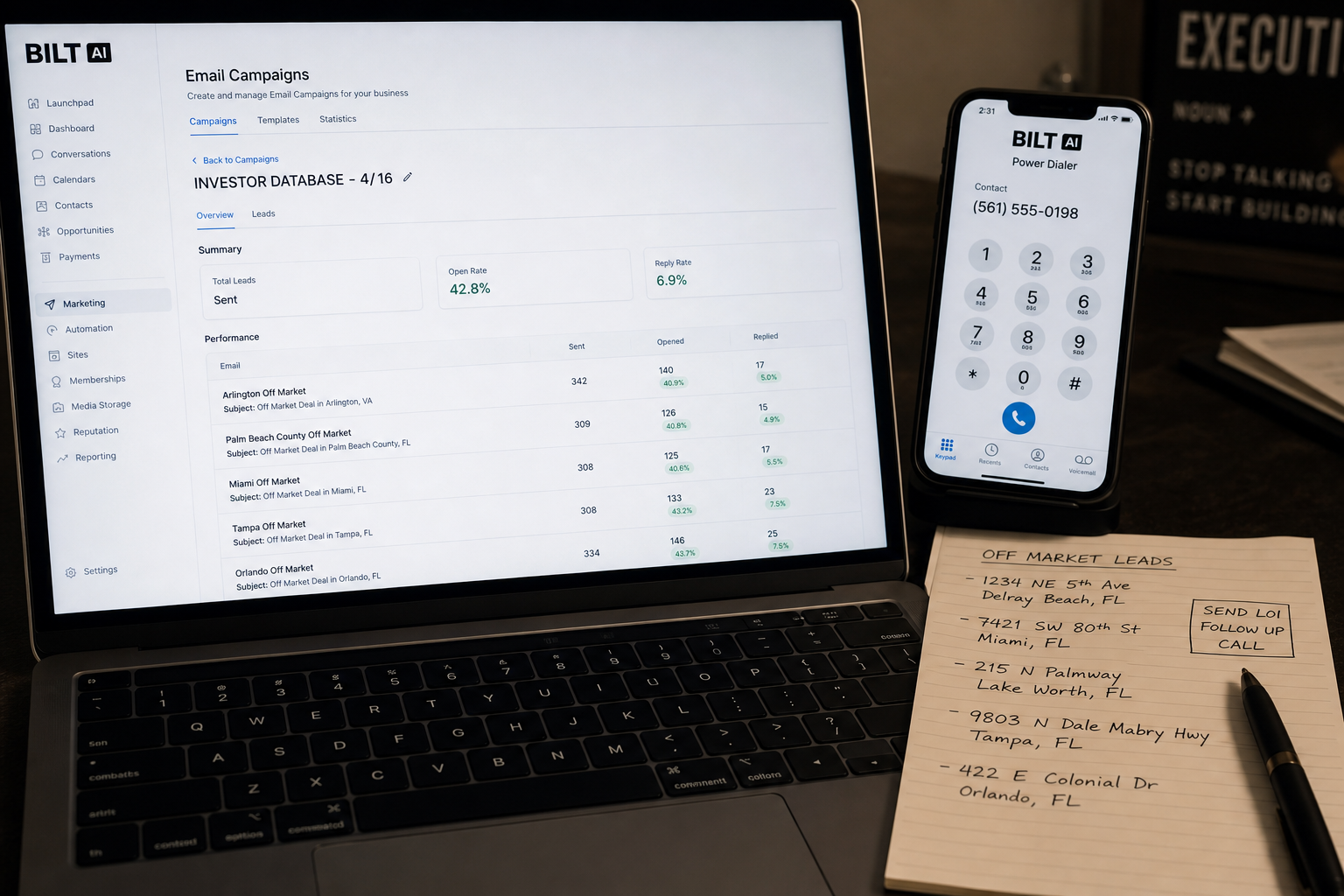
An acquisitions manager pulls a list, hits send on a batch of emails, then waits. No replies show up, so the next move is to jump on the dialer and call the same list cold. A week later the conclusion is that one of the channels “doesn’t work.”
This pattern shows up across wholesaling teams and small acquisition shops. The channel gets blamed, but the real failure sits in how the sequence is built. Cold calling vs cold email for REI only becomes a real decision when both are run as systems with timing, feedback, and continuity.
Across BILT AI client accounts, the difference between a dead list and a producing list usually comes down to whether touches are stacked across time and channels. A single blast or a one-day call sprint is not a strategy. It is a test with no follow-through.
Since the 2024 Google and Yahoo sender requirements tightened authentication and complaint thresholds, single-touch campaigns got even weaker because inbox placement now depends on consistent, healthy sending patterns, not spikes. See Google Postmaster Tools and Yahoo sender best practices for the current baseline.
The common mistake: treating channels like one-off campaigns
The most expensive mistake is not choosing the wrong channel. It is running both channels like isolated events. Email goes out once. Calls happen once. Then the operator switches lanes.
An operator in Phoenix ran a 21-day sequence using the same data slice. Emails went out in 5 to 7 touches, and calls were layered on days 2, 5, and 10. The quote from their acquisitions lead was simple: “Replies started after the third touch, calls converted after they had seen our name twice.”
That detail matters. Familiarity compounds. A seller who ignores the first email might recognize the company name when the phone rings. A call that goes to voicemail can get reinforced by the next email that references the same property.
There is also a feedback loop most teams skip. If opens show up but replies do not, the issue is the offer or the subject line, not the channel. Google’s own documentation on sender reputation shows that engagement signals like opens and spam complaints directly impact future inbox placement, which then feeds back into performance. See Gmail sender guidelines.
Why switching channels too early kills deals (the contrarian view)
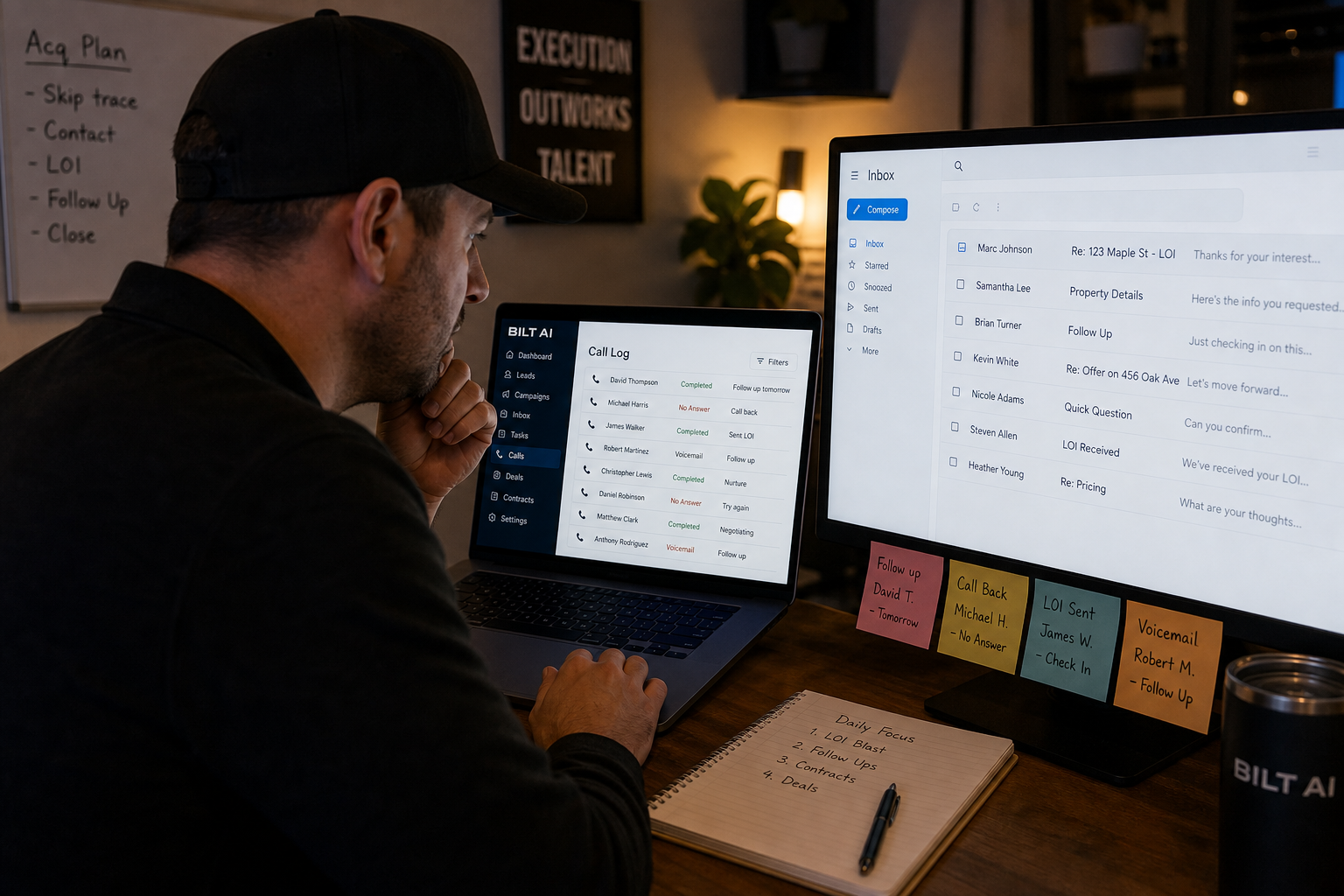
Standard advice says to test channels and double down on the winner. In real estate outreach, that approach often underperforms because it ignores how sellers make decisions. The contrarian take is this: switching channels early reduces conversion because it resets familiarity instead of compounding it.
A seller who owns a tired rental is not sitting in a funnel. They are dealing with tenants, repairs, and timing. Recognition across touches matters more than the initial channel. When the same brand shows up in the inbox, then on the phone, then again in the inbox, it feels persistent in a way that a single channel cannot replicate.
After the 2024 email changes from Google and Yahoo, senders who maintained consistent cadence and low complaint rates saw better placement over time. That means your third and fourth emails often perform better than your first, assuming the list is clean and the message is relevant. Treating email as a one-shot removes that advantage.
Calling alone has a similar issue. Unknown numbers get ignored. Without a prior touch, pickup rates stay low. Layering email first warms the name, then calls convert that awareness into a conversation.
The 21-day REI sequence that compounds email and calls
This is the piece most operators save and reuse. It is a simple 21-day sequence that ties cold email and cold calling into one workflow using the same list segment.
21-Day Sequence Map
- Day 1: Email #1, short intro, property-specific subject line, plain text
- Day 2: Call attempt #1, voicemail references the email and property address
- Day 4: Email #2, follow-up with a soft question about timing
- Day 5: Call attempt #2, different time window than Day 2
- Day 8: Email #3, address a common objection (condition, tenants, timeline)
- Day 10: Call attempt #3, mention prior attempts and keep it under a minute
- Day 14: Email #4, simple offer framing or range if appropriate
- Day 21: Email #5 to #7, light bumps spaced out, close the loop
Each touch references the same property and keeps language consistent. No switching tone between channels. The goal is recognition and continuity.
Tools matter here. Teams using Gmail with warmed domains can monitor placement in Google Postmaster Tools. Dialers like CallTools or similar help space attempts and track outcomes. For list hygiene, platforms like NeverBounce reduce bounces that can hurt domain reputation.
If you are running this at any real volume, spreadsheets break fast. This is where BILT AI CRM fits. It handles LOI blasting, sequencing, and follow-ups so the same contact does not get treated like a new lead every time you switch channels.
How Kompozy keeps follow-ups from sounding like templates
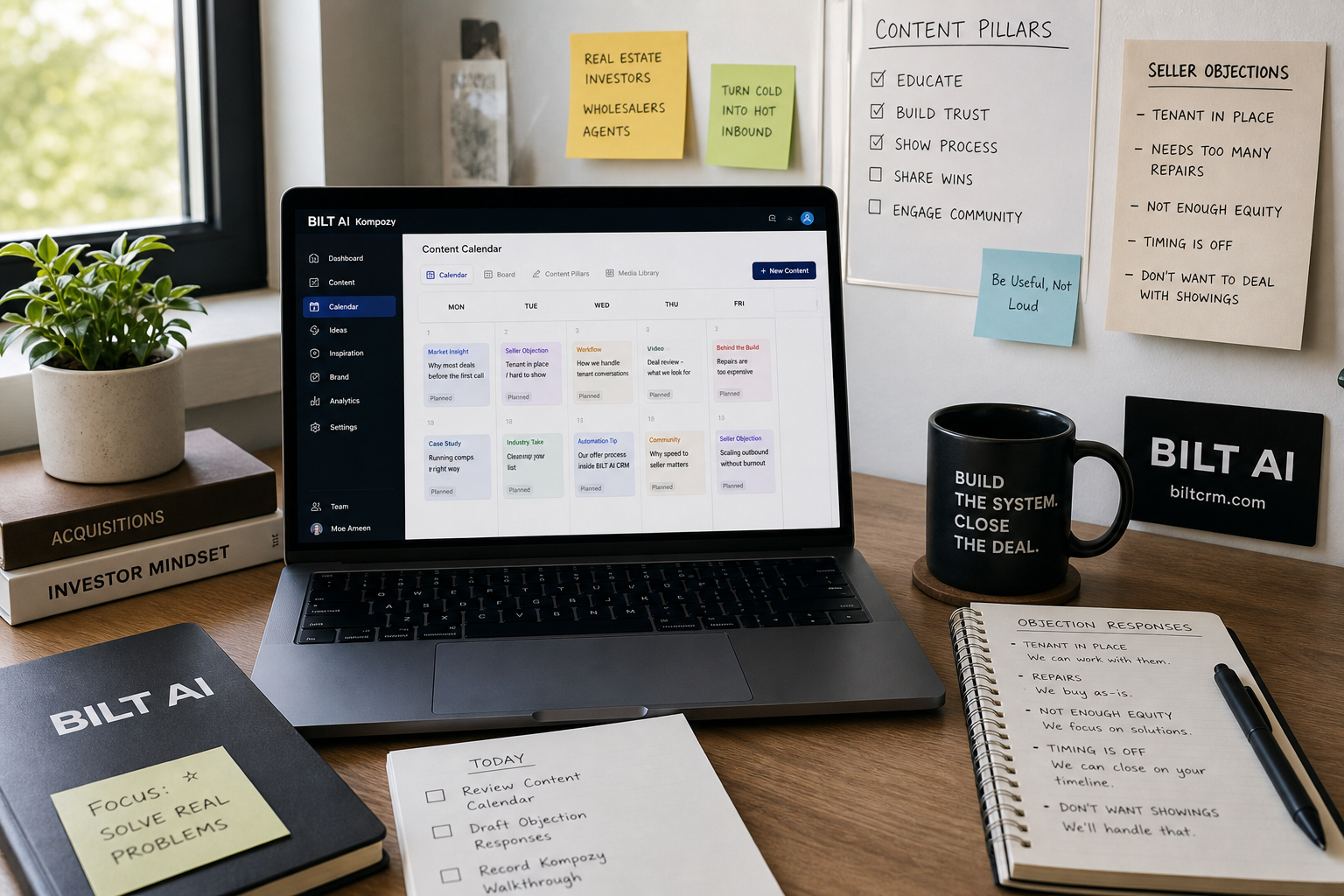
Follow-ups are where most sequences fall apart. Operators either repeat the same line or switch tone so much that it feels like a different sender. That disconnect shows up in reply rates.
Inside Kompozy, the workflow starts with a Persona Brief and a topic pool built from real seller objections. Think condition issues, tenant problems, timing constraints, or price expectations. Each follow-up pulls from that pool so the sequence feels like a conversation, not a loop.
The second layer is distribution. A single idea can fan out across multiple platforms so the seller sees consistent messaging. That might include email, light social touches, and other channels where appropriate. The effect is staying present without spamming one inbox.
This ties back to the earlier point. Channels do not fail on their own. Disconnected workflows do. When messaging is consistent and tied to actual objections, each touch builds on the last instead of restarting the conversation.
What the data actually tells you when campaigns stall
Most teams look at outcomes only. Deals or no deals. That is too late in the cycle. The earlier signals tell you what to fix.
If emails are getting opened but not answered, the subject line did its job. The body or the offer did not. If emails are not getting opened, deliverability or subject lines need work. Google’s guidance emphasizes domain reputation and engagement as key drivers for inbox placement, which you can observe in Postmaster dashboards.
On the calling side, if pickup rates are low but callbacks happen after voicemails, your script is working but timing may be off. If neither pickups nor callbacks happen, your list quality or caller ID reputation could be the issue.
Per the 2024 updates from Google and Yahoo, bulk senders are expected to maintain low spam complaint rates and proper authentication. Failing those standards can push messages to spam, which makes even a good sequence look broken.
Reading these signals weekly keeps the system improving. Ignoring them leads to channel switching, which resets progress.
Before your next list pull, run this in the next 48 hours
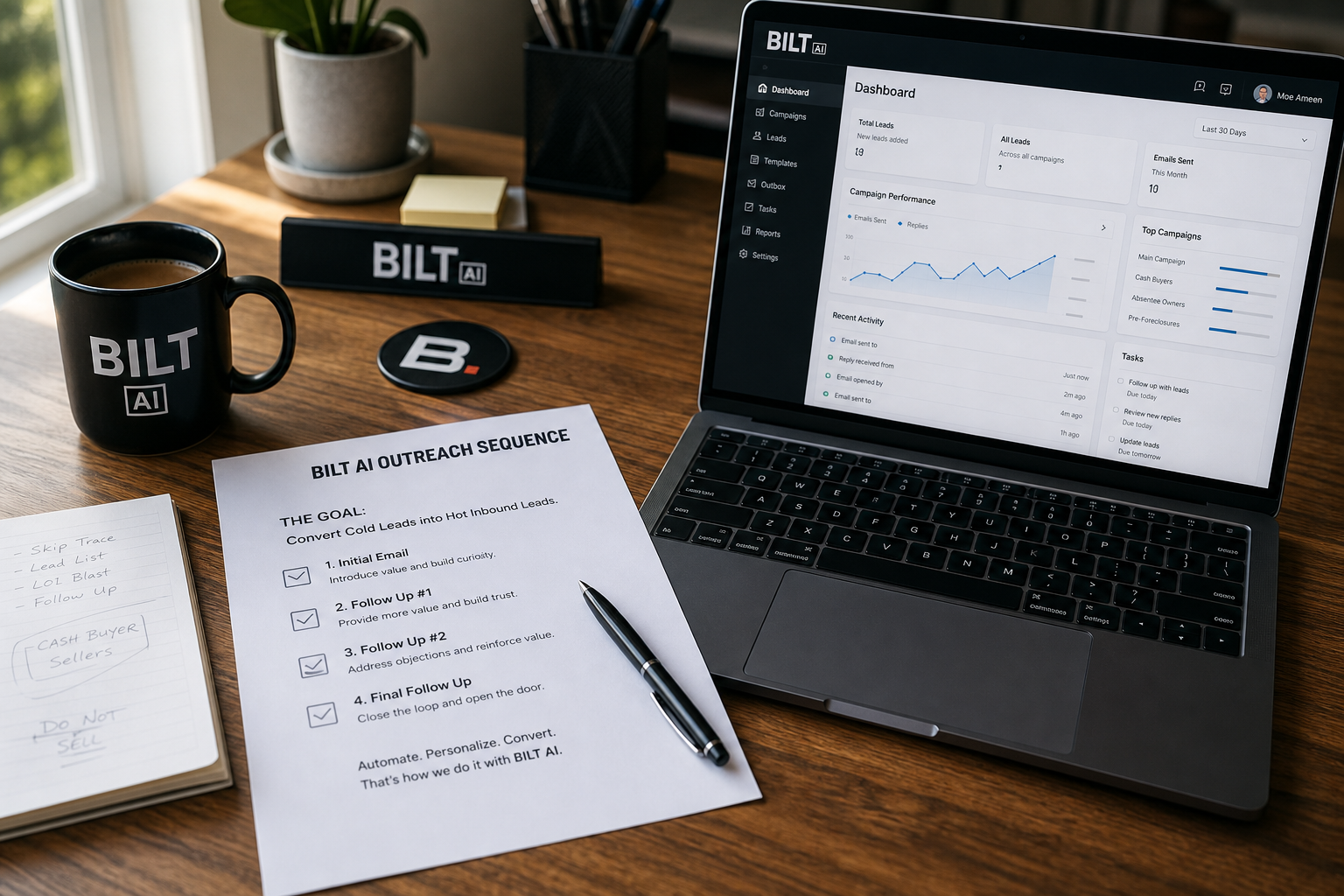
1. Map your sequence. Write out a 21-day plan with 5 to 7 emails and 3 call attempts. Assign each touch a purpose tied to a seller objection. Keep it in one document so your team does not improvise mid-stream.
2. Set up deliverability basics. Authenticate your domain, monitor Google Postmaster Tools, and clean your list with a service like NeverBounce before the first send.
3. Align scripts and copy. Make sure your voicemail references the same property and language used in your emails. Consistency increases recognition.
4. Track leading indicators. Review opens, replies, pickups, and callbacks every week. Adjust subject lines, offers, and call windows based on what you see, not on assumptions.
5. Centralize execution. Use a system that keeps email, calls, and follow-ups tied to the same contact record. If you want a walkthrough of how we run this inside BILT, you can book a short demo and see the sequence live.
If your focus is building a repeatable content and follow-up engine, Kompozy shows how to structure the messaging layer so each touch feels connected. See how it works at Kompozy.
Frequently Asked Questions
Is cold calling or cold email better for real estate investing?
Neither wins on its own. A combined sequence outperforms because recognition builds across touches, which increases reply and pickup rates when the same seller sees your name more than once.
How many touches should a cold email sequence have in REI?
Five to seven emails over about three weeks is a solid baseline, supported by sender guidelines from Google that favor consistent cadence and engagement over one-time blasts.
Why do my cold emails get opens but no replies?
Your subject line is working but the message or offer is off. When open rates are present without replies, adjust the body copy or positioning before changing channels.
When should I call after sending a cold email?
Start calling within a couple of days and layer attempts across the sequence, for example on days two, five, and ten, so the call benefits from prior exposure to your name.
Do Google and Yahoo rules affect real estate cold email?
Yes. The 2024 sender requirements emphasize authentication and low complaint rates, which directly impact inbox placement and therefore campaign performance.


© Copyright 2024 by BILT. All rights reserved.


