

LOI Blasting Strategy That Actually Gets Replies
“Blast bigger lists for better results.” That advice is why your LOIs get ignored
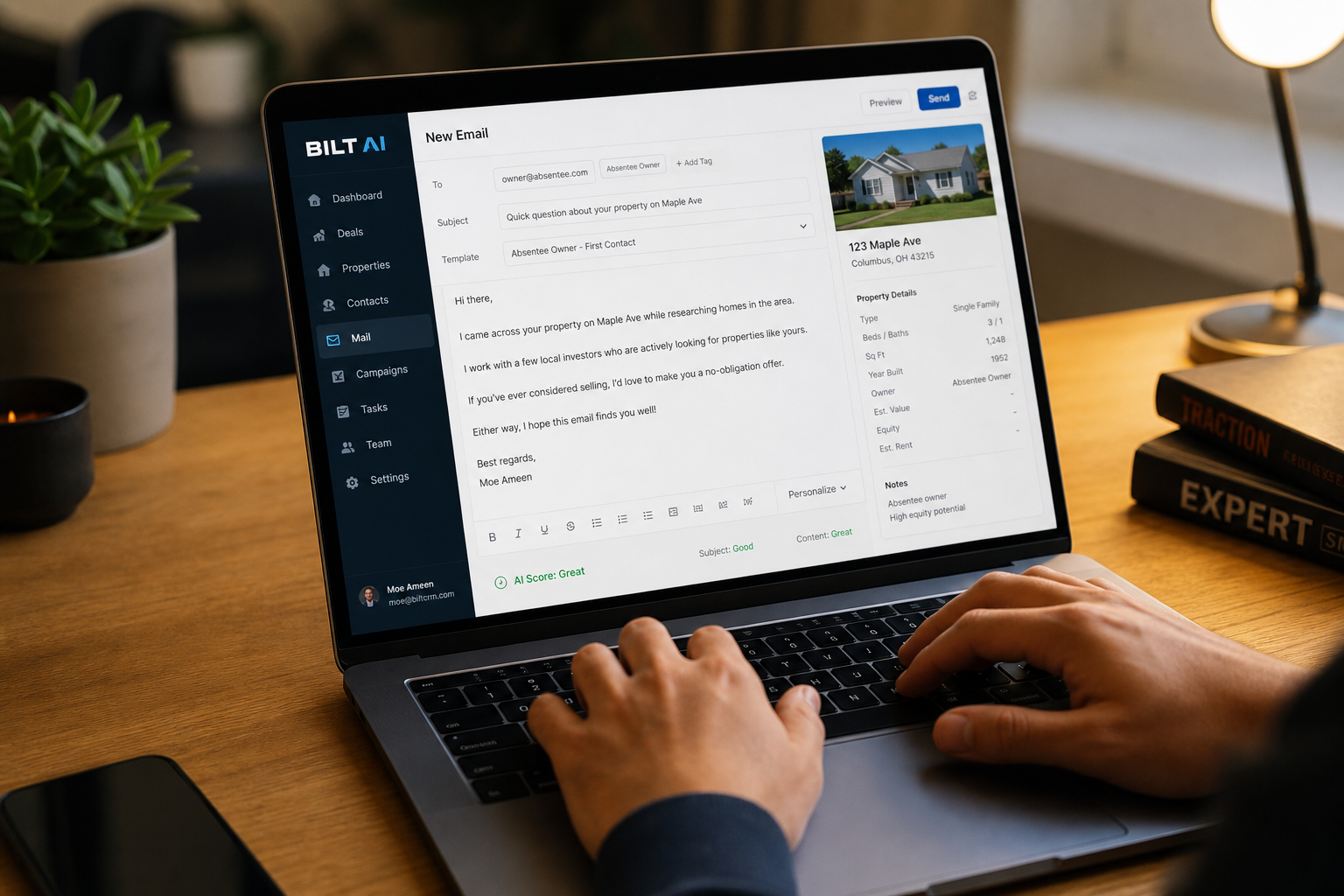
A wholesaler in Dallas sent a large batch of LOIs and watched replies stall. The copy looked fine. The pricing was within range. Still quiet.
The problem wasn’t effort. It was how the LOI blasting strategy was structured. Most operators over-send and under-segment. They change price, terms, and angle at the same time, then can’t tell what actually moved a seller.
The highest reply rates consistently come from smaller, tighter batches, a single variable change per send, and fast follow-up tied to what recipients actually did. When the email feels targeted, owners answer. When it feels blasted, they ignore it.
This post breaks down a field-tested way to run LOI blasts that produce signal you can act on, not noise you can’t diagnose.
Why a 150–300 contact batch beats a massive send
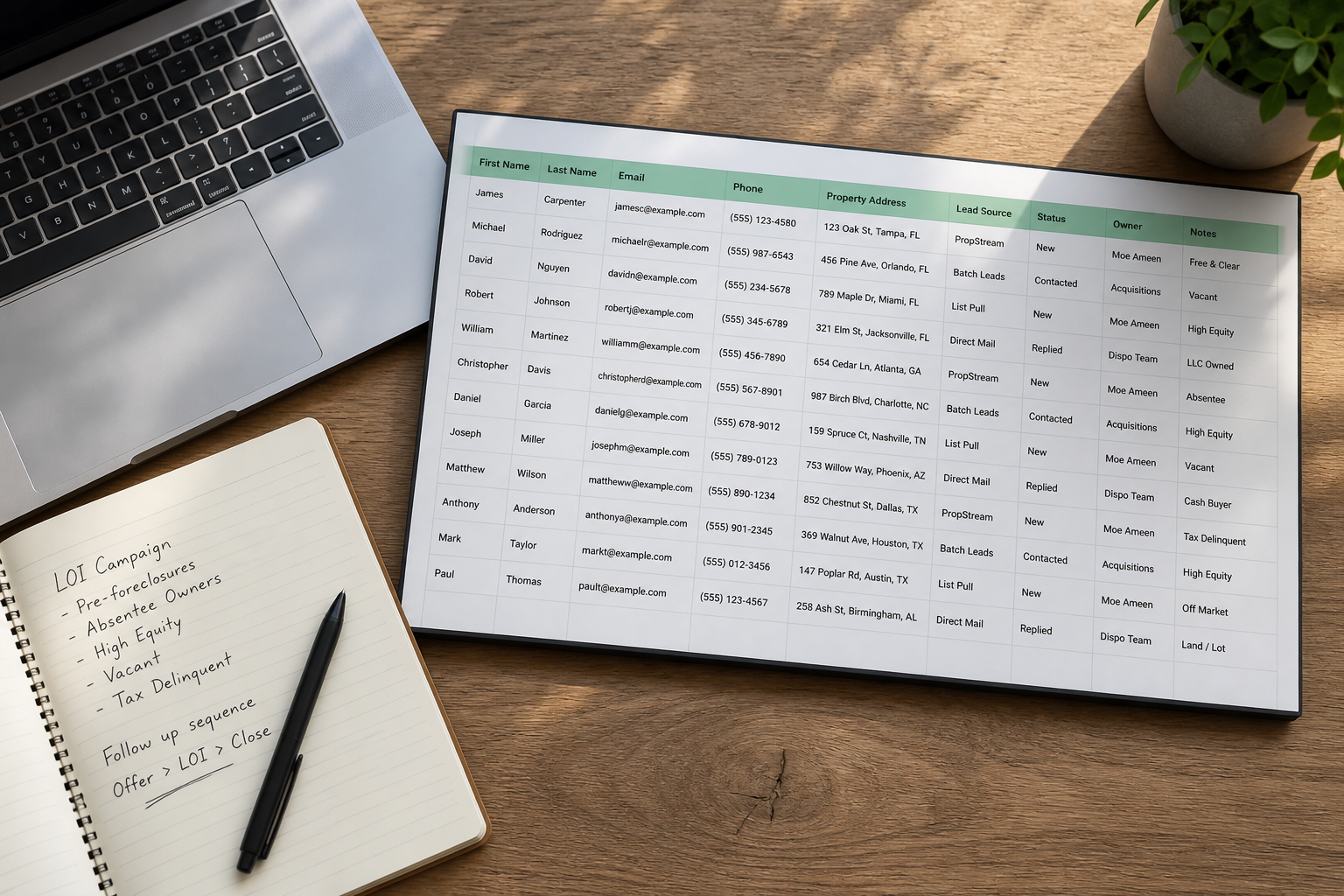
Big sends look efficient on paper. In practice, they blur your feedback loop. When a batch is too large, you lose the ability to attribute replies to a specific change.
Keep your LOI blasting strategy inside a controlled range. A batch of roughly 150–300 contacts gives you enough volume to see patterns without washing out the signal. Within that band, you can read subject line performance, opening paragraph resonance, and which offer angle triggered responses.
There’s also a deliverability layer. Since the 2024 Gmail and Yahoo sender requirements, bulk senders are expected to maintain authentication, low complaint rates, and consistent sending patterns. Review the guidance at Google Postmaster and Yahoo Sender Hub. Oversized, erratic blasts increase the odds of throttling or spam placement.
Email volume is not the constraint. Clarity is. When you know what changed and what happened next, you can iterate fast and compound small wins.
Change one variable or learn nothing

Most LOI campaigns fail as experiments. Price shifts, terms adjust, and the angle changes in the same send. When replies move, there’s no clean attribution.
Run your LOI blasting strategy like a controlled test. Pick one variable per batch.
- Price only: keep terms and angle fixed, adjust the offer.
- Terms only: same price, change close timeline or contingencies.
- Angle only: same economics, change the story you’re telling the owner.
Operators who stick to one variable get faster feedback. After two or three cycles, you’ll know which lever actually moves your market. That’s how you stop guessing and start compounding.
A quick aside. Angle is underrated. A repositioning narrative that matches the asset’s reality often outperforms a slightly higher number with a generic pitch.
The 72-hour follow-up window most people miss
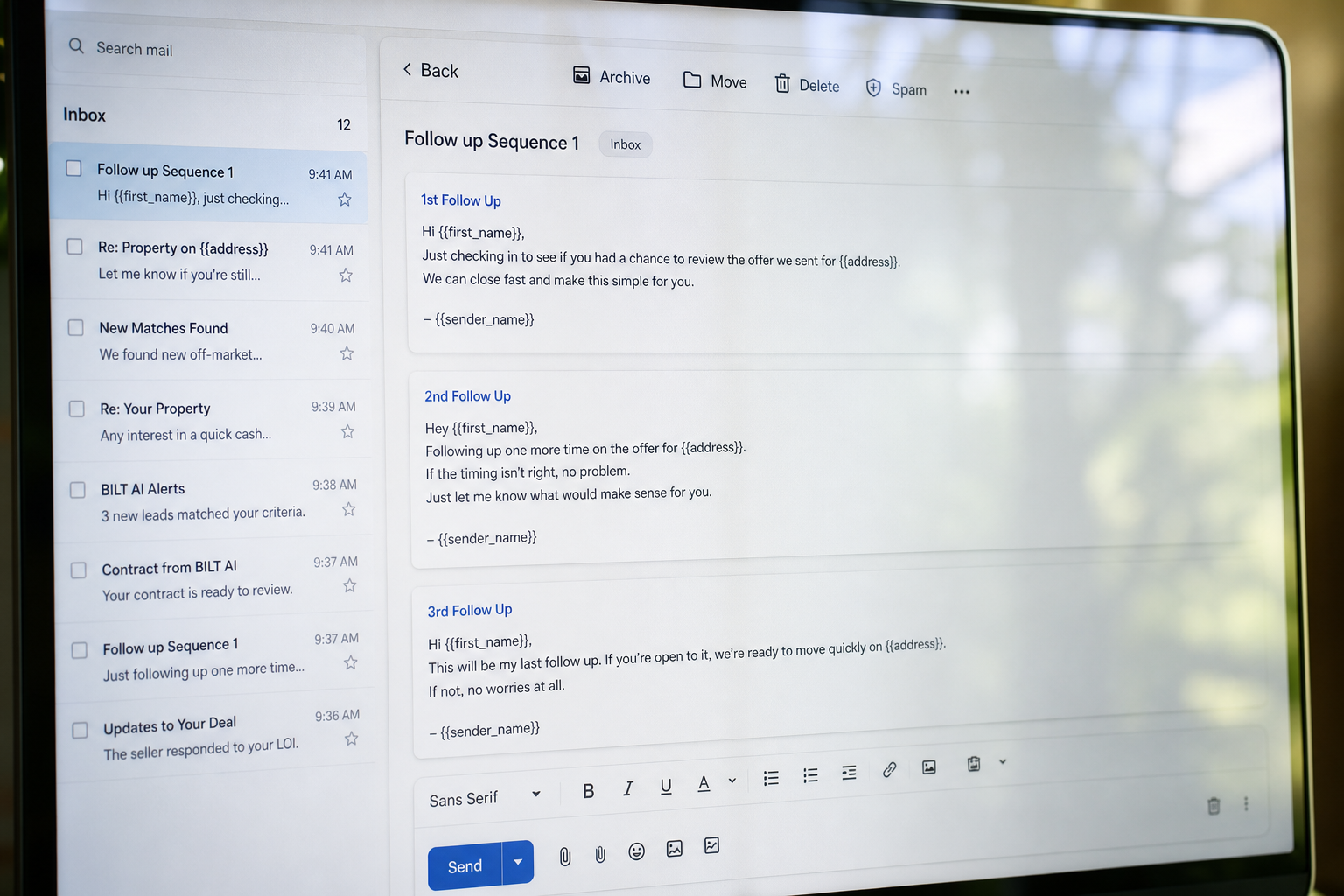
Replies don’t all show up on day one. Many come after a short nudge that lands while your initial email is still fresh.
Build two follow-ups inside a 72-hour window before you send the first LOI. This keeps your cadence tight and consistent.
- Follow-up 1: a brief bump that references the property and your original terms.
- Follow-up 2: a slight reframing. Keep the economics the same, adjust the angle or add a single clarifying line.
Why this works. Owners who skimmed the first message get a second chance to engage. Owners who were on the fence see a clearer picture. And because your variables are controlled, you can tell which message did the work.
Compliance still matters. The FTC CAN-SPAM guide outlines requirements around identification and opt-out. Following it protects your domain and your reputation.
Operator vignette: how a tighter loop produced real replies
Jordan, a wholesaler working small multifamily in a Sunbelt market, shifted from large blasts to a tighter LOI blasting strategy. Each batch sat within the 150–300 range, and only the angle changed between sends while price and terms stayed fixed.
Over a single cycle, replies clustered around one angle that spoke directly to deferred maintenance and tenant turnover. Jordan kept the same economics and ran the next batch with that angle only. The reply pattern held.
“We stopped guessing. Same price, same terms, one story. The inbox told us which story to keep.”
The key detail wasn’t a clever line. It was the discipline of changing one thing at a time and reading the signal before touching anything else.
A save-worthy artifact: the LOI batch control sheet
Use this simple control sheet for every send. It keeps your LOI blasting strategy honest and your learning loop tight.
LOI Batch Control Sheet
- Batch size: 150–300 contacts
- Variable under test: price OR terms OR angle (pick one)
- Hold constant: the two variables you did not choose
- Segment definition: same asset type and similar ownership profile
- Send window: consistent daily window for this batch
- Follow-ups: 2 messages scheduled within 72 hours
- Measurement: replies by message version, not total replies
- Next action: roll forward the winning variable unchanged into the next batch
Keep a simple log next to this sheet. Note which message triggered the reply and any language owners used. Those phrases become your next angle.
Using Kompozy to keep angles aligned with personas
Angle gets stronger when it maps to a real operator persona. That’s where a content system helps.
In BILT AI Kompozy, set up a topic pool per asset type and run variations through Persona Frames. Each LOI angle is tied to a specific owner profile, so your messaging stays coherent across batches.
Then push replies and non-replies into an autopilot pipeline that generates the next follow-up based on behavior, not guesswork. The system keeps your cadence consistent while you focus on reading the signal.
If your current setup is a spreadsheet and a few templates, it will work for a while. Once you’re running multiple batches across different asset types, you’ll want the structure Kompozy provides to avoid mixing variables and muddying results.
For a walkthrough of how we structure this for operators, see how it’s set up inside Kompozy.
Where deliverability quietly breaks your LOI blasting strategy
Even a well-structured batch fails if it never lands in the inbox. Deliverability is not a side task.
Authenticate your domain, warm it up, and keep sending patterns steady. Google’s guidance for bulk senders highlights authentication and complaint thresholds. Their Postmaster tools help you monitor domain reputation over time at Google Postmaster Tools.
Industry research also shows how crowded the channel is. The Radicati Group’s Email Statistics Report (2024) estimates daily email volume in the hundreds of billions, which means your LOI competes in a very busy inbox. Source: Radicati Group, 2024.
Keep your batches consistent, your lists clean, and your copy aligned with the segment. When those pieces line up, your controlled tests actually reach the owner you’re trying to engage.
If you want this running without duct tape
Operators who run this process at scale outgrow ad hoc tools quickly. If your LOI blasting strategy is moving deals, the bottleneck becomes coordination across lists, variables, and follow-ups.
That’s the exact problem BILT AI CRM was built to solve. It evaluates properties, generates offers, sends LOIs, and handles follow-up in one place so your tests stay clean and your pipeline stays active. If you want to see how this fits your current setup, book a short walkthrough at this calendar.
P.S. If your focus is content and messaging systems that keep angles consistent across batches, Kompozy is the layer most operators add next: kompozy.io.
Next 48 hours: run a controlled LOI cycle
- Segment a clean list inside your CRM or a tool like Google Postmaster Tools for monitoring. Keep it within 150–300 contacts and one asset type.
- Pick one variable to test. Lock the other two. Document it in your control sheet before sending.
- Write two follow-ups now and schedule them within 72 hours. Keep the second message as a reframed angle, not a new offer.
- Send in a consistent window and watch replies by message version. Do not change anything mid-batch.
- Roll the winner forward into the next batch unchanged. Only then pick a new variable to test.
Frequently Asked Questions
What is LOI blasting in real estate?
LOI blasting is sending letters of intent to a targeted list of property owners via email to generate deal conversations. In practice, operators who keep batches around 150–300 contacts and control a single variable per send see clearer reply patterns.
How many emails should be in an LOI blast?
A controlled batch of about 150–300 contacts works best because it balances signal and volume. Operators using this range can attribute replies to a specific change instead of guessing across a large send.
How many follow-ups should I send after an LOI?
Two follow-ups within 72 hours is a strong baseline. This timing captures owners who missed the first email and those who needed a clearer angle, without dragging the sequence out.
Why aren’t my LOI emails getting replies?
Most campaigns fail because they change price, terms, and angle at once or send to lists that are too broad. Keeping one variable per batch and tightening the segment usually surfaces what’s actually working.
Do deliverability rules affect LOI blasting?
Yes, bulk sender rules from Google and Yahoo require authentication and low complaint rates. Monitoring with Google Postmaster Tools and following FTC CAN-SPAM guidance helps your emails reach the inbox.


© Copyright 2024 by BILT. All rights reserved.


