

Cold Email Burnout in Real Estate
Stop scaling cold email when your pipeline feels empty
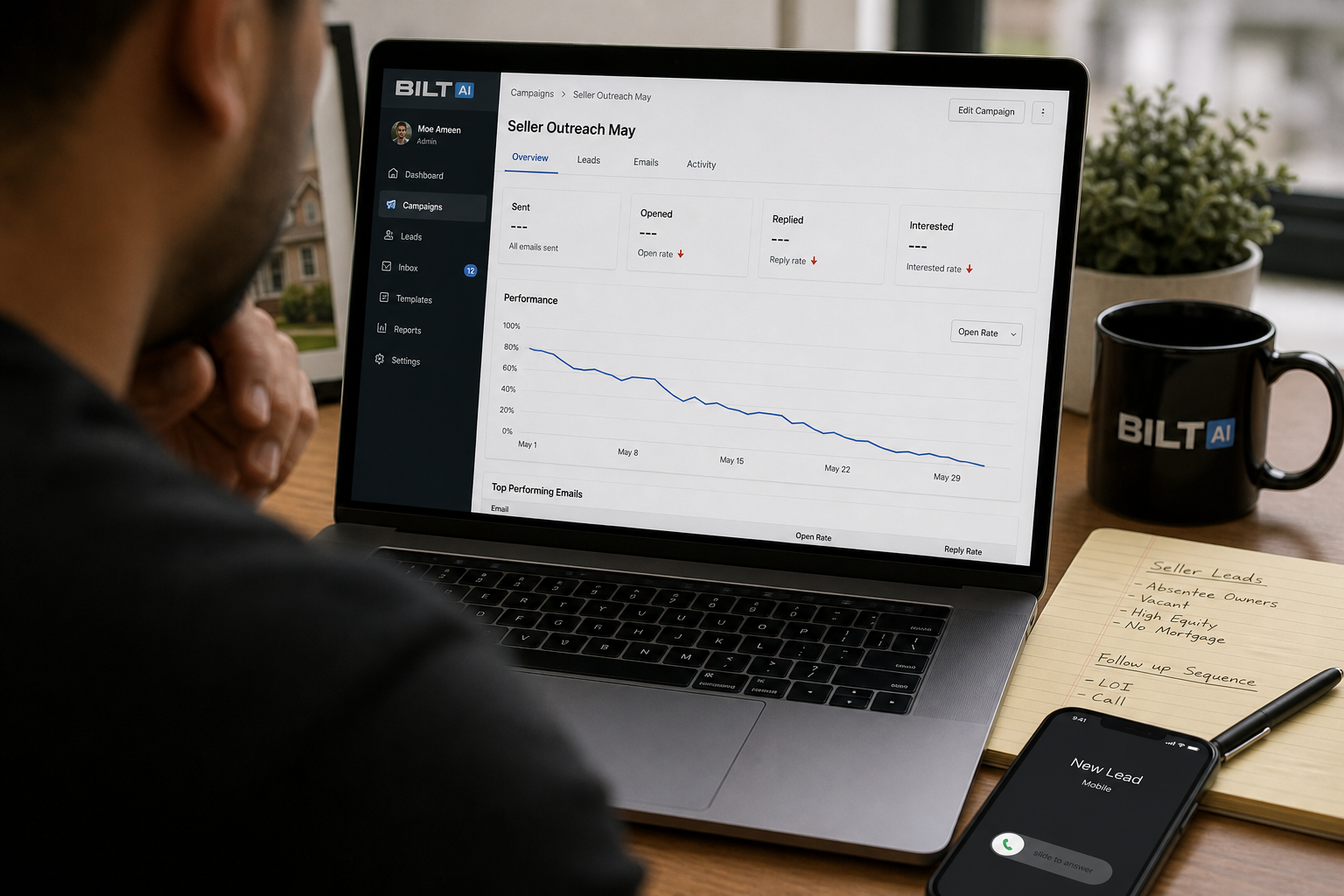
A real estate operator staring at an empty pipeline usually reacts the same way. More lists. More sends. More domains. It feels logical, but it creates the exact problem they are trying to escape.
Cold email real estate campaigns break when urgency replaces timing. That pressure shows up in sending patterns, domain setup, and messaging quality. Google and Yahoo made this even stricter after their 2024 sender requirements update, which raised the bar on authentication and spam thresholds. You can review the official guidance here: Google sender guidelines.
When volume jumps before infrastructure is stable, inbox placement drops. Replies disappear. Operators assume the list is bad, when the system is actually the issue.
This is where most investors burn months. Not because cold email does not work, but because they try to force outcomes on the wrong timeline.
Why feeling behind wrecks your deliverability
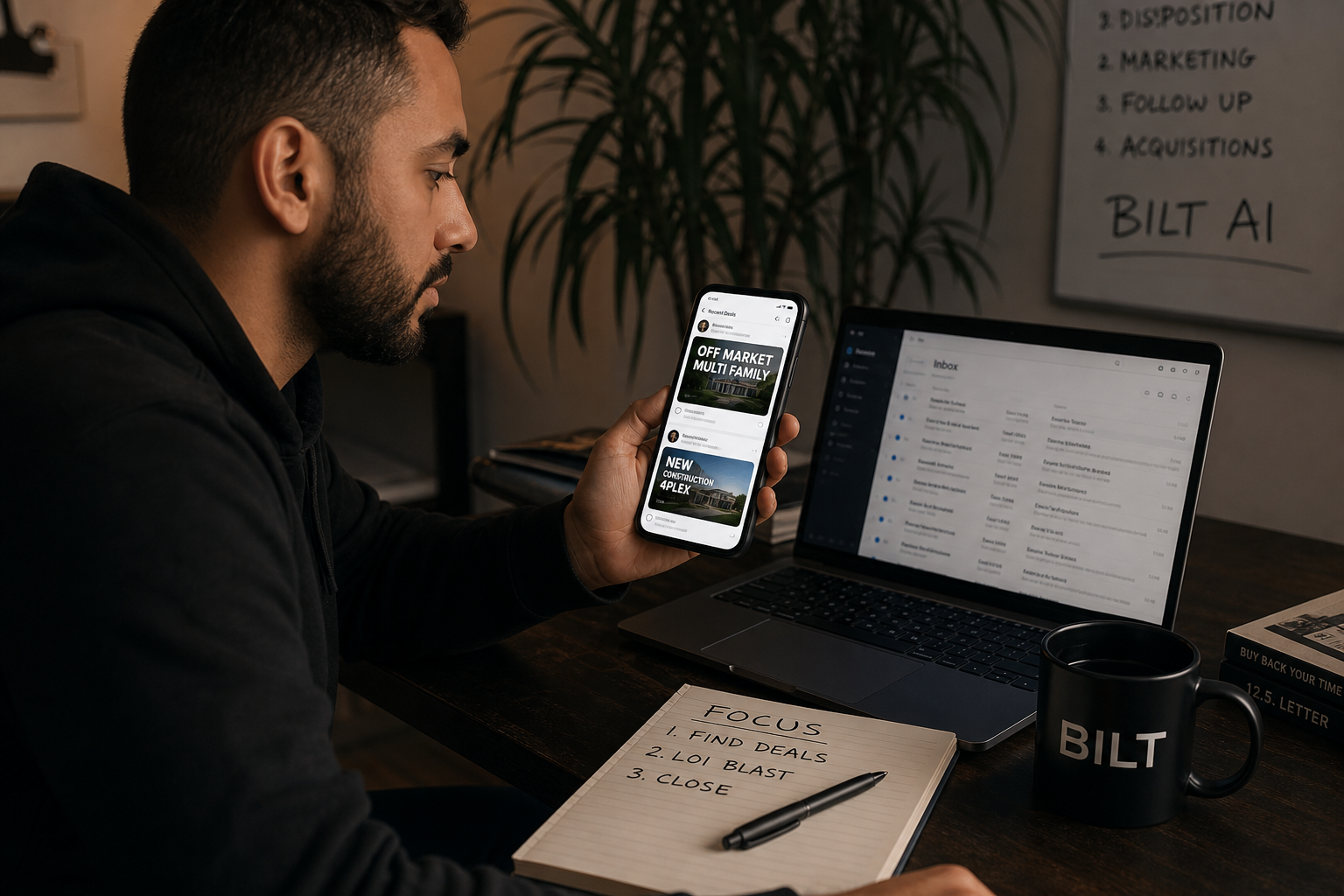
The pressure to "catch up" usually comes from watching other investors close deals publicly. Social feeds are filled with assignment fees, deal screenshots, and claims of scale. What is not shown is the infrastructure behind those results.
Cold email real estate outreach depends on domain reputation, warming cycles, and consistent behavior over time. Rushing this process creates patterns that look identical to spam campaigns.
According to the FTC CAN-SPAM compliance guide, email practices that mislead or overload recipients increase the likelihood of filtering and penalties. That applies directly to investors blasting unprepared domains.
An operator who feels behind tends to change variables too quickly. New copy every week. New domains every few days. Different lists every send. None of these systems stabilize long enough to produce signal.
What looks like a lead problem is often just a timing problem disguised as urgency.
The contrarian take: slower cold email closes more deals
Most advice in real estate pushes speed. More outreach, faster follow up, higher volume. That works in some channels, but cold email behaves differently.
Slower systems outperform rushed ones because inbox providers reward consistency. Gradual volume increases, stable messaging, and predictable sending patterns build trust at the domain level.
Operators who scale too early train spam filters to ignore them. Operators who pace their campaigns allow engagement data to compound. Replies increase. Conversations stack. Deals follow.
This shows up clearly when comparing two approaches. One investor sends aggressively from new domains and gets minimal responses. Another sends at a controlled pace, tracks engagement, and compounds replies over time. The second operator builds a pipeline that actually converts.
Cold email is not a race. It is reputation building.
The cold email timing checklist investors actually keep
This is the piece most operators screenshot and refer back to. Not theory. Not broad advice. Just thresholds that keep campaigns stable.
Cold Email Stability Checklist
- Domain age before scaling: minimum warm period aligned with Google Postmaster signals
- Daily send consistency: avoid large spikes between campaigns
- Reply handling: respond within the same business cycle to maintain engagement signals
- List quality control: remove non-responsive segments regularly
- Authentication: SPF, DKIM, and DMARC fully configured per Google standards
- Content stability: keep core messaging consistent across sends
- Domain rotation: only after engagement stabilizes, not before
Tools like Google Postmaster Tools help track domain reputation directly. Most investors skip this and operate blind.
When these conditions are met, cold email real estate campaigns start producing predictable inbound instead of random spikes.
Where BILT AI CRM fits when volume starts to break you
At a certain point, spreadsheets and disconnected tools stop working. That usually happens when conversations increase but tracking breaks down.
If you are managing outreach, replies, and LOIs manually, the bottleneck is no longer lead flow. It is system coordination.
This is exactly why BILT AI CRM exists. It handles LOI blasting and cold email in one place, built specifically for real estate operators. Instead of juggling tools, the system keeps sending patterns consistent while organizing inbound conversations.
The benefit is not just efficiency. It protects deliverability while letting you scale outreach without breaking your setup.
That shift is where cold data starts turning into actual deal flow.
What to do in the next 48 hours to fix your cold email
- Audit your sending domains using Google Postmaster Tools and check reputation signals
- Stabilize your sending pattern by keeping volume consistent for the next few cycles
- Review your last campaigns and remove lists that produced no engagement
- Consolidate your workflow into a single system if tracking feels fragmented
If your current setup feels scattered, the fastest path forward is seeing how a structured system should look. Book a walkthrough here: https://www.biltcrm.com/book-demo.
P.S. If content production is slowing you down alongside outreach, Kompozy is where we organize and scale everything on the content side.
Frequently Asked Questions
Why is my cold email not getting replies in real estate?
Your cold email is not getting replies because your domain reputation or sending pattern is unstable. Google Postmaster data often shows low trust scores when volume spikes too quickly.
How long does it take for cold email to work in real estate?
Cold email starts working once domain reputation and engagement stabilize, which depends on consistent sending and proper setup. Campaigns tied to stable domains see replies compound over time instead of appearing randomly.
What tools should I use for real estate cold email?
Use tools like Google Postmaster for deliverability tracking and a dedicated CRM like BILT AI CRM to manage outreach and inbound conversations in one place.
Is cold email still effective after the 2024 updates?
Yes, cold email is still effective, but only when authentication and sending practices meet the stricter 2024 Google and Yahoo requirements.


© Copyright 2024 by BILT. All rights reserved.


