

Cold Email Preparation for Real Estate That Converts
Stop blaming your list. Your preparation is what’s breaking your deals.
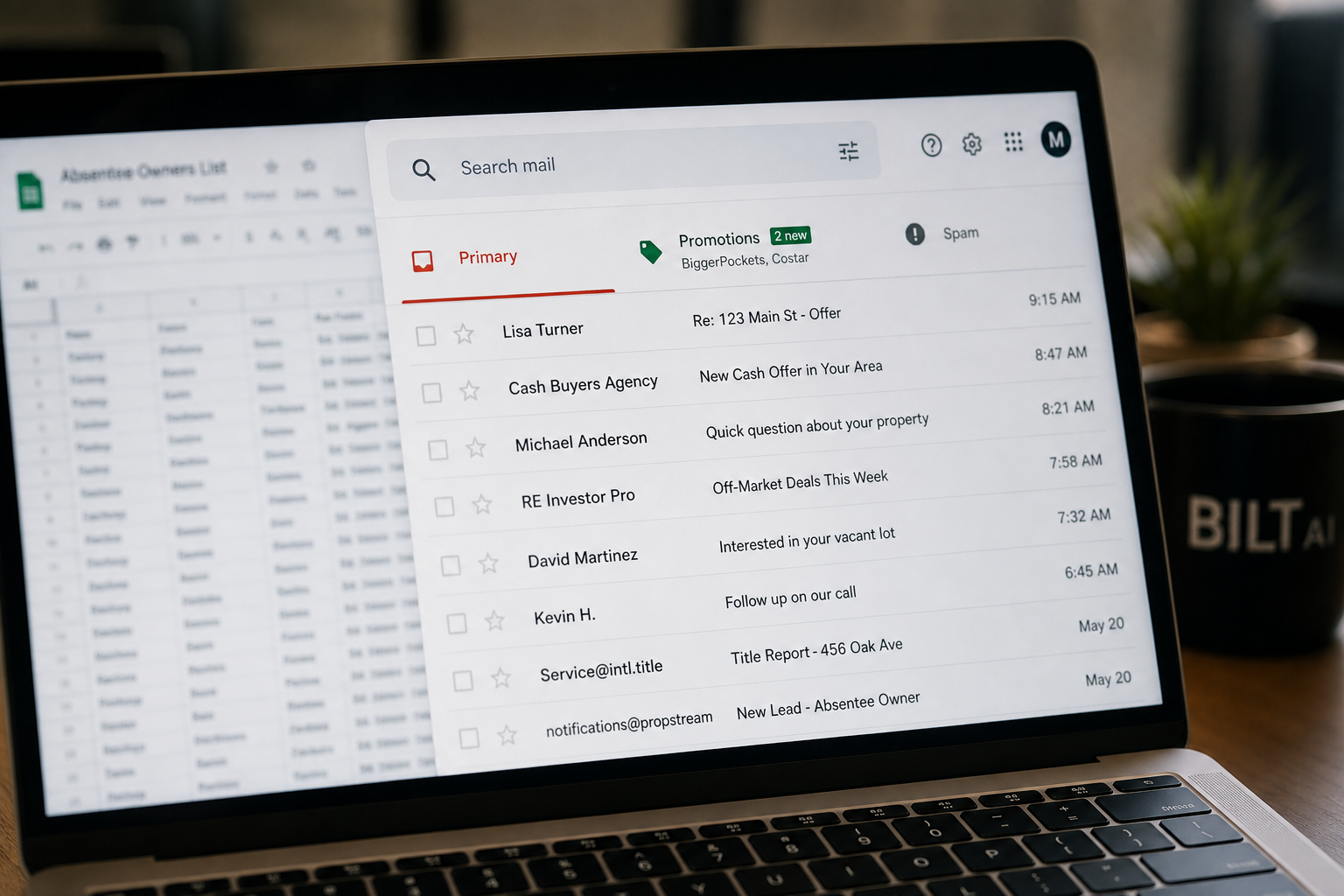
A Houston wholesaler pushed a fresh batch of off-market owners into an outreach tool and expected contracts to follow. Replies were quiet, inbox placement dropped, and the few responses that came in were defensive. The list looked fine. The problem sat upstream.
Cold email in real estate doesn’t fail because owners “aren’t motivated.” It fails because the system sending those LOIs was never prepared to survive real volume. Preparation decides whether your outreach lands in Primary, Promotions, or Spam, and whether a seller reads it like a business offer or a nuisance.
The quote floating around about falling to your level of preparation lands differently when you’ve watched a domain burn in a week. Preparation here is not mindset. It is DNS records, domain age, sending patterns, copy structure, and how you handle replies. Miss one layer and the rest collapses.
Why a brand-new domain sending LOIs looks like a scam to Google
After the 2024 sender requirements rolled out from Google and Yahoo, the bar for bulk senders changed. Authentication is not optional anymore. If your domain is new, un-warmed, and suddenly pushes a wave of LOI emails, it mirrors the exact pattern filters are built to stop.
Start with the basics that actually move the needle. SPF, DKIM, and DMARC need to be configured correctly. Google’s own documentation spells out the requirements for bulk senders, including authentication and low complaint rates. You can review it directly at Google’s sender guidelines and Yahoo’s parallel update at Yahoo Sender Hub.
Then look at behavior. Sudden spikes, identical templates, and zero reply handling all signal automation without reputation. That is why operators who “did everything right” still watch inbox placement crater. The system behaved like a blast, not a conversation.
Preparation means staging your volume, varying your copy enough to feel human, and treating replies as part of the system, not an afterthought. That’s how you earn placement before you ask for contracts.
The preparation stack serious investors run before sending a single LOI
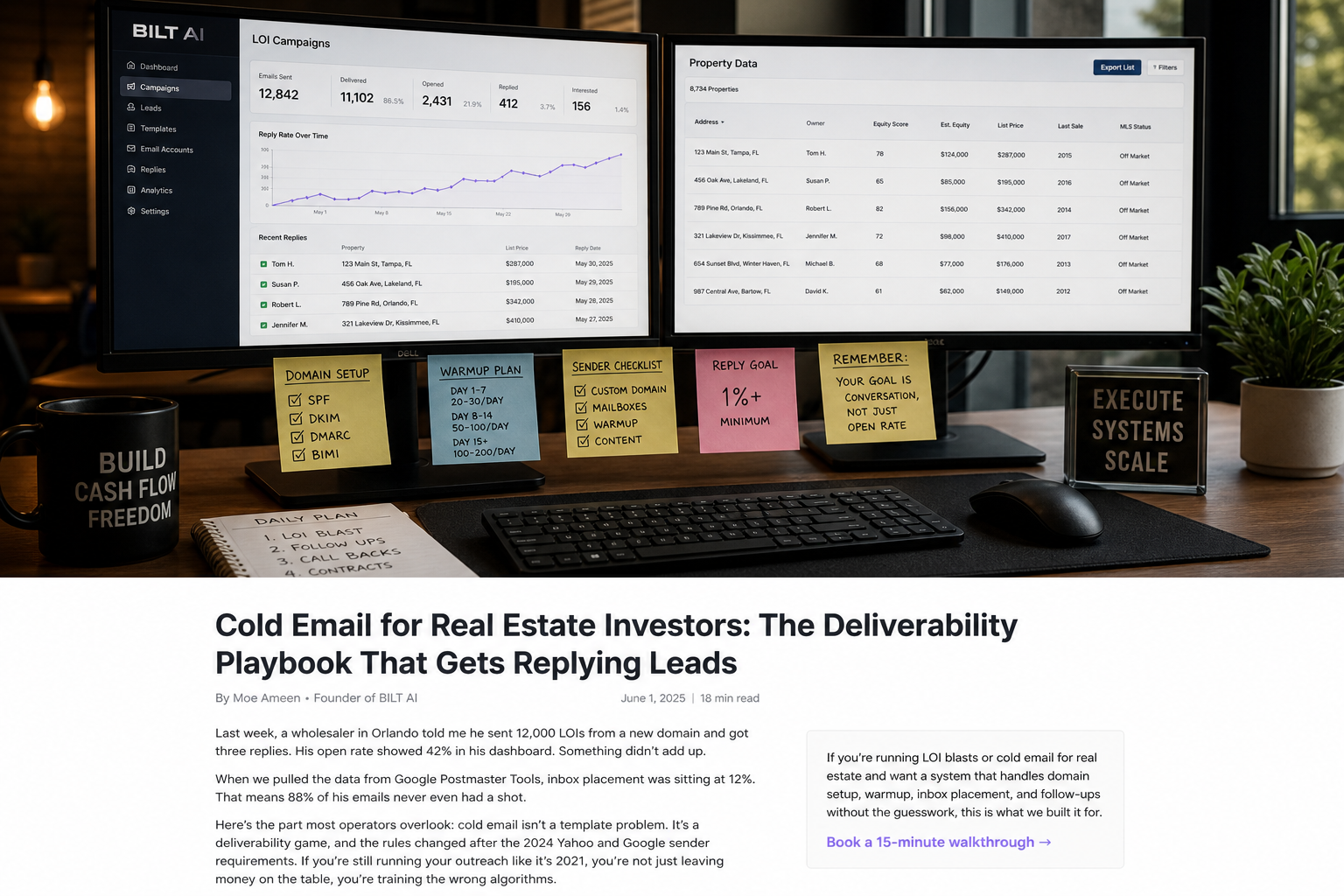
Preparation is a stack, not a step. Skip one layer and you’ll feel it in replies or deliverability within days.
Domain and inbox setup
Use a dedicated sending domain, not your main website. Set up inboxes on Google Workspace or Outlook. Authenticate with SPF, DKIM, DMARC. Verify everything in Google Postmaster Tools so you can see reputation instead of guessing.
Warm-up and behavior
Warm inboxes gradually. That includes sending and receiving, not just pushing emails out. Tools can simulate this, but manual replies still matter. Real conversations build trust signals faster than any script.
List hygiene tied to real estate data
Pull lists from sources like PropStream or county records, but clean them. Remove duplicates, role accounts, and obvious traps. In real estate, that means filtering out corporate entities when you’re targeting individual owners, or vice versa depending on your strategy.
Offer framing that reads like a deal, not marketing
Your LOI should look like something a buyer would actually send. Address the property, reference a plausible purchase range, and keep it tight. No fluff. Owners respond to clarity.
If you’re running this at scale, spreadsheets break quickly. That’s where systems like BILT AI CRM come in, built specifically for LOI blasting and reply handling in real estate workflows. The difference shows up when replies start stacking and you need to move fast.
A real operator’s miss that cost deals before the fix
An acquisitions manager in Dallas was sending consistent outreach to small multifamily owners. The team had decent data and a clear buy box. Replies were thin and often negative.
The issue was not the offer. It was the setup. The sending domain had no DMARC policy, inboxes were new, and every email used the same structure. Once they fixed authentication, slowed the ramp, and rewrote the LOI to reference specific property details, tone shifted. Replies became neutral to positive, and conversations started to open.
“We thought volume would solve it. Turns out the system itself was getting filtered before anyone even saw the offer.”
That change did not require a new market or a new list. It required preparation that matched the way email providers evaluate senders today.
The one artifact operators keep: pre-send LOI readiness checklist
This is the piece worth saving. Run it before any campaign goes out.
- Authentication verified: SPF, DKIM, DMARC pass in Google Admin and visible in Google Postmaster Tools
- Domain age: sending domain has a history of normal activity, not a sudden spike
- Inbox health: test emails land in Primary for seeded accounts across Gmail and Outlook
- Volume ramp: daily sends increase gradually instead of jumping to full capacity
- List filtered: contacts match your buy box (owner type, asset class, geography)
- LOI clarity: property referenced, price range present, no marketing language
- Reply handling: inbox monitored, responses answered quickly, no dead threads
Most investors skip at least two of these. That is usually enough to tank performance before the first serious seller sees your message.
The contrarian take: more volume makes bad preparation worse, not better
Common advice says send more to get more deals. That logic breaks under modern filtering systems. More volume amplifies whatever your system is doing wrong.
If your domain looks suspicious, increasing sends accelerates reputation damage. If your LOI reads generic, more people ignore it faster, which feeds negative engagement signals back into providers like Gmail.
Operators who win here do the opposite at the start. They send less, watch behavior, adjust copy, and only scale once placement and replies look healthy. It feels slower, but it preserves the asset you actually depend on, which is your sending reputation.
This shift lines up with how platforms now evaluate senders post-2024 updates. Engagement, authentication, and consistency carry more weight than raw output.
What to do in the next 48 hours if your emails aren’t converting
1. Audit your setup inside Google Workspace and Postmaster Tools. Fix SPF, DKIM, and DMARC, then send test emails to confirm placement.
2. Rewrite your LOI to reference a real property and remove anything that reads like marketing. Keep it direct and grounded in the deal.
3. Reduce volume temporarily and watch replies. Scale only after you see consistent inbox placement and actual conversations starting.
If your pipeline depends on outbound, preparation is not optional. It is the difference between sending emails and actually starting deals. If you want to see how this looks inside a system built for real estate operators, book a walkthrough at biltcrm.com and run your next campaign on infrastructure that’s already dialed in.
Frequently Asked Questions
How do I improve cold email deliverability for real estate deals?
Fix authentication first, then control sending behavior. Google and Yahoo’s 2024 requirements require SPF, DKIM, and DMARC, and senders who follow them see better inbox placement because providers can verify legitimacy.
What should a real estate LOI email include?
A clear reference to the property and a realistic purchase range. Investors who include property-specific details get more replies because the message reads like a real offer instead of a template.
Does sending more emails get more real estate deals?
No, higher volume without preparation reduces performance. Providers track engagement and complaints, so poor setup at scale damages domain reputation and lowers inbox placement.
Which tools help manage real estate cold email campaigns?
Tools like Google Workspace for inboxes, Google Postmaster Tools for reputation monitoring, and platforms such as BILT AI CRM help manage LOI blasting and reply workflows in one place.


© Copyright 2024 by BILT. All rights reserved.


