

Cold Email for Real Estate Leads That Actually Convert
Why cold email is the real fight against irrelevance in real estate

A wholesaler can have the cleanest list in PropStream, skip trace every owner, and still sit on zero replies. The issue usually is not data. It is that no one recognizes the sender when the message lands.
Cold email real estate leads work when the market knows you exist. That sounds obvious, but most operators are still relying on one channel at a time. They text a list, then stop. They send a batch, then wait. Meanwhile, inbox providers are filtering harder than ever.
After the 2024 Google and Yahoo sender updates, bulk senders have to meet authentication and spam rate thresholds or risk throttling and filtering. Google documented these requirements publicly, including SPF, DKIM, and DMARC alignment and maintaining low spam complaint rates via Gmail sender guidelines. Yahoo mirrored similar standards on its sender best practices page.
That means the game changed. You are not just sending emails. You are earning inbox placement repeatedly, across multiple domains, while competing with every other investor hitting the same owner list.
Operators who win here treat outbound like a system tied directly to deals. Every email connects to a property, a price, and a reason to respond.
The contrarian truth: more volume without infrastructure kills deals
Most advice says send more. More emails, more contacts, more domains. That advice breaks operators fast.
Higher volume without infrastructure tanks deliverability. When a domain sends aggressively without warming, inbox providers flag behavior patterns that resemble spam campaigns. Placement drops, replies disappear, and the operator assumes the list is bad.
Cold email real estate leads do not scale linearly. Doubling send volume does not double replies. In many cases, it cuts them in half because fewer emails reach the primary inbox.
Gmail Postmaster Tools shows domain reputation trends and spam rates inside its dashboard. Operators who check it regularly notice a pattern. When complaint rates rise or authentication is off, inbox placement drops almost immediately.
Instead of asking how many emails to send, the better question is how many inbox placements you are earning. That is the metric tied to deals.
This is why experienced investors build sending infrastructure first. Multiple domains. Proper authentication. Gradual warmup. Then scale.
The outreach system that turns cold lists into inbound conversations
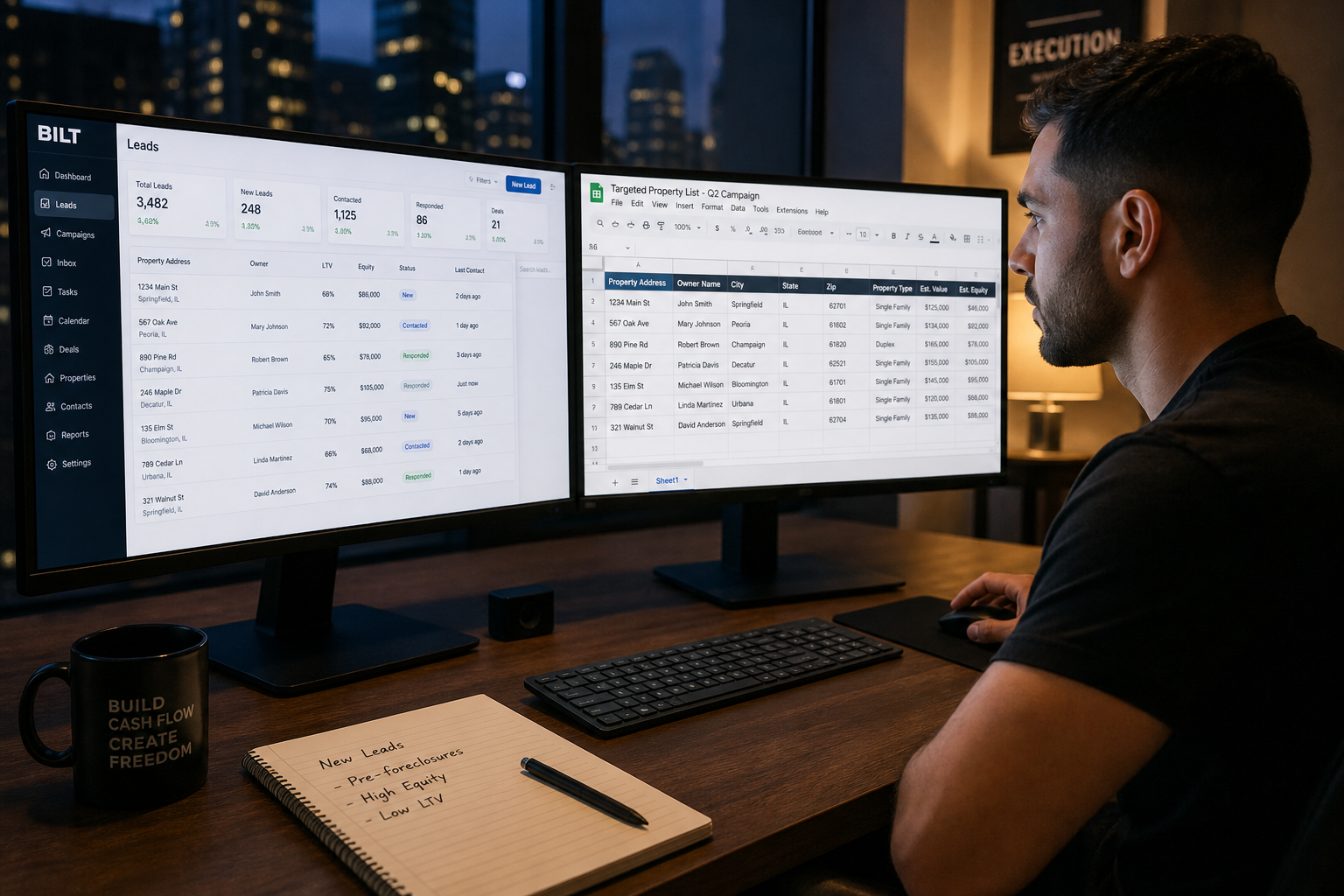
Cold email real estate leads convert when the system connects three pieces. Targeting, deliverability, and message-market fit.
Targeting that matches real deals
Lists pulled from tools like PropStream or BatchLeads work best when filtered by actual deal signals. Absentee ownership, equity position, and property condition indicators narrow the list to sellers who might transact.
A broad list increases volume but lowers intent. Operators who filter tightly see fewer sends but stronger replies.
Deliverability that earns inbox placement
Domains must be set up with SPF, DKIM, and DMARC before sending. Tools like Google Workspace and Microsoft 365 support this natively, but configuration still matters. Without alignment, even strong offers land in spam.
Warming tools such as Instantly or Smartlead gradually build sending reputation. They simulate real conversations and engagement patterns across inboxes.
Messaging tied to property context
Generic messages fail because they read like blasts. The emails that get replies reference the asset. Address, condition signal, or ownership timeline.
That does not mean writing each email manually. It means structuring templates with variables that reflect real data points from your list.
Operators who combine these three elements see something different. Replies start referencing the property directly. Conversations move faster because context already exists.
The one artifact worth saving: a cold email framework that gets replies
This is the framework used across multiple outbound campaigns targeting off market sellers. It is simple, but each line has a job.
Subject line
- Property address or street name
- Avoid promotional language
Opening line
- Mention the property directly
- Keep it conversational, not formal
Body
- State interest clearly
- Reference condition or ownership signal if available
- Offer a simple next step
Close
- Low friction reply option
- No pressure language
Example template
Subject: 123 Main St
Hey, I came across your property on Main St and wanted to reach out.
Not sure if you would consider selling, but I am actively buying in the area. Happy to make an offer as is.
If it is something you would look at, just reply here and I can send details.
This works because it respects how owners read email. Fast, clear, and specific. No branding, no long explanations.
When this framework is paired with strong targeting and proper deliverability, replies feel like inbound. Owners respond because the message feels relevant to their situation.
Where most real estate operators break the system

Breakdowns usually happen in execution, not strategy.
One common issue is sending from a primary domain tied to your website. When deliverability drops, it affects everything from inbound inquiries to lender communication. Separate sending domains protect the core business.
Another issue is inconsistent sending. Operators blast a list, stop for weeks, then restart. Inbox providers interpret this as irregular behavior. Consistency builds trust with email systems.
Message fatigue also plays a role. When the same template hits the same list repeatedly, response rates decline. Rotating variations and refreshing lists keeps engagement stable.
There is also a workflow problem. Many investors still track conversations in spreadsheets. Once reply volume increases, deals slip through. Follow-ups get missed. Opportunities disappear.
This is where systems matter. If you are running this at any meaningful scale, you will outgrow manual tracking fast. That is why tools like BILT AI CRM exist. It connects outbound email, replies, and deal tracking in one place so conversations actually turn into contracts.
Turning replies into contracts instead of conversations
Replies are not the goal. Contracts are.
Cold email real estate leads often stall after the first response because there is no follow-up structure. The seller replies, the investor responds once, then the thread dies.
Operators who close deals from email treat replies like the start of a pipeline. Every response triggers a sequence. Qualification, offer, follow-up.
CRM systems track this automatically. They remind you when to follow up, log conversations, and keep deals moving forward.
Without that structure, even strong campaigns underperform. With it, a single reply can turn into a signed agreement.
The difference is not in the email itself. It is in what happens after the reply.
What to do in the next 48 hours to get your first replies
- Set up a sending domain in Google Workspace and configure SPF, DKIM, and DMARC using Gmail guidelines. Verify inside Google Postmaster Tools.
- Pull a targeted list from PropStream filtered by absentee owners and equity signals. Export clean data with verified emails.
- Warm the domain using Instantly or Smartlead before sending. Start slow and increase gradually while monitoring reputation.
- Load the framework above into your sending tool and personalize with property-level variables.
- Track every reply inside a CRM. If you do not have one built for this workflow, review how BILT AI CRM handles outbound and deal tracking and decide if it fits your operation.
That sequence gets you from zero to conversations quickly. From there, the focus shifts to consistency and follow-up.
Frequently Asked Questions
Does cold email work for real estate leads today?
Yes, when deliverability and targeting are handled correctly. Gmail and Yahoo updated sender requirements in 2024, and operators who meet those standards still land in the inbox and get replies.
How many emails should I send per day for real estate outreach?
Start low and scale gradually based on domain reputation. Google Postmaster Tools shows when reputation drops, which signals you are sending too aggressively.
What is the best tool for sending real estate cold emails?
Tools like Instantly and Smartlead are commonly used for sending and warming, while CRMs like BILT AI CRM manage replies and deal flow in one place.
Why are my cold emails going to spam in real estate campaigns?
Most spam issues come from missing authentication or poor sending behavior. Gmail requires SPF, DKIM, and DMARC alignment, and failure to meet those standards reduces inbox placement.
How do I turn email replies into deals?
You need a follow-up system tied to a CRM. Operators who track replies and schedule consistent follow-ups convert more conversations into signed contracts.


© Copyright 2024 by BILT. All rights reserved.


