

Pain Tolerance in Real Estate Wins Deals
“You just have to be the last man standing.” Most people hear that and still quit early

“You don’t have to be the smartest to win. You just have to be the last man standing.”
That line gets repeated in every business circle. Real estate included. Then the same people who share it stop following up after a few ignored emails and wonder why their pipeline dries up.
Operators in this space don’t lose because they lack strategy. They lose because they stop too soon. Deals rarely happen on the first touch. Or the second. Or even the fifth.
The gap between someone locking contracts consistently and someone “trying wholesaling” usually comes down to how long they’re willing to stay in the conversation. Not how clever their first message was.
In real estate, pain tolerance shows up as unanswered calls, dead inboxes, sellers who ghost you, and deals that fall apart the day before closing. If you can’t sit in that long enough, none of the tactics matter.
Why pain tolerance in real estate beats IQ every time
There’s a common belief that better scripts, smarter targeting, or sharper underwriting win deals. Those things matter, but they don’t carry the weight people think.
The operators who consistently close are the ones who stay in motion after things get uncomfortable. That means continuing outreach when response rates dip. It means following up with sellers who said no. It means working through deals that get messy halfway through escrow.
The U.S. Bureau of Labor Statistics has tracked business survival rates for years. Their data shows that roughly 20% of businesses fail within the first year, and about half don’t make it to five years (BLS, 2024, source). That drop-off isn’t because every failed business lacked intelligence. Most simply stopped operating long enough to figure things out.
Real estate follows the same pattern. Most investors exit before their pipeline compounds. They never reach the point where inbound replaces grind.
Pain tolerance is what keeps you in the game long enough to see that shift.
The real bottleneck is not leads, it is follow-through
“I need more leads” is one of the most common statements in this space. It sounds logical. It’s also usually wrong.
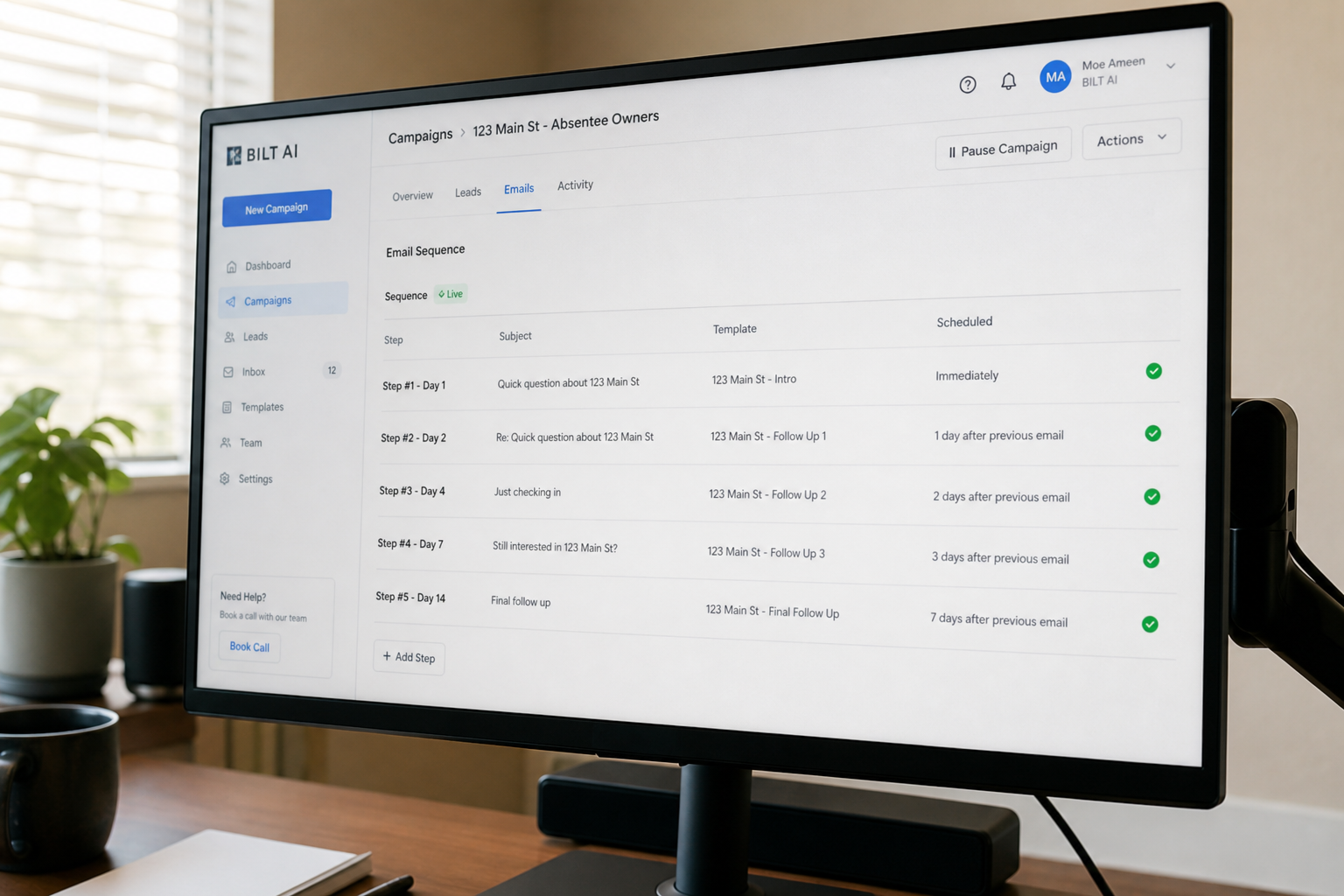
The actual issue is what happens after the lead comes in. Most pipelines leak because follow-up is inconsistent. Messages are sent in bursts. Conversations go cold. Opportunities sit untouched.
Google’s own guidance on email deliverability highlights consistency and sender behavior as core signals for inbox placement (Google Postmaster Tools, source). Sporadic outreach patterns don’t just hurt organization, they actively reduce your ability to reach prospects at all.
This is where most operators underestimate the role of endurance. Staying consistent across weeks and months is uncomfortable. It feels repetitive. Results lag behind effort.
But the operators who push through that phase end up with something different entirely. Conversations start coming back inbound. Sellers reply days or weeks later. Pipelines stabilize.
That only happens if you stay in long enough.
The only follow-up system worth keeping (save this)
Most follow-up advice is vague. “Stay consistent” doesn’t help when your pipeline is scattered across a spreadsheet and your inbox.
Here’s a system operators actually keep because it holds up under volume.
The 6-touch follow-up structure for real estate leads
- Day 1: Initial outreach via email or SMS. Keep it simple and direct.
- Day 3: First follow-up referencing the original message. No new pitch.
- Day 7: Add context. Mention property or situation if known.
- Day 14: Short check-in. Keep tone casual.
- Day 21: Pattern interrupt. Different subject line or angle.
- Day 30: Final nudge. Clear opt-out tone.
This structure works because it matches how sellers actually respond. Not immediately. Not predictably.
If you’re running this manually, it breaks fast. That’s usually where things fall apart.
If you’re running this at scale, you need infrastructure behind it. That’s exactly why BILT AI CRM was built. It handles LOI blasting and structured follow-up without relying on memory or spreadsheets.
The compounding effect most investors never reach
Early-stage outreach feels like pushing a rock uphill. Low replies. Minimal traction. Constant second-guessing.
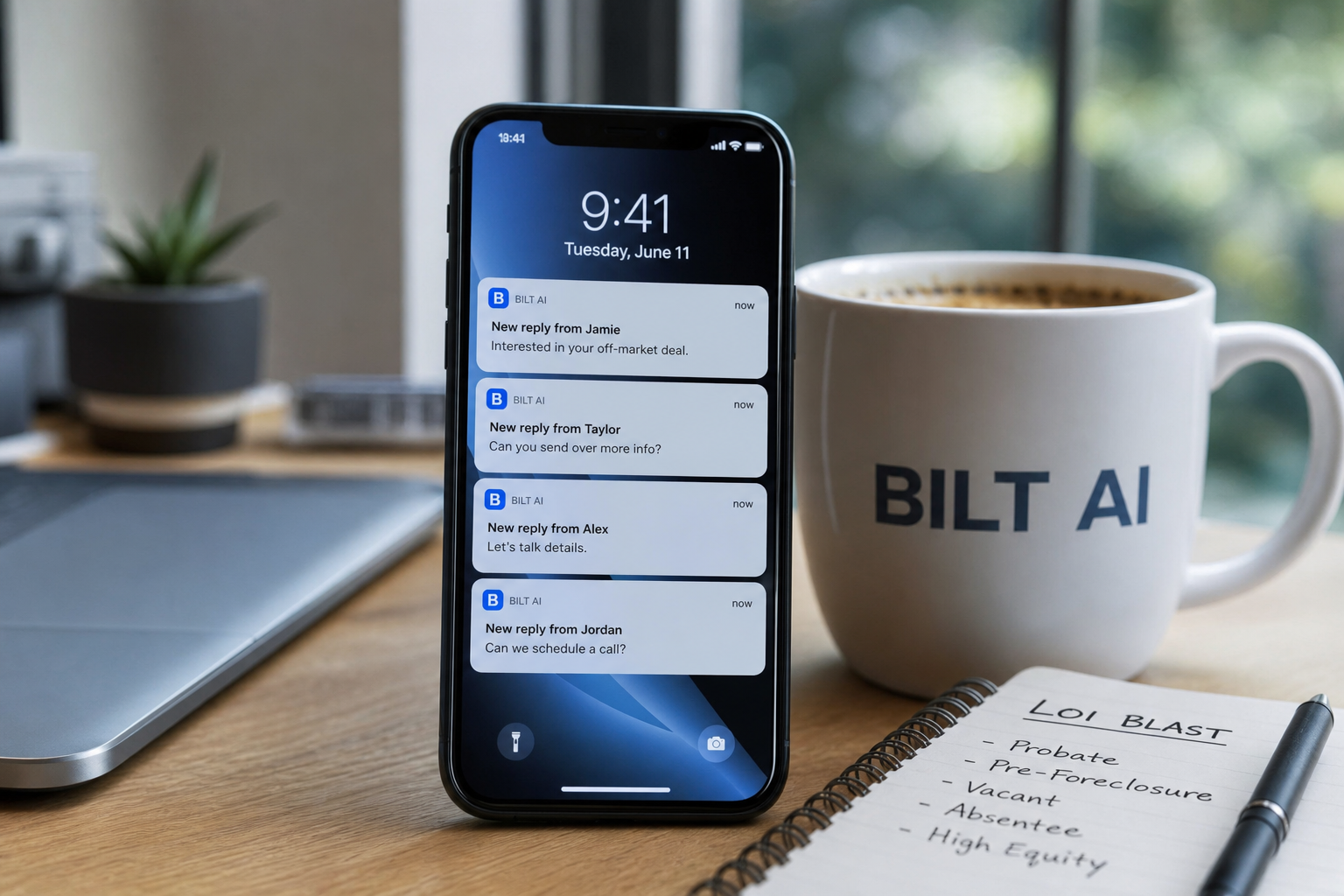
Then something shifts. Conversations start stacking. Sellers reply out of order. Deals come from messages you forgot you sent.
This is the compounding phase, and most investors never reach it because they stop just before it begins.
Pew Research has documented how response behavior in digital communication is often delayed and non-linear (Pew Research, 2023, source). That means your pipeline is always working in the background if you keep feeding it.
When you quit early, you cut off that delayed return. When you stay consistent, you start receiving responses from past effort while current outreach continues.
This is where outbound turns into inbound. Not overnight, but predictably.
What operators actually do differently day to day
There’s nothing glamorous about this part. It’s repetitive. It’s quiet. It’s where most people lose interest.
Operators who win treat outreach like a daily function, not a campaign. They don’t wait for motivation. They rely on systems.
They also don’t overreact to short-term signals. A slow week doesn’t trigger a full strategy change. A few ignored messages don’t mean the channel is broken.
Instead, they focus on maintaining volume, consistency, and follow-through. Over time, that creates stability in deal flow.
That stability is what allows better decisions on underwriting, negotiations, and dispositions. Without it, everything feels reactive.
And reactive operators don’t last long in this business.
What to do in the next 48 hours if your pipeline is dry
- Audit your last 30 days of outreach. Look at how many follow-ups actually went out. Use tools like Google Postmaster to check deliverability signals.
- Implement the 6-touch sequence. Load your existing leads into a structured system so nothing slips. This can be done inside your CRM or automated platform.
- Restart outbound immediately. Don’t wait to “optimize” messaging. Volume plus consistency beats perfect copy.
- Track replies, not sends. Your pipeline health is measured by conversations started, not messages sent.
If your current setup can’t support that level of consistency, that’s the bottleneck to fix first.
If you want to see how this runs in a real operator workflow, you can book a walkthrough of BILT AI CRM and see how outbound turns into inbound when the system holds.
For content and workflow systems behind the scenes, Kompozy shows how operators keep execution consistent without burning out.
Frequently Asked Questions
Why is pain tolerance important in real estate investing?
Pain tolerance matters because most deals come from delayed responses and repeated follow-up. Data from the BLS shows many businesses fail early, which mirrors how investors quit before pipelines compound.
How many follow-ups does it take to close a real estate deal?
Most deals happen after multiple touches, not the first message. The 6-touch structure outlined above reflects how real sellers respond over time, often after initial silence.
What is the best way to follow up with real estate leads?
The best approach is a structured sequence across multiple days using email or SMS. Platforms like Google Postmaster confirm consistent sending behavior improves deliverability and response rates.
Why do most wholesalers fail to get consistent deals?
Most fail because follow-up breaks down, not because leads are unavailable. Pipelines collapse when outreach is inconsistent or stops too early.


© Copyright 2024 by BILT. All rights reserved.


