

Real Estate Lead Generation Accountability
Why real estate lead generation accountability breaks after your first few deals
A wholesaler closes a few deals, builds confidence, then watches pipeline slow down. The reaction usually points outward. "The list is bad." "Sellers aren’t responding." "Email is dead." That pattern shows up in Phoenix, Tampa, Dallas, and just about every active investor market.
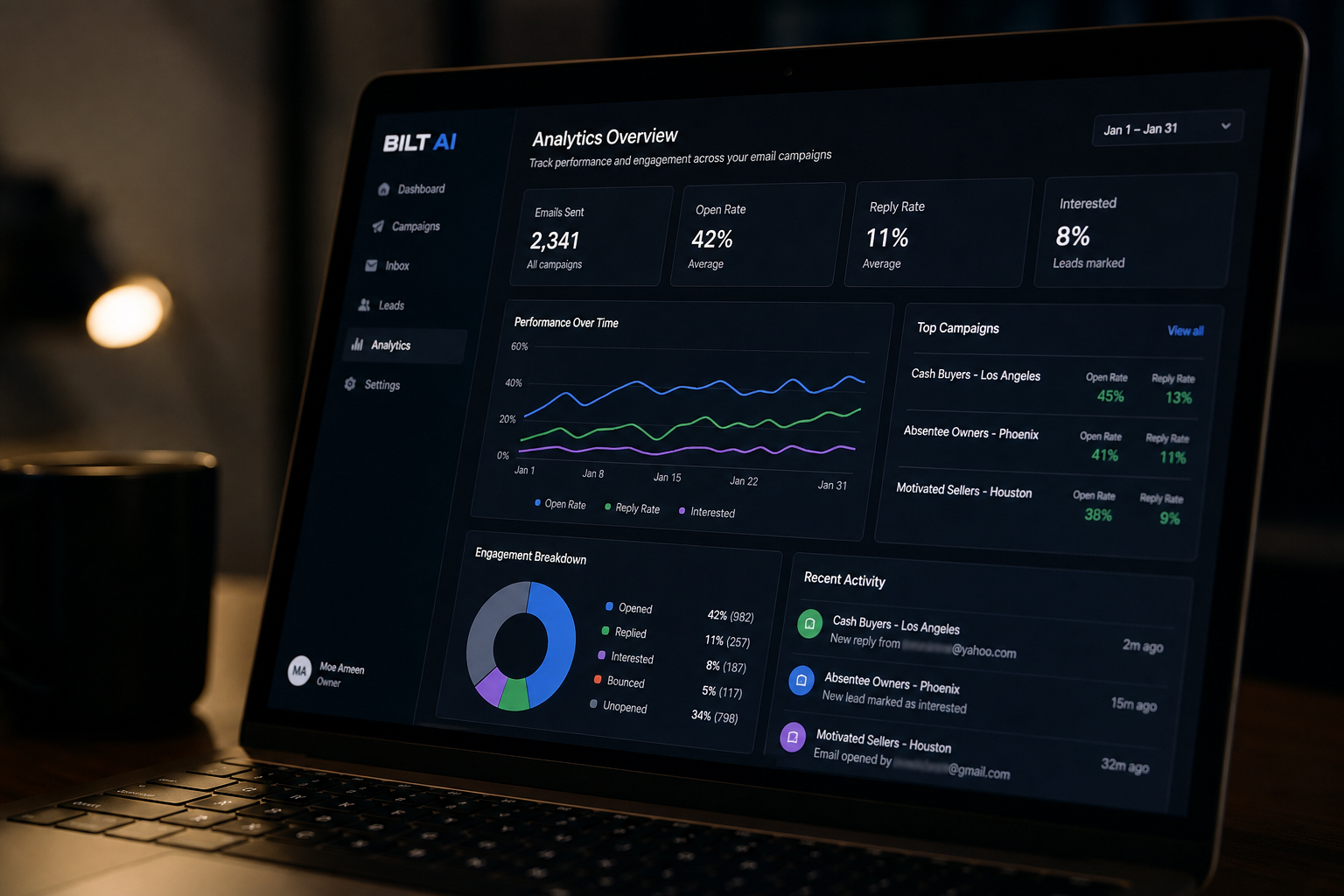
Accountability in real estate lead generation is less about motivation and more about visibility. Once volume increases, the operator loses sight of what is actually happening inside their outbound system. Open rates drop. Replies shift tone. Deliverability changes after the 2024 Google and Yahoo sender updates. And without clear tracking, everything feels random.
Per Google’s own sender requirements update in 2024, bulk email senders must maintain low spam complaint rates and proper authentication or risk inbox placement issues (Google Sender Guidelines). That change alone altered how real estate investors should think about outbound. What used to work at lower volume starts to fail quietly.
Accountability, in this context, means knowing exactly where your pipeline is breaking. Not guessing. Not blaming the market. Knowing.
The contrarian take: your problem is not leads, it is interpretation
Most operators assume they need more leads. In practice, the issue is usually misreading the signals they already have.
Cold email responses, even negative ones, carry intent data. A seller saying "not interested" is still engagement. A soft "maybe later" is a follow-up opportunity. Ignoring those signals creates artificial scarcity.
The Federal Trade Commission has emphasized that consumer communication preferences matter in outreach, especially in marketing channels like email (FTC CAN-SPAM Guide). Investors who treat responses as binary outcomes miss the nuance that actually drives deals.
An operator in Houston running outbound at scale shifted one behavior. Instead of filtering for only positive replies, the team categorized every response into intent buckets. Within a few weeks, follow-ups increased deal conversations without increasing send volume. The insight was simple. The data was already there.
Accountability means owning how you interpret feedback, not just how many messages you send.
What accountability looks like inside a working outbound system
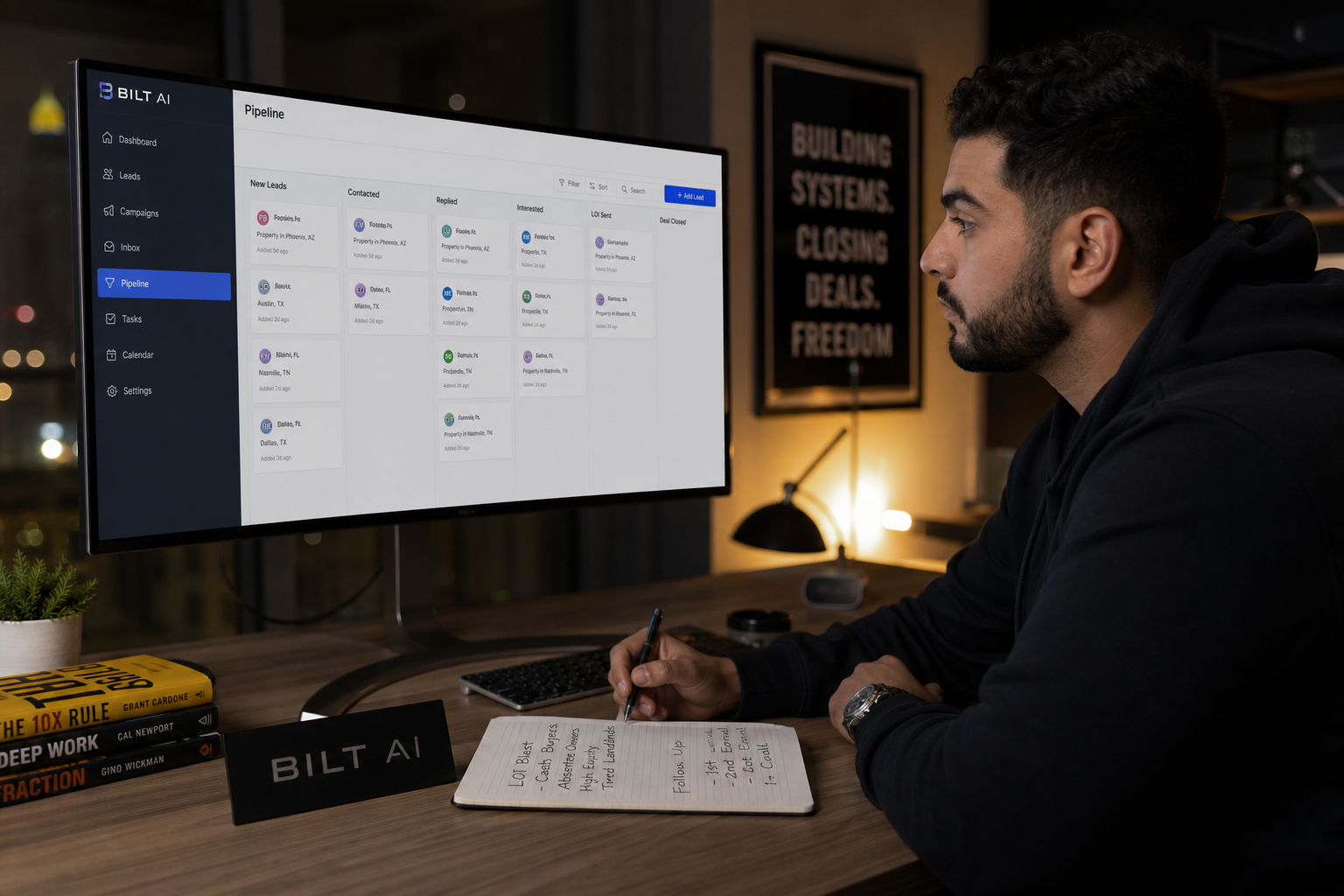
In real estate, accountability ties directly to transaction flow. Contracts, assignments, dispositions. That means your lead generation system should map cleanly to those stages.
A functioning outbound system tracks three layers. Deliverability, engagement, and conversion. Each one ties to a different part of your pipeline.
Deliverability layer
Tools like Gmail Postmaster Tools show domain reputation and spam rates. If inbox placement drops, it does not matter how good your offer is.
Engagement layer
Reply rates, sentiment, and time-to-response. This is where most investors lose visibility. Replies sit in inboxes without structured follow-up.
Conversion layer
How many conversations turn into signed contracts or appointments. This is where revenue actually happens.
An operator example makes this concrete. David, a wholesaler in Atlanta, was sending consistent outbound but closing inconsistently. Over a 30 day window, he tracked each layer. Deliverability was stable. Engagement was high. Conversion was low. The issue turned out to be follow-up timing. He was waiting too long to respond to interested sellers. After tightening response time, signed contracts increased without sending more emails.
Accountability is not about working harder. It is about seeing clearly where the system breaks.
The one artifact to keep: the inbound accountability checklist
This is the exact framework used internally to diagnose outbound issues before touching volume.
- Domain age threshold: minimum 30 days before scaling send volume (aligned with 2024 Google requirements)
- Authentication: SPF, DKIM, DMARC fully configured and verified via Google Postmaster Tools
- Spam complaint rate: keep below 0.3% per Google guidelines
- Reply categorization: every response tagged within 24 hours (positive, neutral, negative)
- Follow-up window: respond to interested leads within same business day
- Offer clarity: each email includes clear buying criteria tied to property condition or timeline
- List source validation: data pulled from verified providers, skip traced and refreshed regularly
- Pipeline tracking: every conversation tied to a deal stage inside a CRM
This checklist removes guesswork. If one item breaks, the system shows it quickly.
Operators who skip this step often jump straight to "send more" or "buy new lists". That move usually compounds the problem instead of fixing it.
Where most wholesalers lose control: follow-up and timing
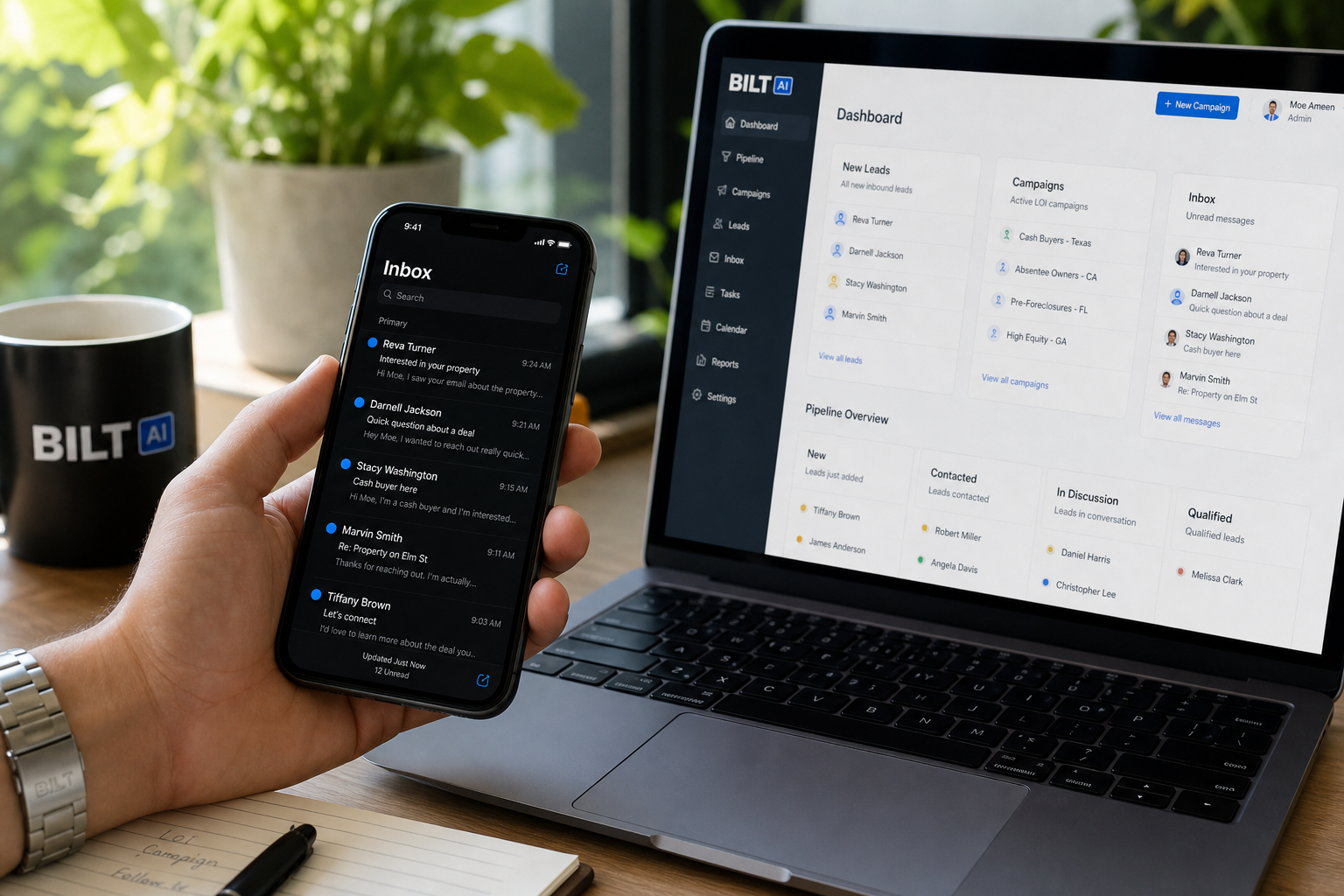
The gap between a reply and a deal is where most revenue disappears. Not because the lead was bad, but because the operator lost momentum.
According to HubSpot’s 2024 sales research, responding quickly to inbound inquiries significantly increases conversion likelihood (HubSpot Sales Statistics 2024). While that data is broader than real estate, the pattern holds inside investor workflows.
In practice, a seller who replies to a cold email is already warm. Waiting even a day can shift that interest elsewhere.
A disposition manager in Charlotte described it plainly. "If we don’t reply same day, we feel it in our contract volume the next week." That operational feedback loop shows up consistently across teams running outbound.
Accountability here means building systems that remove delay. Notifications, CRM triggers, even simple inbox discipline.
This is also where tools matter. If you are running outbound at any real scale, spreadsheets break quickly. Systems like BILT AI CRM were built specifically to track conversations, categorize replies, and move leads toward signed agreements without losing visibility.
How to shift from reactive to controlled inbound lead flow
Real estate lead generation accountability is ultimately about control. Not control over the market, but control over your inputs and responses.
Cold email done correctly turns outbound into inbound. Sellers respond. Conversations start. Pipeline builds.
The shift happens when you stop treating outreach as a volume game and start treating it as a system with feedback loops.
Operators who make this shift stop asking "why is this not working" and start asking "where is this breaking". That change sounds small. It changes everything about how decisions get made.
When the system is clear, scaling becomes predictable. When it is not, every slowdown feels like a mystery.
What to do in the next 48 hours to fix your pipeline
- Audit your domain setup. Check authentication and spam rate using Google Postmaster Tools. Fix any warnings before sending another batch.
- Categorize your last 50 replies. Go through recent email responses and tag intent. Look for missed follow-ups or ignored opportunities.
- Tighten response time. Set a rule to respond to every interested lead the same day. Use a CRM or notification system to enforce it.
- Map your pipeline. Write out each stage from first email to signed contract. Identify where leads stall.
- Install a tracking system. If you are managing this manually, move into a structured platform that tracks conversations and deal stages automatically.
If your bottleneck sits anywhere between outbound and signed contracts, it is usually a visibility problem. That is exactly where a structured system changes outcomes. If you want to see how this looks applied to your current pipeline, you can book a walkthrough here.
For operators building content and inbound alongside outbound, the system behind that workflow lives at Kompozy.
Frequently Asked Questions
What is real estate lead generation accountability?
Real estate lead generation accountability means tracking every stage from outreach to signed contract and identifying exactly where deals are lost. For example, using Gmail Postmaster Tools to monitor deliverability shows whether emails are reaching inboxes or being filtered.
Why are my cold emails not generating seller leads?
Most cold email issues come from deliverability or follow-up gaps, not the list itself. Google’s 2024 sender rules require proper authentication and low spam rates, and failing either reduces inbox placement significantly.
How fast should I respond to seller replies?
Same-day responses perform best because seller intent is highest immediately after replying. Sales data from HubSpot shows faster response times increase conversion rates across inbound channels.
Do I need a CRM for wholesaling leads?
Yes, once volume increases beyond a small number of conversations, a CRM becomes necessary to track replies and deal stages. Tools like BILT AI CRM organize outreach, responses, and contracts in one place.
How do I improve email deliverability for real estate outreach?
Set up SPF, DKIM, and DMARC authentication, warm your domain before scaling, and monitor spam rates in Google Postmaster Tools. Google explicitly requires these steps for bulk senders as of 2024.


© Copyright 2024 by BILT. All rights reserved.


