
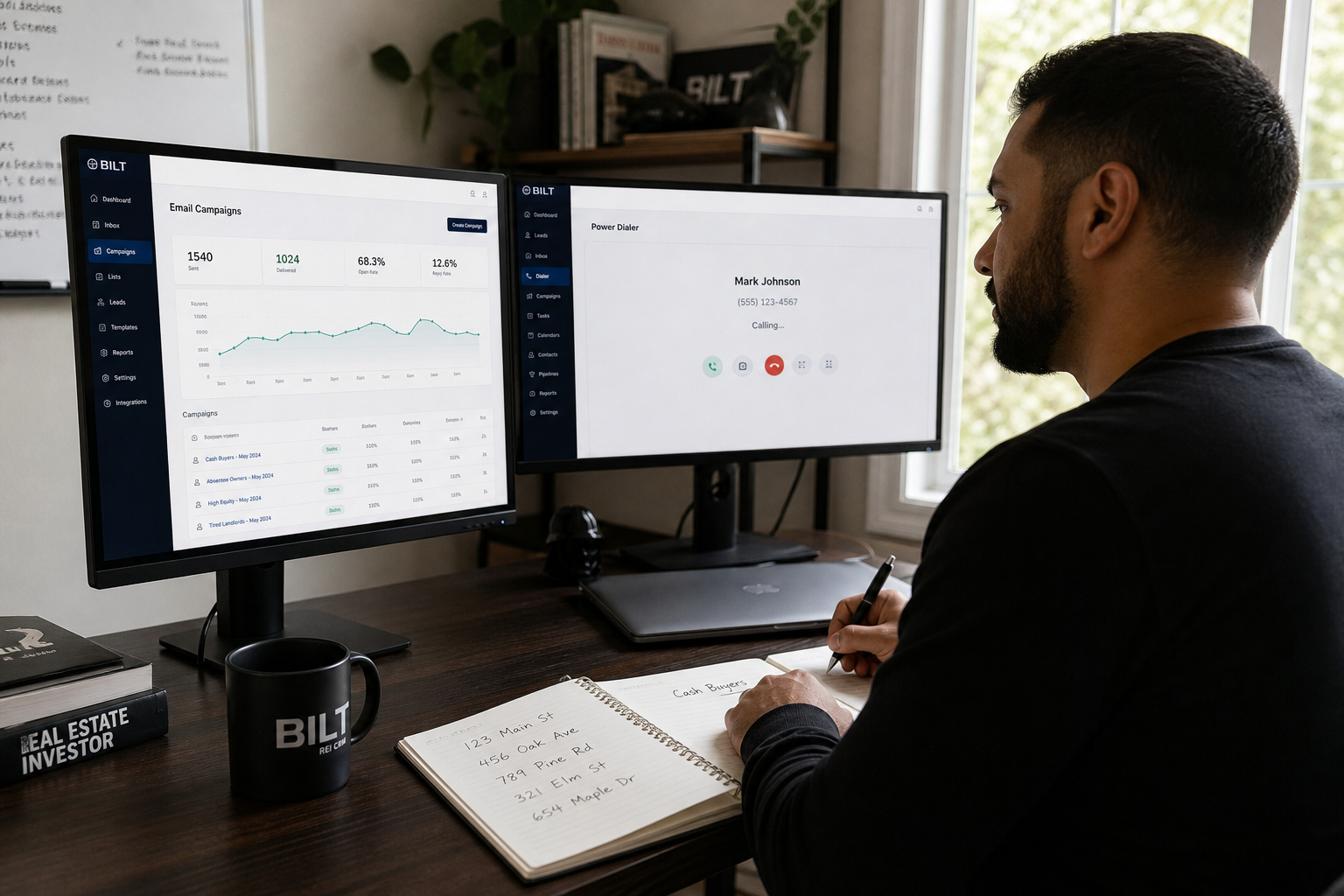
Cold Calling vs Cold Email for REI
Stop picking a lane, that decision is costing you deals
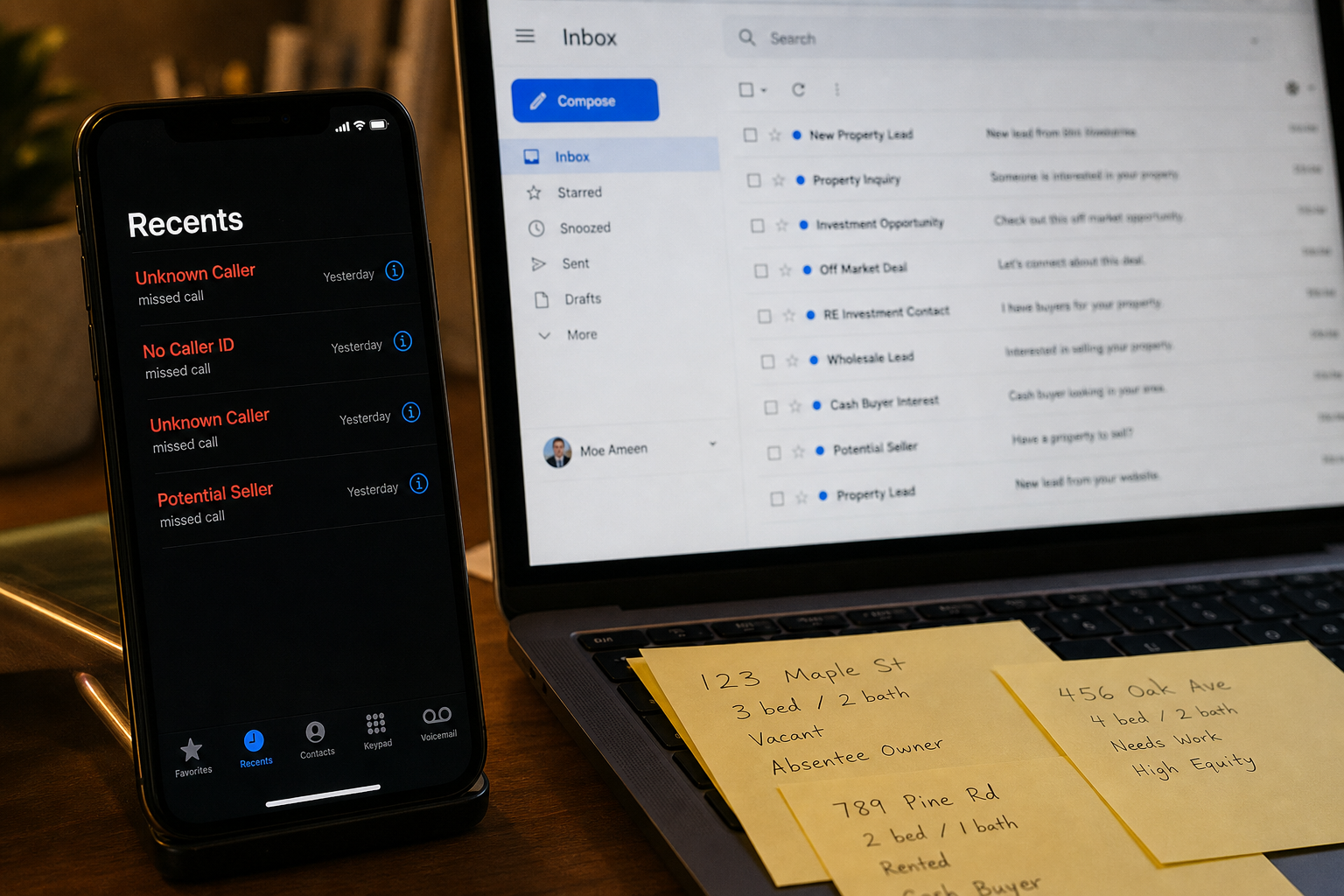
A Dallas wholesaler ran 2,000 cold calls in a single push and shut email off completely. The following week, a smaller segmented email batch pulled a 3–5% reply rate while calls only converted after 5+ touchpoints. The message in his Slack was blunt: “We keep restarting conversations we could’ve warmed.”
The cold calling vs cold email REI debate gets framed like a choice. It is not. Operators lose deals when they commit to one channel and expect it to carry the full pipeline.
Cold calling depends on timing and repetition. Miss the moment and the seller moves on or forgets you. Cold email scales and gives you coverage, but most investors burn domains by blasting generic templates that look identical to everyone else in the market.
The pattern across teams is consistent. Calls close when the prospect already recognizes your name. Email gets replies when the message maps to a real seller scenario, not a template. The winning setup sequences both so each channel fixes the other’s weakness.
Why a missed call window kills more deals than a bad script

Batch dialing works when you can stack reps and hit the same list repeatedly. Most REI teams cannot sustain that pace. Sellers who would have picked up at one moment will ignore unknown numbers later that day.
Look at how carriers and filters treat repeated outreach. The FTC Telemarketing Sales Rule outlines constraints that shape how often and how aggressively you can call. Even if you stay compliant, the practical limit is attention. People stop answering.
Calling still matters. It converts intent faster than any other channel once there is context. That context is the gap most teams ignore. They dial cold numbers without any prior exposure, then blame scripts when pickup rates lag.
In practice, the highest performing calling blocks happen after a prospect has seen your name in their inbox or on a piece of content tied to their situation. The call becomes a continuation, not an interruption. That shift changes how quickly you get from hello to property details.
Teams that rely on calls alone end up chasing the same list with diminishing returns. The fix is not more dialing hours. It is building recognition before the first ring.
Why most cold email in real estate burns domains by week two
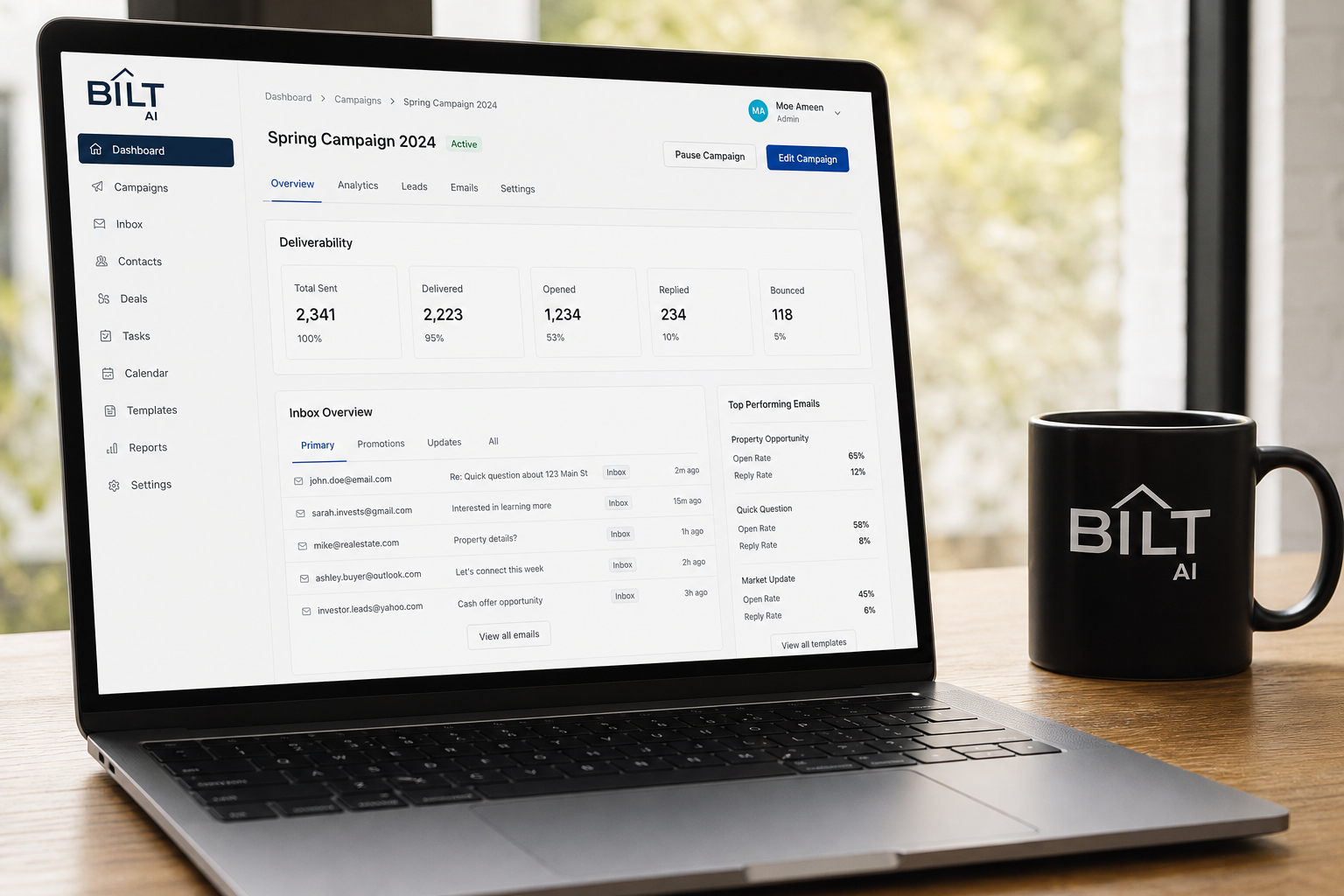
Email fails in REI for a predictable reason. Templates look mass produced, lists are unsegmented, and sending ramps too fast. After the 2024 Yahoo and Google sender requirements, inbox providers expect authentication and consistent behavior from new domains. The official guidance is documented by Google at Google Postmaster Tools and by Yahoo at Yahoo Sender Hub.
Operators ignore this and blast thousands of messages from fresh domains. The result is poor inbox placement and a reputation that is hard to recover. Replies drop, and the team assumes email “does not work for real estate.”
When lists are segmented by equity and timing, replies show up. A seller with clear equity and a recent trigger behaves differently than a long tail owner with no urgency. The copy can be simple when the targeting is precise.
A Houston acquisitions manager described the shift this way: “We stopped writing clever emails and started matching scenarios. Same list size, fewer sends, better replies.” The lift came from alignment, not wordsmithing.
Email is not the problem. Volume without relevance is the problem, and deliverability punishes that fast.
The contrarian play, sequence first then call into engagement
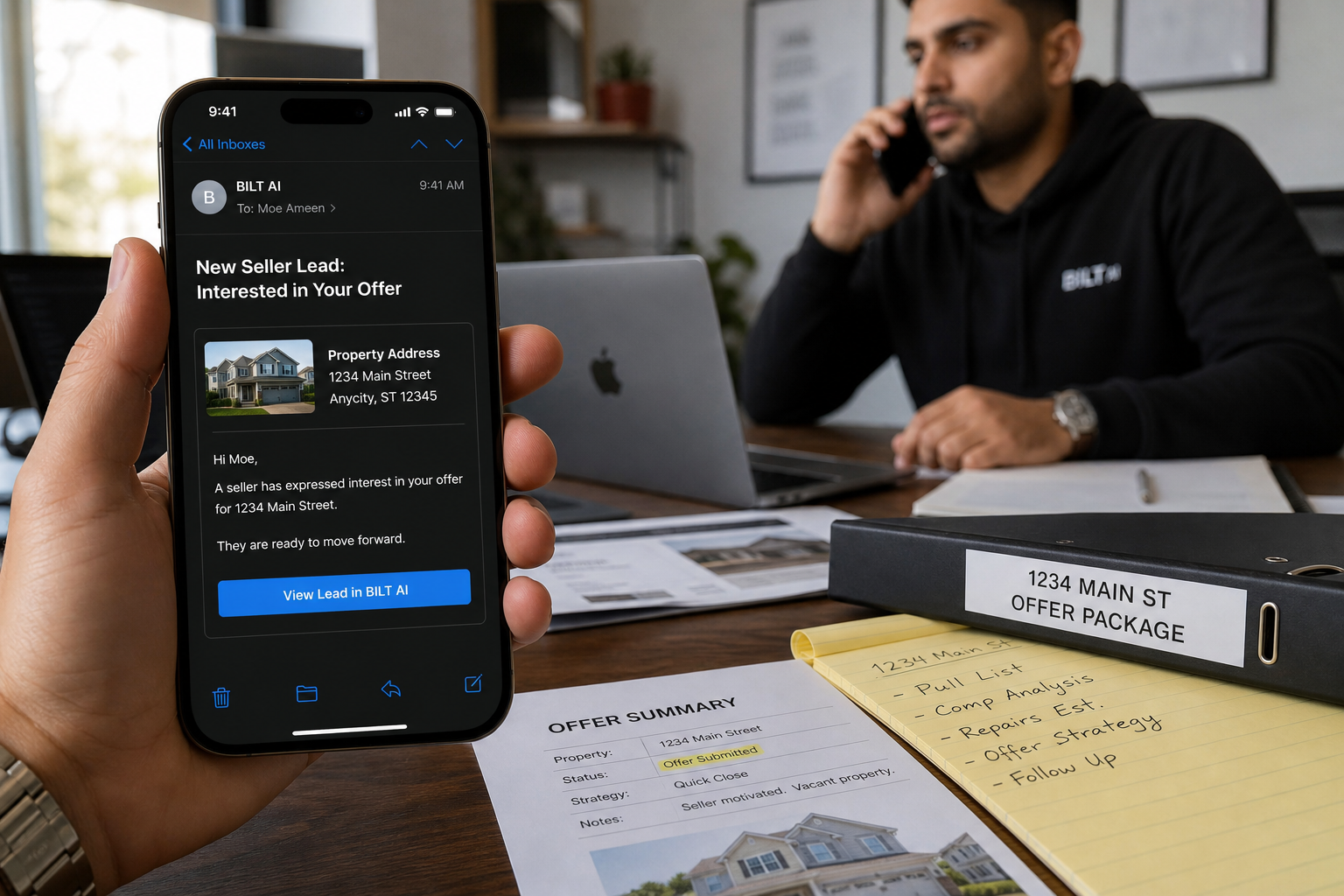
Most advice tells you to pick your primary channel and optimize it. That is backwards for this problem. Sequencing beats specialization.
Start with a targeted email that states a clear offer and signals credibility tied to the seller’s situation. Give it room to land. Watch for opens and replies. Then call only the contacts who show engagement or match high intent filters.
This is where the cold calling vs cold email REI conversation breaks. Calls convert better when the recipient has context. Email produces that context at scale when it is segmented correctly.
A Midwest wholesaling team ran this sequence across a focused list. Email first, then calls on engaged contacts. Their internal note captured the difference: “First call sounded like a follow up, not a cold pitch.” Conversions happened earlier in the conversation because the seller recognized the name and the property reference.
Sequencing also protects your domain. You are not forcing volume to chase results. You are letting targeting and timing do the work, then using calls to close the gap.
A 3 touch sequence you can deploy on your next list
This is the piece operators save because it is simple to run and hard to mess up.
3 touch email sequence tied to one seller scenario
- Email 1, scenario anchor
Subject references the situation, not a generic pitch. Body names the property type and a likely constraint. Keep it short. Include a plain language offer and a credibility line tied to similar deals. - Email 2, proof and clarity
Reply to your first email. Add a quick example of how you structured a similar deal and what the seller cared about. No attachments. One clear next step. - Email 3, timing nudge
A brief check in that acknowledges timing. Offer a simple path to say yes or no. This protects your domain and your time.
Run this against a segmented list built on equity and timing. Do not mix scenarios in one sequence. If you are targeting absentee owners with equity, keep every line aligned to that reality.
Then generate five content variations around that same scenario and distribute them across channels. This is where Kompozy fits. Use a persona brief and a topic pool to produce daily variations that mirror your outreach angle so your name shows up before you ever dial.
Once engagement shows up, call. Reference the email directly. The conversation starts in the middle instead of at the beginning.
Where BILT AI CRM fits when you scale this system
Running this sequence manually works at small volume. It breaks when you are tracking multiple lists, scenarios, and follow ups across a team. That is when you need a system that can evaluate properties, generate offers, and keep the communication consistent.
If you are sending LOIs and following up across dozens of properties, you will outgrow spreadsheets fast. That is why we built BILT AI CRM. It evaluates properties, picks an offer path, sends LOIs, and keeps follow ups moving so engaged prospects do not go cold between touches.
The connection to this article is direct. Sequencing only works if execution is consistent. Miss a follow up or lose track of a reply and the advantage disappears.
Teams that adopt a system here are not chasing more leads. They are converting the attention they already generated.
What to do in the next 48 hours
- Segment one list by scenario
Use your data source and tag for equity and timing. Keep it narrow so your message matches the reality of the seller. - Write the 3 touch sequence
Draft the emails above in your sending tool and authenticate your domain using guidance from Google Postmaster Tools before you send. - Generate five matching content pieces
Use Kompozy to create variations that mirror your outreach angle and publish them across your channels. - Call only engaged contacts
Build a call block for opens and replies. Reference the email and the property scenario in your first sentence.
If you want a walkthrough of how this looks on your actual list and how we handle LOIs and follow ups inside the system, book time here: see how BILT AI CRM runs this for wholesalers.
Frequently Asked Questions
Is cold calling or cold email better for real estate investors?
Neither on its own wins consistently. Sequencing both performs better, email builds recognition and calling converts once there is context, which is why teams see higher outcomes when calls follow engaged emails.
What reply rate should I expect from cold email in REI?
Segmented lists tied to equity and timing can produce 3–5% reply rates, which aligns with the scenario driven approach described above where targeting does the heavy lifting.
Why do my cold emails go to spam so quickly?
Fast volume from new domains and generic templates trigger filters, as outlined by Google Postmaster Tools and Yahoo Sender Hub, which expect authentication and consistent sending patterns.
How many call attempts should I make per lead?
Conversions often require 5+ touchpoints, but those touches work best after the prospect has seen your name through email or content, which changes pickup and response behavior.
Do I need a CRM to run this sequence?
You can start without one, but managing multiple lists and follow ups breaks quickly at scale, which is why teams move into systems like BILT AI CRM to keep execution consistent.


© Copyright 2024 by BILT. All rights reserved.


