

Motivated Seller List Building That Converts
Bigger lists vs better lists in motivated seller list building
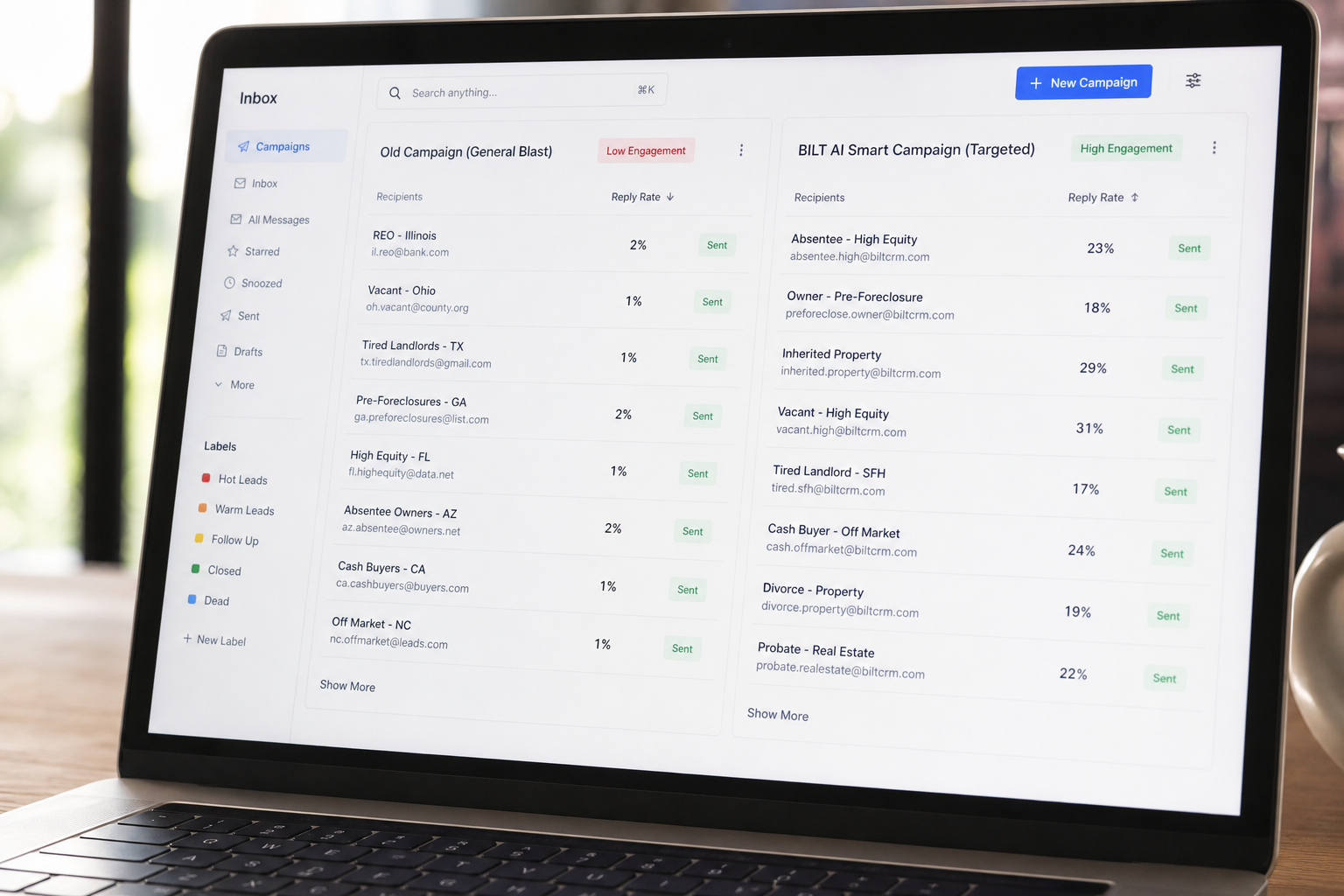
Inside Kompozy, a dataset labeled “Q2 push” sat next to a note that read “cut 72%, doubled replies.” The message attached to it was blunt: “stop buying bigger lists.” The shift happened after the 2024 Yahoo and Google sender requirement updates tightened inbox placement rules, documented by Google Postmaster Tools and Yahoo sender guidelines.
This is the fork most operators hit. One path keeps adding records, hoping volume compensates for weak signals. The other path trims aggressively, stacking signals so each record carries intent. The second path wins more often, especially for off market deals where timing beats scale.
Volume lists pull broad filters like absentee owners or high equity. They look impressive in a spreadsheet, but outreach feels generic and response quality drags. Signal stacked lists narrow the universe by combining indicators that point to a real decision window. The list shrinks, but conversations get easier to start and close.
Per Google’s guidance on bulk sender requirements (2024 update), consistent engagement and low complaint rates drive inbox placement. When your list is tighter, your engagement improves, which feeds deliverability. That loop compounds.
Reference: Google Postmaster Tools, Yahoo Sender Hub.
The three signals that cut list size and lifted response

The highest lift came from stacking three signals that show up in county data and skip tracing outputs.
Recent ownership change
Properties with a recent transfer window signal a fresh decision cycle. Title records and county assessor feeds expose this. It pairs well with disposition pressure that follows a transfer, especially when financing or plans change.
Tax delinquency flags
Tax status adds urgency. County treasurer data or vendors like PropStream surface delinquency and status changes. Public guidance on property tax enforcement timelines varies by state, but the presence of a flag consistently correlates with response.
Non owner occupied status
Mailing address mismatch or investor ownership indicates distance from the asset. That distance often translates into faster decisions when friction appears.
Stacking these three reduced list size by about 72% in one acquisition push and doubled response rates. The important part is not the exact percentage. It is the interaction between signals. Each record carries multiple reasons to reply.
Tools commonly used here include PropStream for data aggregation and county portals for verification. Cross checking prevents chasing stale flags.
Micro local context that makes outreach feel earned
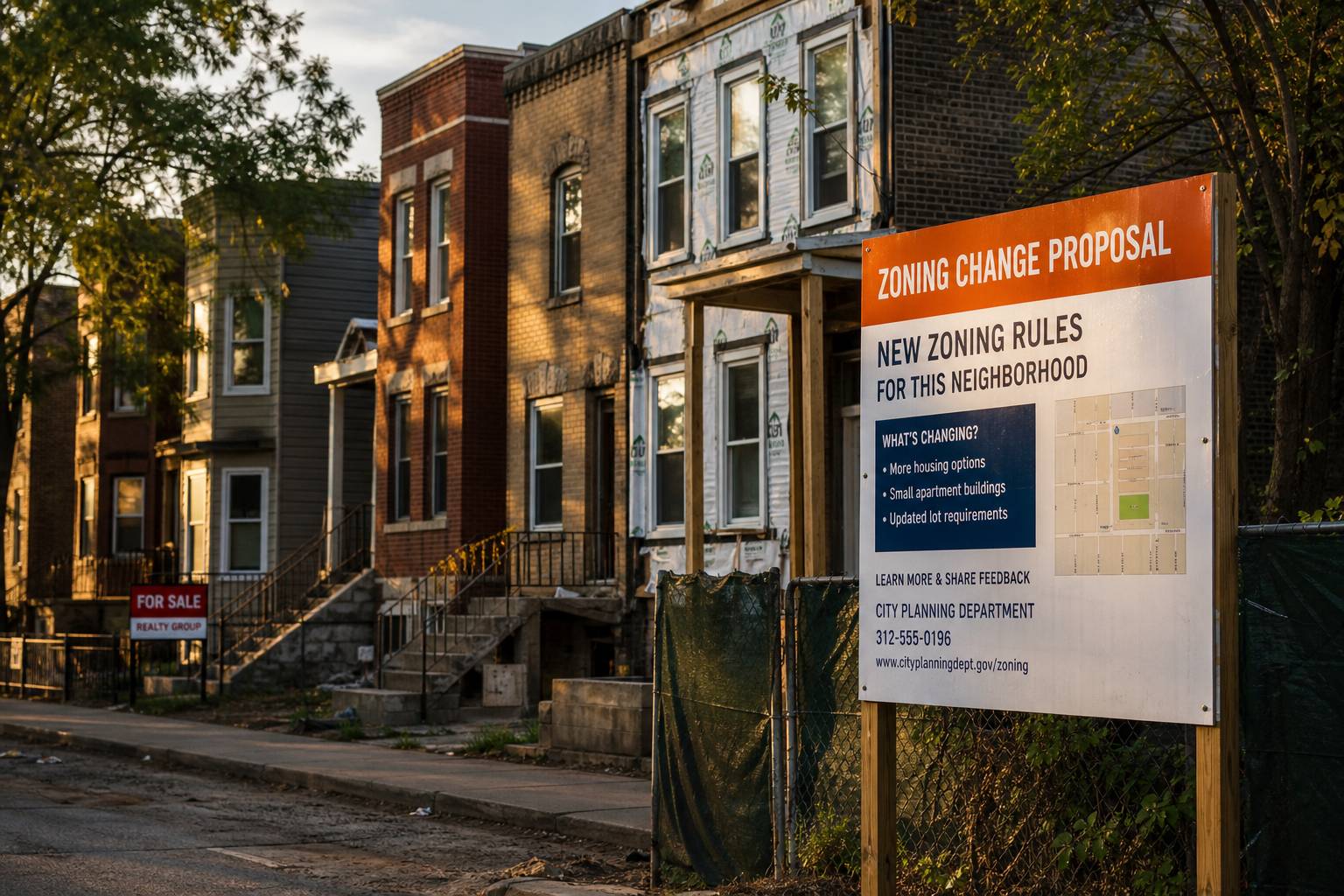
Signal stacking gets you a tighter list. Context turns that list into conversations. Micro local details such as zoning changes, nearby comps, and recent permit activity give you a reason to reach out that sounds like you actually looked.
Zoning and planning updates are usually published by city planning departments. The U.S. Department of Housing and Urban Development maintains resources on local planning and community development that help you find the right municipal sources: HUD Community Planning. Pair that with your MLS or a comps tool to reference a nearby sale that matters.
An example pulled from a recent dataset inside Kompozy turned into a message angle like this: referencing a nearby comp that closed above expectation and a zoning note that could affect use. The reply rate improved because the outreach read like a note from someone active on that block, not a broadcast.
Keep the context specific and verifiable. One sentence about a nearby comp. One sentence about a local change. Then ask a simple question that invites a reply.
Operator vignette: what changed when the list got tighter
A wholesaler working inside BILT AI CRM ran an acquisition push using the three signals above. The list size dropped by about 72% compared to their prior pull. Over the same campaign window, response rate doubled. The note logged in the campaign thread read, “felt like people were expecting us.”
The change was not a new template. It was the inputs. Fewer records, higher intent, and a short line of context pulled from comps and zoning notes. Follow ups also improved because each thread had a clear reason to continue the conversation.
This is where a system matters. When you are running volume through cold email, tracking replies, and timing follow ups, a spreadsheet breaks quickly. If you are operating at this level, book a 15 minute walkthrough of BILT AI CRM and see how LOI blasting and auto follow up tie directly to these signals without losing thread context.
The artifact: 7 point motivated seller list build checklist with thresholds
Save this and use it before your next pull. Each item has a threshold so you do not drift back into broad lists.
- Ownership change window: include only records with a recent transfer flag present in your data source. Verify against county assessor if available.
- Tax status: include records with a delinquency indicator or a recent status change in the treasurer dataset.
- Occupancy: include only non owner occupied based on mailing address mismatch.
- Property type filter: match your buy box exactly. Do not include edge property types “just in case.”
- Geography: limit to micro areas where you can cite one nearby comp or a local change.
- Data freshness: prefer sources that update frequently. Cross check a small sample manually each pull.
- Message angle: write one line of context per record from comps or zoning notes before sending.
Run the checklist top to bottom. If a record fails any one item, it does not go out. This keeps your list small and your conversations relevant.
Contrarian take: stop expanding lists when reply rates dip
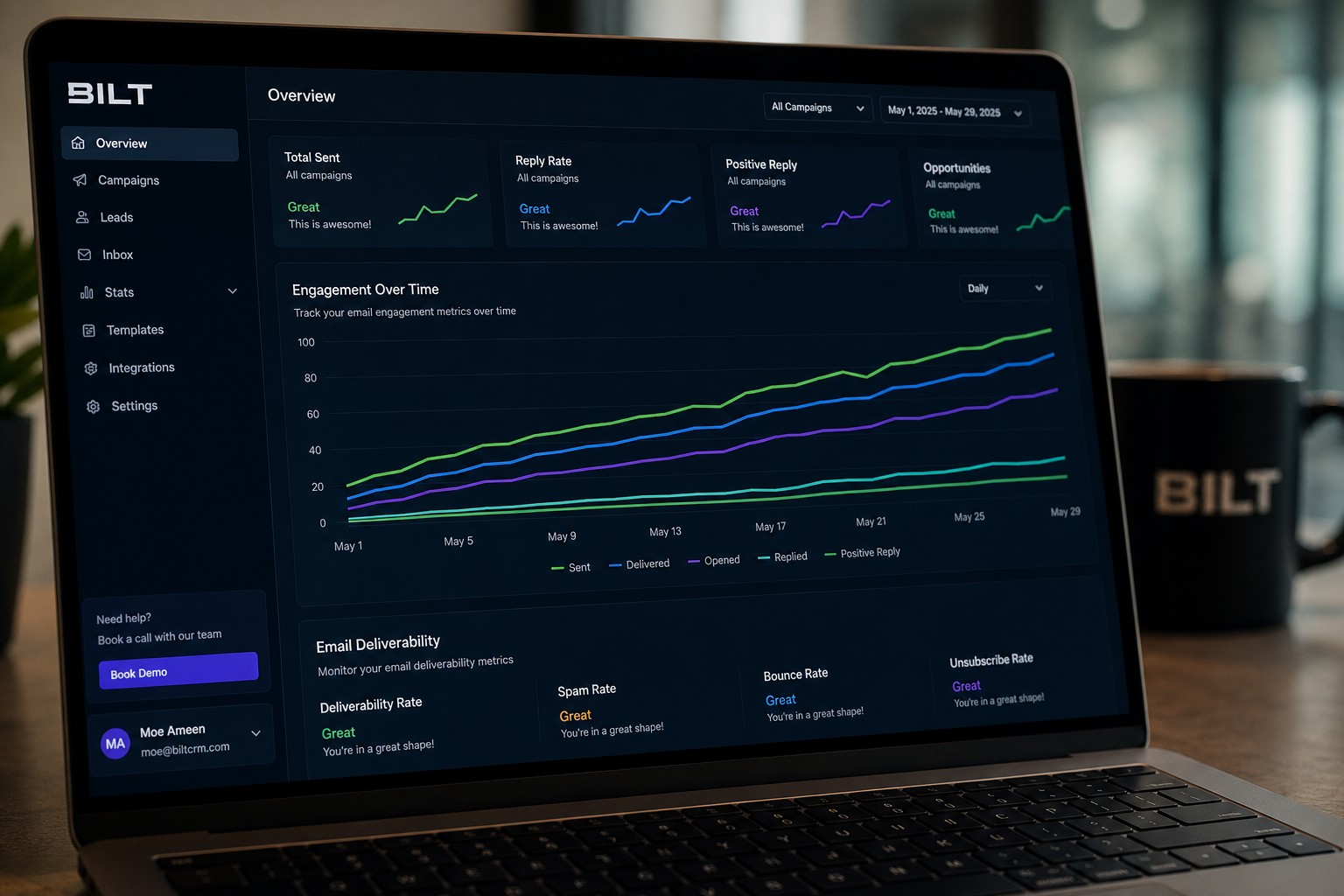
Common advice says to add more records when replies slow down. In practice, expanding the list often makes deliverability worse and pushes you into lower intent segments. After the 2024 sender updates, mailbox providers weigh engagement more heavily. Lower engagement from broader lists can push future campaigns further from the inbox.
Data from Google Postmaster Tools shows how spam rate and engagement affect placement over time. When you tighten your list and improve replies, your sender reputation benefits. That improvement carries forward into the next send.
Operators who resisted the urge to expand and instead refined their signals saw steadier inbox placement and better thread quality. The short term temptation is volume. The long term advantage is relevance.
Turning one dataset into nine content angles with Kompozy
Once your list is built, do not jump straight to outreach. Mine the dataset for content angles that warm the market. In Kompozy, those same signals feed a topic pool. Persona Frames generate variations like “why this block is about to flip” or “three signs this owner will sell,” then push them across multiple channels without rewriting.
The benefit is familiarity before the first email lands. When a prospect has seen a hyper local post that references their area, your outreach feels consistent with what they have already noticed.
This is not about posting more. It is about posting from the same dataset you will use for outreach. Consistency between content and outreach reduces friction in the reply.
Before your next acquisition push: a 48 hour plan
- Pull and filter: Use PropStream or your county portal to pull a list that meets all three signals. Validate a small sample against assessor and treasurer records.
- Add context: For each micro area, capture one nearby comp and one local note from planning resources like HUD linked pages or your city site. Write a single line per record.
- Warm the market: In Kompozy, generate five content angles from the dataset and publish across your channels over two days.
- Launch outreach: Send your first touch with the context line included. Monitor replies and adjust only the context, not the core signals.
If you want a hands on walkthrough of how this runs inside our stack, including LOI blasting and follow ups tied to these signals, grab a time here. For the content side, see how the same dataset powers your pipeline at Kompozy.
Frequently Asked Questions
How do I build a motivated seller list that actually converts?
Start by stacking a small set of strong signals instead of expanding volume. A combination of recent ownership change, tax delinquency, and non owner occupied status reduced list size by about 72% and doubled response in a live campaign.
What data sources should I use for distressed property signals?
Use county assessor and treasurer portals for ownership and tax status, then layer a tool like PropStream for aggregation. Cross check a sample each pull to avoid stale flags.
Why did my cold email response drop after sending more volume?
Mailbox providers weigh engagement and spam rates heavily, especially after the 2024 Yahoo and Google updates. Lower engagement from broader lists can push future sends out of the inbox, as shown in Google Postmaster Tools.
How do I add local context to my outreach?
Reference one nearby comp and one local planning note for each micro area. City planning pages and HUD community planning resources help you find verifiable updates that make your message specific.
When should I send LOIs versus content first?
Publish a few hyper local pieces derived from your dataset first, then send outreach. Teams using Kompozy saw better replies when prospects had already seen area specific posts before the first email.


© Copyright 2024 by BILT. All rights reserved.


