
Skip Tracing Data Sources That Actually Convert
5,000 records, 3 weeks, and reply rates fell off a cliff
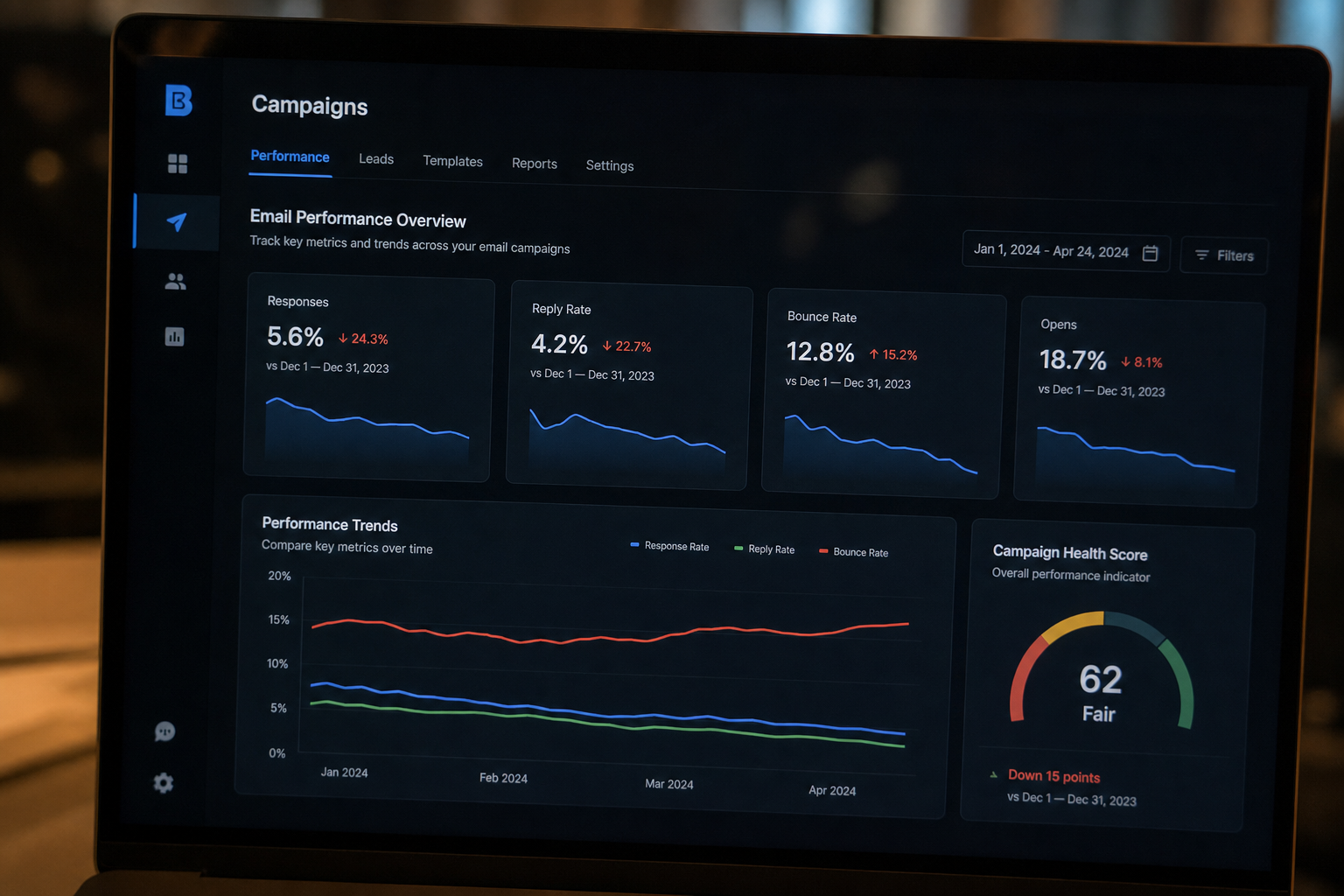
A 5,000 record list went out through a single skip tracing provider, then into a cold email and SMS sequence. For the first stretch, replies came in consistently. By week three, response dropped hard.
The assumption was messaging fatigue or a weak offer. It was neither. The data aged out.
Emails started bouncing. Phone numbers flipped to DNC flags. Ownership records shifted quietly in the background. The campaign kept running against a version of reality that no longer existed.
This is how most operators still treat skip tracing data sources. Pull once, enrich once, blast until it stops working. Then blame the channel.
The real issue sits upstream. Data decays faster than most acquisition pipelines refresh it.
Skip tracing data sources are not static, they decay weekly
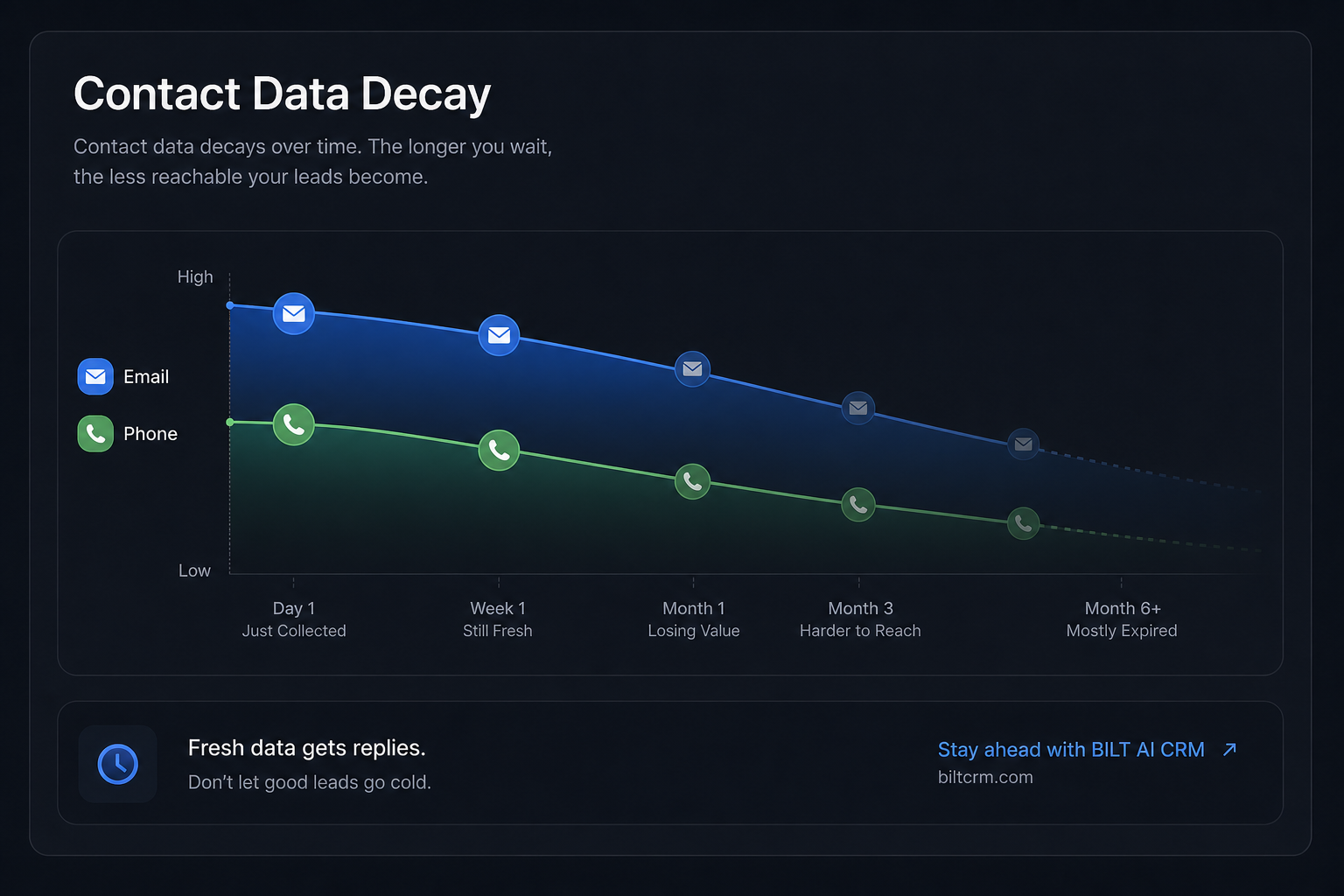
Skip tracing data sources are snapshots. Not systems.
Phone carriers reassign numbers. Email servers tighten filters. County records update ownership after filings. None of this waits for your campaign to finish.
According to the FCC, phone numbers can be reassigned and ported between carriers regularly, which directly impacts call accuracy. On the email side, providers like Google introduced stricter sender requirements in 2024, documented in Google Postmaster guidelines, increasing penalties for poor list hygiene.
That means a list enriched once is already degrading while you are still mid-sequence.
Operators who rely on a single pass through one provider are effectively betting their deal flow on stale inputs.
The better framing is this. Skip tracing data sources are inputs into a living system. If the system does not refresh, performance drops are guaranteed.
The contrarian take: more data sources beat better data sources
Most advice says to find the best skip tracing provider and stick with it. That advice sounds clean. It is also wrong in practice.
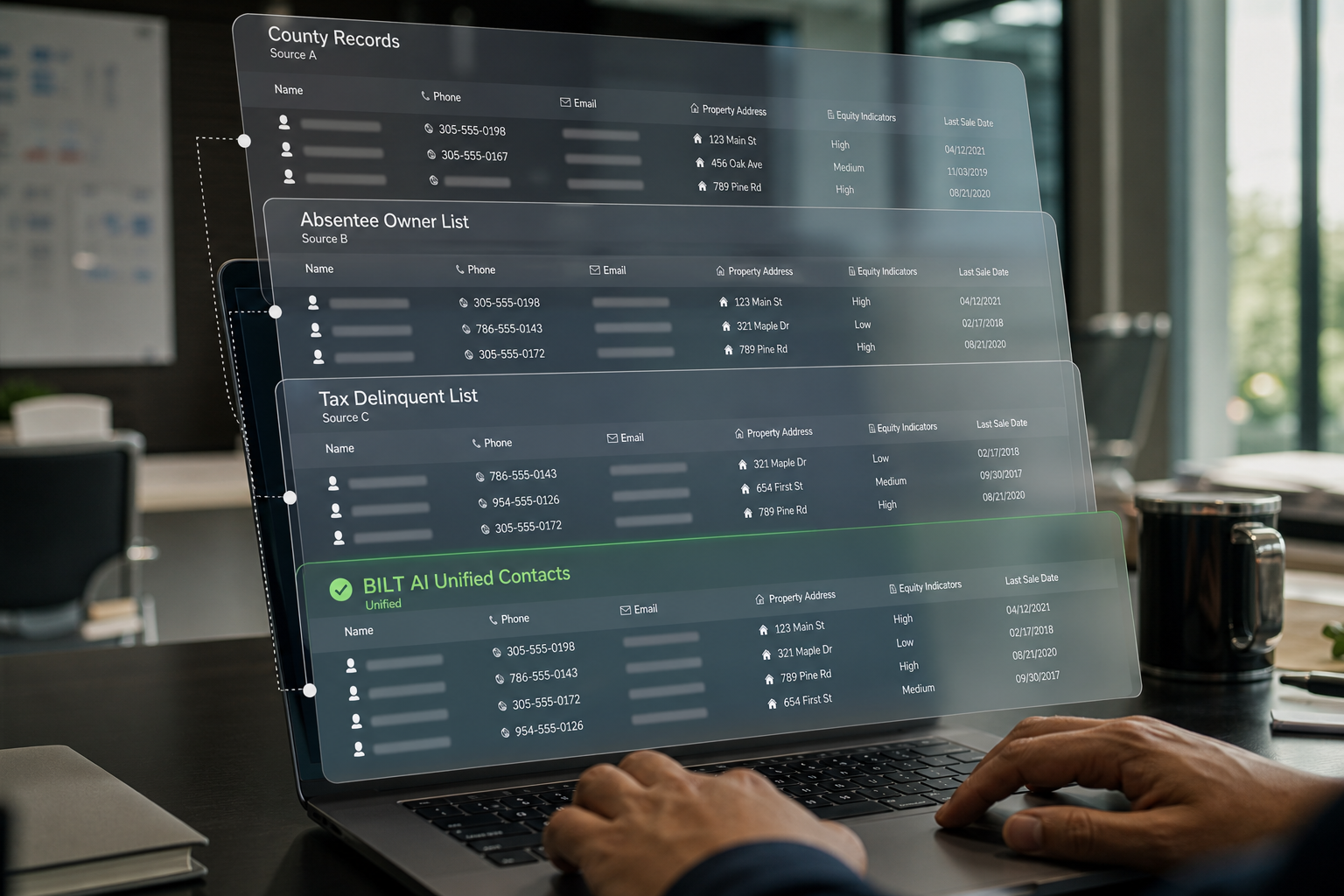
No single provider has complete coverage. Each source has gaps, biases, and lag.
Stacking multiple average providers in a structured loop consistently outperforms relying on one premium source. Not because each source is perfect, but because their gaps overlap differently.
One provider might miss updated emails but catch fresh phone numbers. Another might surface LLC ownership changes faster. When combined, they fill each other's blind spots.
This shows up clearly in outbound performance. A partial refresh across multiple sources often produces stronger engagement than a full refresh from a single source.
Per the 2024 Federal Reserve Small Business Credit Survey, data quality and record accuracy remain a top factor in outreach success and financing outcomes. The same principle applies here. Incomplete data is more damaging than imperfect data that is continuously updated.
Operators who accept that no source is complete build systems that compensate. Operators who chase the perfect provider stall out.
The rolling enrichment loop that fixes stale data
The shift is simple in concept and operationally demanding. Instead of treating skip tracing as a one-time step, it becomes a recurring loop.
Every set interval, records are reprocessed through a secondary source. Missing fields get appended. Existing fields get validated or replaced. Each data point is tagged with its origin and timestamp.
Here is the structure that holds up in real pipelines:
- Primary source runs first pass enrichment across the full list
- Secondary source reprocesses the same records on a fixed cadence
- Confidence scoring compares phone and email matches across sources
- Low-confidence records get deprioritized or re-enriched
- High-confidence records move into outbound sequences
This is where tools matter. Platforms like Skip Genie or Batch Skip Tracing can act as inputs, but they are not systems by themselves.
If you are running volume, spreadsheets break quickly. That is exactly why we built BILT AI CRM. It handles LOI blasting and cold outreach while continuously updating contact records behind the scenes, so you are not sending offers to dead data.
The key is not which tool you pick. It is whether your system revisits the same records repeatedly.
The one artifact worth saving: weekly enrichment checklist with thresholds
This is the operating layer most teams skip. Not because it is complex, but because it requires discipline.
Weekly Skip Tracing Enrichment Checklist
- Re-run entire active list through a secondary provider every 7 days
- Append only new or updated fields, do not overwrite blindly
- Tag every record with source name and enrichment date
- Flag records where phone and email mismatch across sources
- Suppress records with repeated bounce or invalid flags
- Prioritize records updated within the last cycle for outbound
- Archive records with no updates after multiple cycles
Each step forces accountability into the data layer. Without tagging and tracking, you cannot tell which source is actually producing conversions.
This is where Kompozy comes into play. In Kompozy, each data source can be mapped as a Persona Frame, and the autopilot pipeline rotates enrichment sources while logging every delta into a trackable system. That gives you visibility into which source is driving replies, not just which one feels best.
Operators who implement even a basic version of this checklist see immediate stabilization in outreach performance. Not because they changed messaging, but because they stopped talking to dead records.
What changed after treating data as a system instead of a list
The before and after is not subtle.
Before, campaigns slowed down over time. Lists had to be replaced entirely. Acquisition felt like starting over every few weeks.
After, the same list kept producing because it was continuously updated.
A small refresh percentage, even in the 10–15% range, can materially change reply behavior because those updates represent the most current contact paths.
Instead of burning through lists, operators extend their lifespan. Instead of guessing which provider works, they track which source produced the actual conversion signal.
This changes how deals get sourced. You are no longer chasing new data constantly. You are extracting more value from the same records.
Fresh data compounds. Stale data misleads.
Next 48 hours: implement a working enrichment loop
1. Run your current list back through a secondary provider like Batch Skip Tracing or Skip Genie. Do not replace fields blindly, append and compare.
2. Tag every updated record with source and date inside your CRM or tracking system. If your current setup cannot do this, it is already limiting you.
3. Prioritize outreach to records updated in the most recent cycle. Suppress anything flagged as invalid or mismatched across sources.
4. Set a recurring weekly task to repeat the process. If it is not scheduled, it will not happen.
If your current system cannot handle that loop cleanly, that is the bottleneck. You can book a walkthrough of BILT AI CRM and see how we structure this for investors running outbound at scale.
And if you are building content or acquisition systems around this workflow, Kompozy is where we map and automate the entire pipeline.
Frequently Asked Questions
What is the best skip tracing data source for real estate investors?
No single skip tracing data source is consistently best. Operators using multiple providers in a rotation outperform those relying on one source because each dataset has coverage gaps that others fill.
How often should I refresh my skip tracing data?
You should refresh skip tracing data at least every 7 days. Phone and email data can change quickly, and weekly enrichment cycles keep outreach aligned with current records.
Why do skip tracing lists stop working over time?
Skip tracing lists degrade because contact data changes and becomes invalid. Email providers and carriers update records continuously, which causes bounce rates and failed calls to increase over time.
Can I use one skip tracing provider for all my deals?
Using one provider limits your data coverage. Multiple providers increase match rates and improve accuracy because they pull from different underlying datasets.
How do I know which data source is performing best?
You track performance by tagging each record with its source and measuring which contacts lead to replies or deals. Systems like Kompozy allow you to log and compare these signals directly.


© Copyright 2024 by BILT. All rights reserved.


