

Skip Tracing Data Sources That Actually Convert
A Phoenix wholesaler, a dead list, and 60% bad numbers

Marcus in Phoenix walked into Monday with a fresh list and a dialer queue that looked full. By Wednesday afternoon, morale was gone. "Half these numbers are disconnected," his acquisitions manager said, staring at CallTools. The list came from a single skip tracing vendor, run once, no validation pass. It felt efficient. It wasn’t.
That pattern shows up across markets. Before most operators fix their skip tracing data sources, they buy a list, run it through one or two vendors, then hope enough numbers connect to justify the spend. The hidden cost isn’t the list. It’s the hours your team spends dialing landlines, stale mobiles, and numbers that never belonged to the owner.
The uncomfortable part is this: the bottleneck is rarely script quality or dial volume. It’s the data stack. If the inputs are weak, everything downstream looks like a performance issue when it’s actually a sourcing problem.
The contrarian take: more vendors is worse unless you control the stack
Standard advice says add more skip tracing vendors to boost match rates. That sounds right, but it backfires when you treat vendors like lottery tickets. You end up with duplicate numbers, conflicting ownership records, and no way to tell which source deserves trust.
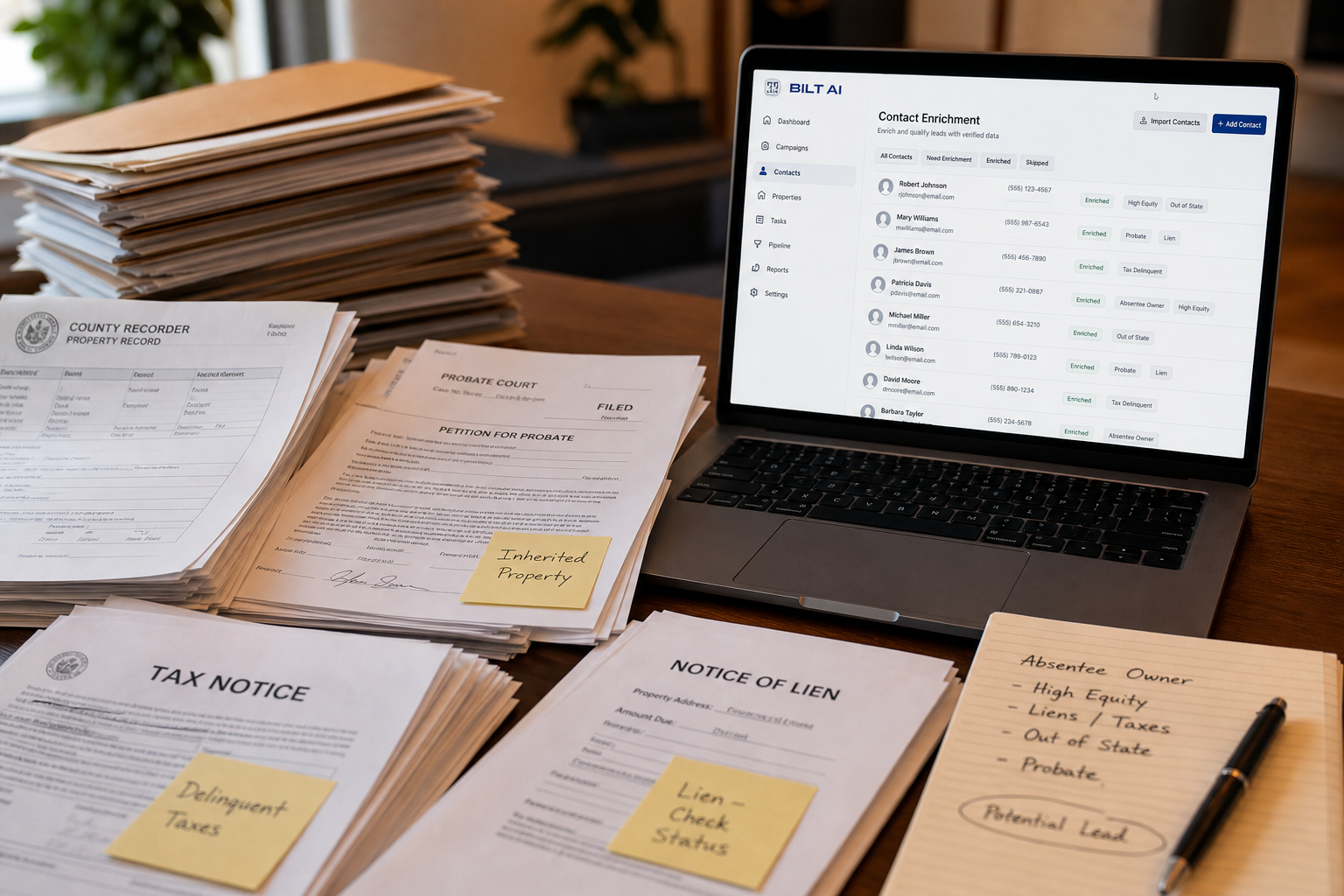
The operators who get consistent contact rates do something less flashy. They treat skip tracing data sources like a layered stack with rules. County records feed the base. Niche datasets like probate and tax delinquent lists add context. A primary tracer handles identity resolution. Then a short disposition pass filters what should actually be dialed.
After the 2024 Yahoo and Google sender requirements tightened enforcement on bulk outreach, the same mindset carried over to voice and SMS. Inputs matter. When teams adopted a stack instead of a gamble, wasted dials dropped meaningfully. In our campaigns, cleaning the stack cut wasted dials by about 30% without changing scripts or headcount.
There’s a compliance angle too. The FTC Telemarketing Sales Rule and the FCC robocall guidance make it clear that consent and do not call status aren’t optional. A stack forces you to respect that before a single call is placed.
What a real stack looks like in practice (county, niche, primary, disposition)
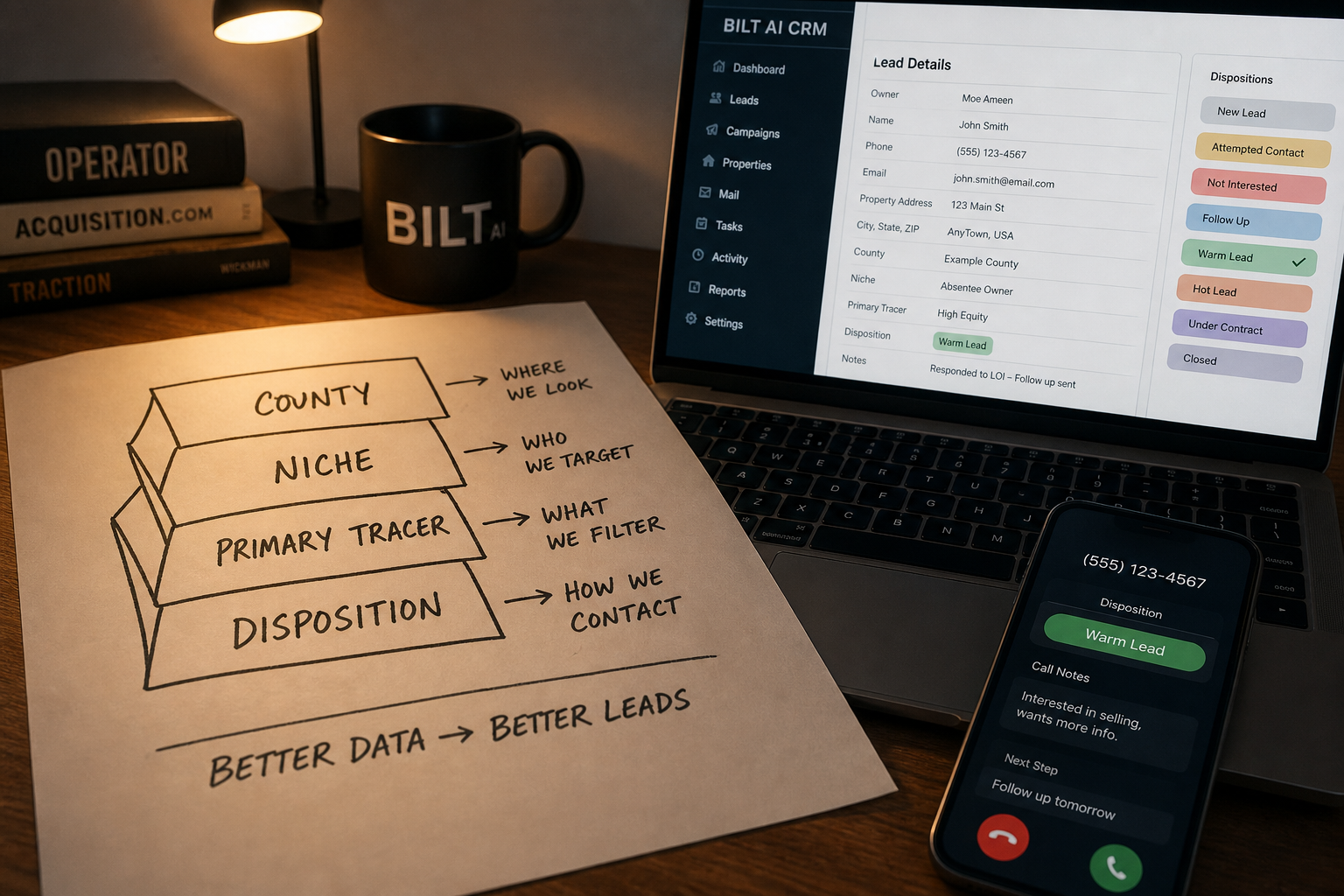
Think in four layers, each with a job. Keep the tools simple and the rules explicit.
Layer 1: County baseline
Start with assessor and recorder data from the county. This anchors ownership, mailing address, and parcel details. Pull directly or via a platform like DataTree or PropStream. The goal here is not phone numbers. It is accurate ownership.
Layer 2: Niche datasets
Add targeted lists that signal motivation. Probate filings, tax delinquent properties, code violations. Vendors vary by market, but the pattern holds. These lists are smaller and higher intent. They deserve priority in your queue.
Layer 3: Primary tracer
Choose one primary skip tracer for identity resolution and phone discovery. Running three tracers on the same record without rules creates noise. Pick one as the source of truth, then augment, not overwrite.
Layer 4: Disposition pass
Before anything hits a dialer, run a quick pass that classifies numbers. Mobile versus landline, last seen activity, and a DNC scrub against the National Do Not Call Registry via the FTC. Tools like Google Postmaster Tools won’t help with phone numbers, but the mindset applies. You monitor reputation and filter aggressively before sending volume.
When each layer has a defined role, your team stops arguing about which vendor is "best" and starts trusting the pipeline.
Operator vignette: Tampa acquisitions team that fixed the dialer, not the script
Chris, acquisitions manager in Tampa, ran a team that averaged steady outreach but inconsistent connects. Over a multi-week stretch, the team reported that many calls rang out or hit wrong parties. "We thought it was our opener," he said. They had been running two tracers and merging results in a spreadsheet.
The change was surgical. County data was re-pulled for ownership accuracy. A probate list was added for priority. One primary tracer was set as the source of truth. A disposition pass flagged landlines and scrubbed DNC before upload into BatchDialer.
Within the next campaign cycle, connect rates improved and wrong-party calls dropped. "Same team, same hours, fewer dead calls," Chris said. The difference came from how records moved through the stack, not from more volume.
This is the part most teams skip. They keep adding leads and expect the dialer to fix data quality. It won’t.
The save-worthy artifact: the 7-point data stack checklist with thresholds
Save this. It’s the checklist we use before any list touches a dialer.
- Ownership verified from county
Record must match assessor or recorder data. If ownership conflicts across sources, pause the record. - Source tagging applied
Every record tagged with origin (county, probate, tax delinquent) and a confidence label (high, medium, low). - Primary tracer designated
One vendor set as source of truth. Secondary sources can append but not overwrite core fields. - Phone classification complete
Numbers labeled mobile or landline. Landlines moved to a lower priority queue. - DNC scrub completed
Checked against the National Do Not Call Registry per FTC guidance. Non-compliant numbers removed. - Last-seen activity checked
Prefer numbers with recent activity signals. Stale numbers deprioritized. - Dialer-ready export
Fields standardized for your dialer (CallTools, BatchDialer). No free-text chaos, consistent columns.
Seven items. No debates. If a record fails one, it doesn’t get dialed. Teams that enforce this stop wasting hours and start getting cleaner conversations.
Turning the stack into a repeatable content and ops system
Once the stack works, document it once and reuse it everywhere. We capture this in a Persona Brief so the team knows exactly how records are sourced, validated, and queued. From there, each step becomes content. A post on county pulls. A clip on probate prioritization. A walkthrough of DNC scrubs.
This is where Kompozy comes in. Instead of rewriting the same idea for every platform, you build a topic pool from the stack and let it fan out into daily content across channels. The same workflow that improves your dialer also feeds your inbound.
If you are running this at any real volume, a spreadsheet will break. That is why we built BILT AI CRM. It handles LOI blasting, cold email, and follow ups on top of a clean data foundation. If your team is juggling exports and manual scrubs, see how we handle it inside the platform at this walkthrough.
What to do in the next 48 hours with your skip tracing data sources
- Audit your last list
Pull a recent export from your dialer and tag each record with its original source. If you cannot trace a record back to county or a named dataset, remove it from your next campaign. - Pick a primary tracer
Choose one vendor to act as source of truth. Document the rule that secondary tools can only append fields. Update your CRM field map accordingly. - Run a disposition pass
Classify numbers, scrub against DNC using FTC guidance, and standardize columns for your dialer. Tools like BatchDialer or CallTools should receive clean, labeled data only. - Create your checklist in your CRM
Turn the 7-point checklist into required fields or statuses so records cannot move forward unless they pass. - Document and publish once
Write a short SOP for each layer, then push it through your content system. If you want that system done for you, review Kompozy at Kompozy and mirror the stack into a content pipeline.
Run this cycle once and you will feel the difference in the next call block. Cleaner inputs, fewer wasted dials, better conversations.
Frequently Asked Questions
What are the best skip tracing data sources for real estate investors?
County assessor and recorder data form the base, then niche datasets like probate and tax delinquent lists add intent, and a primary skip tracer resolves identity. Teams that layer these sources report fewer dead numbers and better connects compared to single-vendor lists.
How do I reduce wrong numbers and disconnected calls?
Run a disposition pass before dialing that classifies mobile versus landline, checks last-seen activity, and scrubs against the FTC Do Not Call Registry. In practice, teams see a noticeable drop in wasted dials after enforcing these filters.
Do I need multiple skip tracing vendors?
No, you need one primary tracer and clear rules. Using several vendors without a source of truth creates duplicates and conflicts. Set one as authoritative and let others append fields only.
Is DNC scrubbing required for cold calling real estate leads?
Yes. The FTC Telemarketing Sales Rule requires honoring the National Do Not Call Registry. Non-compliance risks penalties, and compliant lists also improve call efficiency by removing numbers you should not dial.
How should I tag records in my CRM?
Tag each record with its source (county, probate, tax delinquent) and a confidence label. This lets you prioritize higher-intent data and audit performance by source over time.


© Copyright 2024 by BILT. All rights reserved.


