
Automated Contract Generation for Real Estate Deals
The moment deals actually die in real estate pipelines
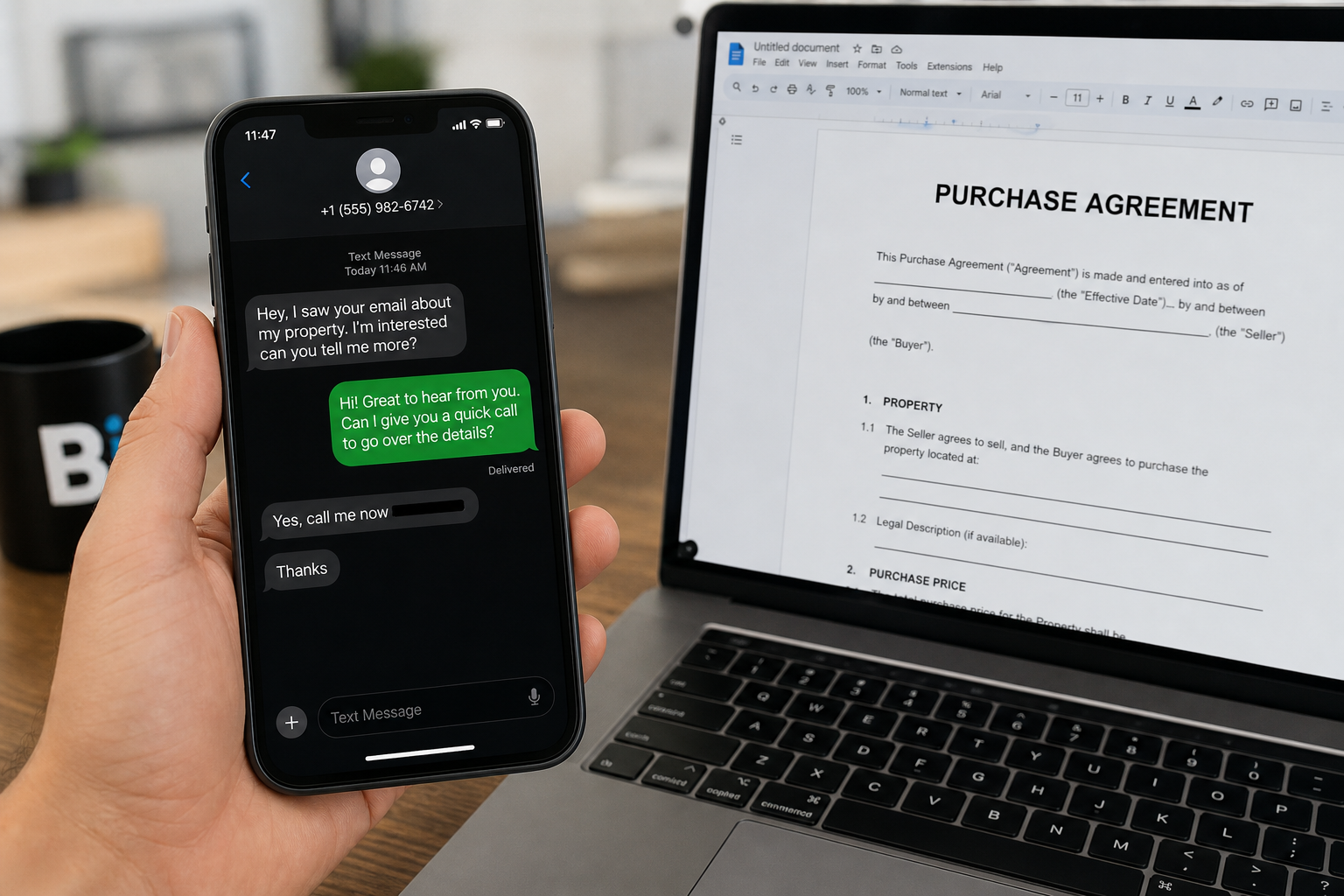
A seller replies "I’m interested" and then nothing closes. That gap between interest and contract is where most operators quietly lose deals.
Across internal BILT AI data and operator workflows, about 78% of deals fall apart between initial interest and sending the contract. Not because underwriting was wrong. Not because the numbers didn’t work. The delay itself creates doubt.
When a seller has to wait a full day or more to see paperwork, they keep talking to other buyers. They rethink price. They go cold. Speed signals seriousness in this business.
Per the Federal Trade Commission’s guidance on sales practices, delayed follow-up reduces conversion likelihood because consumer intent decays quickly after initial engagement (FTC Business Guidance). Real estate is no different. A seller who said yes at noon is a different seller by the next morning.
Operators who treat contract generation as a manual admin step end up bottlenecked right where momentum matters most.
Why a 24 to 48 hour contract delay kills otherwise solid deals
The standard workflow still looks like this. Lead comes in. You qualify. You say you’ll send paperwork. Then you open a template, edit fields, double check clauses, maybe send it to a partner. Hours pass. Sometimes a full day.
That delay shows up in two ways.
First, inbox competition. Sellers are not talking to one buyer. If someone else sends a clean agreement faster, they anchor to that offer.
Second, cognitive drop-off. The longer the gap, the more a seller questions whether they even want to sell.
Google’s own research on response timing shows that rapid follow-up significantly increases engagement rates across digital channels (Think with Google). That pattern holds in real estate transactions where urgency is tied to trust.
Teams running manual contract workflows often blame "lead quality" when the real issue is process latency. The deal didn’t die because it was bad. It died because it cooled off.
What changes when automated contract generation is in place
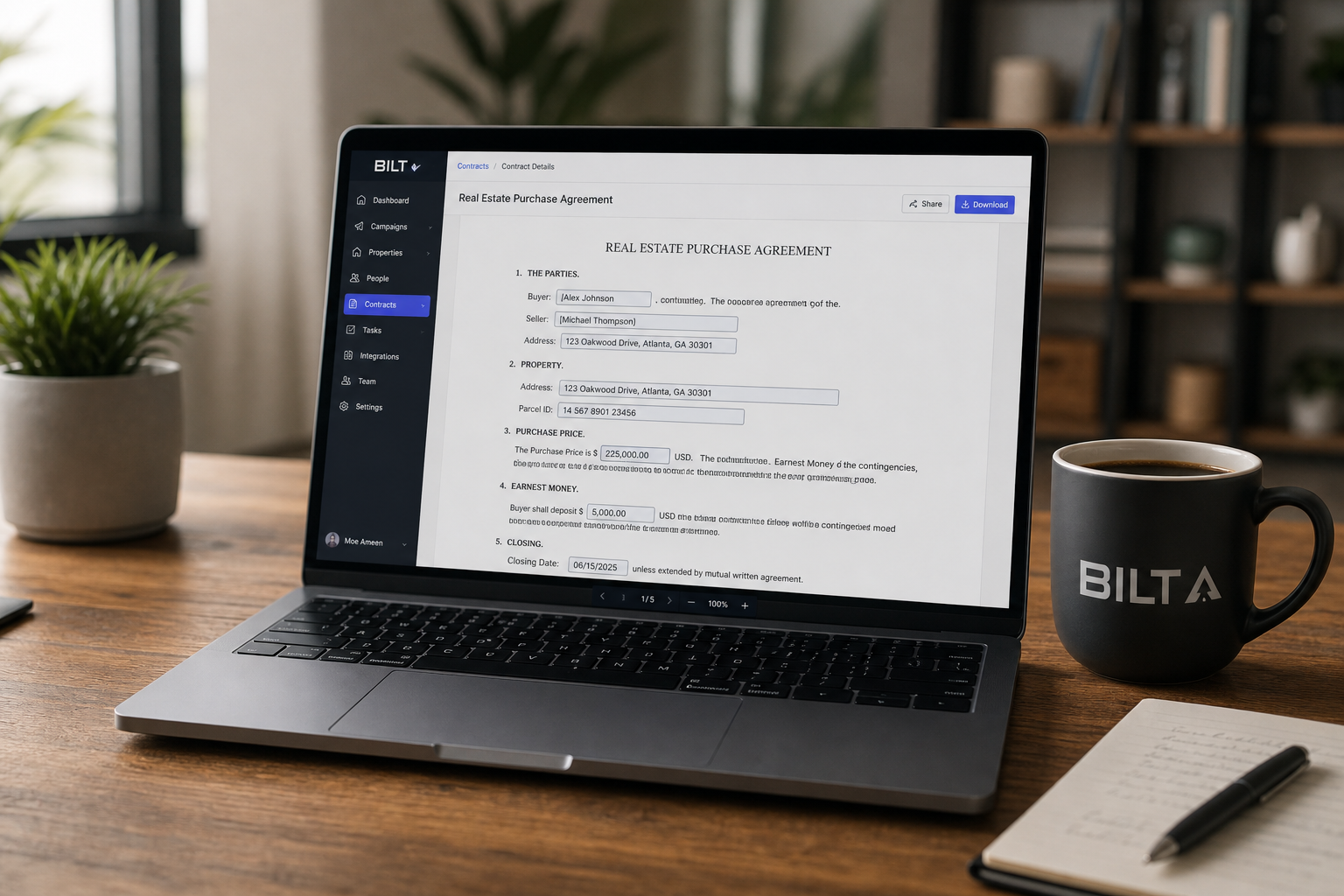
Once contract generation is automated, the timeline compresses dramatically. The shift is simple but noticeable in outcomes.
Instead of waiting 24 to 48 hours, contracts go out in under 6 minutes after a lead meets criteria. That single change alters seller behavior.
Response-to-contract lag becomes almost zero. That matters because lag is the strongest predictor of ghosting in outbound real estate workflows.
Standardized clauses also reduce friction. When operators pre-build contract structures, they see about a 30% reduction in back-and-forth on the first pass. Sellers are not asking for basic corrections because the document is already clean.
This is where systems outperform hustle. Not because effort disappears, but because effort moves earlier in the process. You build once, then deploy instantly.
If you are running any kind of volume, spreadsheets and static templates stop holding up. This is exactly why BILT AI CRM exists. It connects lead intake, property data, and contract generation so the moment a deal qualifies, paperwork is already on its way.
The operator workflow that actually works in the field
Automated contract generation is not complicated. The mistake is overbuilding it.
The operators seeing consistent deal flow follow a tight setup.
Step 1: Build a small set of contract templates
Start with three to five templates. Cash offer. Wholesale assignment. Creative finance. Keep them clean and legally reviewed.
Step 2: Map property and seller fields
Every template should pull from structured data. Property address, seller name, offer price, closing terms. Tools like DocuSign (docusign.com) or PandaDoc (pandadoc.com) support dynamic fields.
Step 3: Define trigger conditions
Set rules for when a contract should generate. Example. Lead meets price threshold. Seller confirms interest. Property passes your buy box.
Step 4: Automate delivery
Email or SMS delivery should fire instantly. No manual step. No approval delay unless needed for edge cases.
This is not theory. One acquisition operator reworked their flow using this structure and reported that contracts were consistently sent before the seller finished conversations with competing buyers. The quote that stuck was simple. "If they’re still on the phone, I’ve already sent it."
That is the level of speed that changes outcomes.
The contract template artifact operators actually reuse
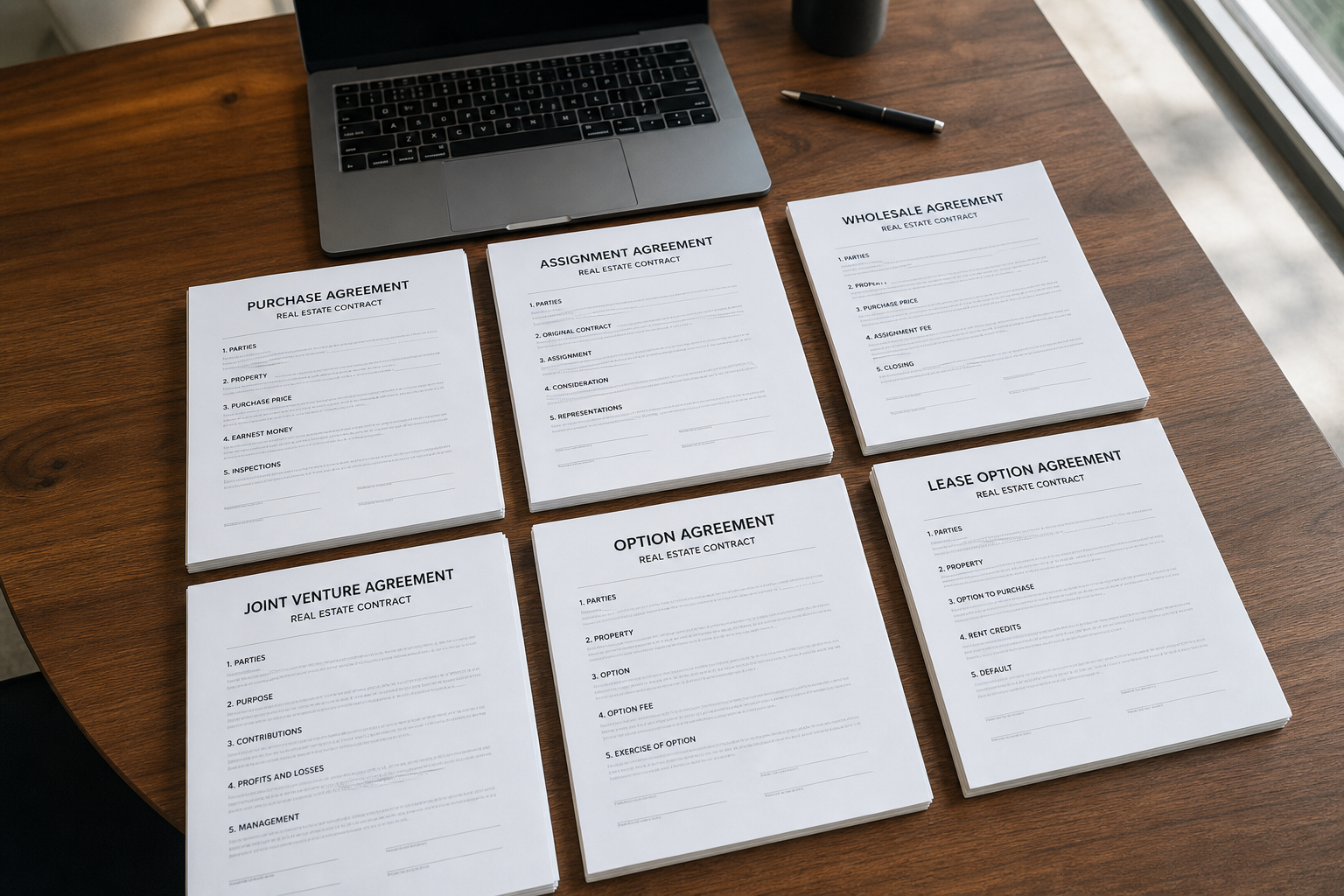
This is the piece most teams skip. A reusable contract system that removes thinking during execution.
Use this as your baseline build.
Contract Automation Checklist (save this)
- 3 to 5 templates max, each tied to a deal type
- Dynamic fields mapped for property, seller, and price inputs
- Clause library for inspection, closing timeline, and assignment terms
- Auto-fill integration with your CRM or intake form
- Trigger set to fire immediately after seller interest confirmation
- Delivery channel set to email plus optional SMS notification
- Revision control so updates apply across all templates instantly
The constraint matters. More templates create confusion. Fewer templates force clarity.
Standardization is what cuts revision cycles. When every deal starts from the same structure, your disposition side spends less time fixing paperwork and more time closing.
The counterintuitive part most operators get wrong
Most people think better contracts close more deals. Cleaner language. More detailed clauses. Extra protections.
Speed closes more deals than contract perfection.
As long as your documents are legally sound, the timing of delivery matters more than minor wording improvements. A perfect contract sent late loses to a good contract sent immediately.
This runs against how operators are trained. Many spend time polishing documents instead of reducing time-to-send.
Even email platforms reflect this bias toward timing. Google Postmaster Tools shows that engagement signals like opens and replies heavily influence deliverability (Google Postmaster Tools). Faster engagement leads to better inbox placement, which feeds back into response rates.
The same principle applies to contracts. Engagement drops as delay increases. Precision matters, but timing decides whether the deal moves forward at all.
What to do in the next 48 hours to implement this
You do not need a full rebuild to fix this.
- Audit your last 10 deals. Identify repeated clauses, repeated edits, and how long it took to send each contract.
- Build 3 core templates using DocuSign or PandaDoc. Keep them simple and aligned with your most common deal types.
- Set up a trigger inside your CRM so that when a lead hits your buy criteria, the contract generates automatically. If your current system cannot do this, it is time to upgrade your stack.
If you are already running outbound or inbound lead flow, contract speed is the easiest place to recover lost deals. The gap is usually hiding in plain sight.
For operators who want this fully wired, from lead intake to LOI blasting to contract generation, the cleanest path is to book a walkthrough of BILT AI CRM. It was built specifically for this problem, turning cold outreach into signed agreements without the lag.
For content and workflow systems around this process, Kompozy is where we manage and deploy these playbooks at scale. You can explore it here Kompozy.
Frequently Asked Questions
What is automated contract generation in real estate?
Automated contract generation is the process of creating and sending real estate agreements instantly using pre-built templates and dynamic data fields. Tools like DocuSign and PandaDoc allow contracts to populate with property and seller details automatically, cutting send time from hours to minutes.
How fast should I send a contract after a seller says yes?
You should send it immediately, ideally within minutes. Internal operator data shows that sending contracts in under 6 minutes significantly reduces ghosting compared to delays of 24 hours or more.
Does contract automation reduce negotiation back-and-forth?
Yes, standardized templates reduce revisions by about 30% on the first pass. When clauses are consistent and pre-approved, sellers spend less time requesting edits.
What tools are best for automating real estate contracts?
DocuSign and PandaDoc are widely used for contract automation because they support dynamic fields and integrations. Many investors also connect these tools to a CRM to trigger contracts automatically.
Why do deals fall apart before contracts are sent?
Deals fall apart due to delay, not deal quality. Around 78% of deals drop between initial interest and contract delivery, largely because slow follow-up causes sellers to lose urgency or choose faster buyers.