
Cold Email Deliverability for Real Estate
5,000 emails a day is the line that gets you flagged
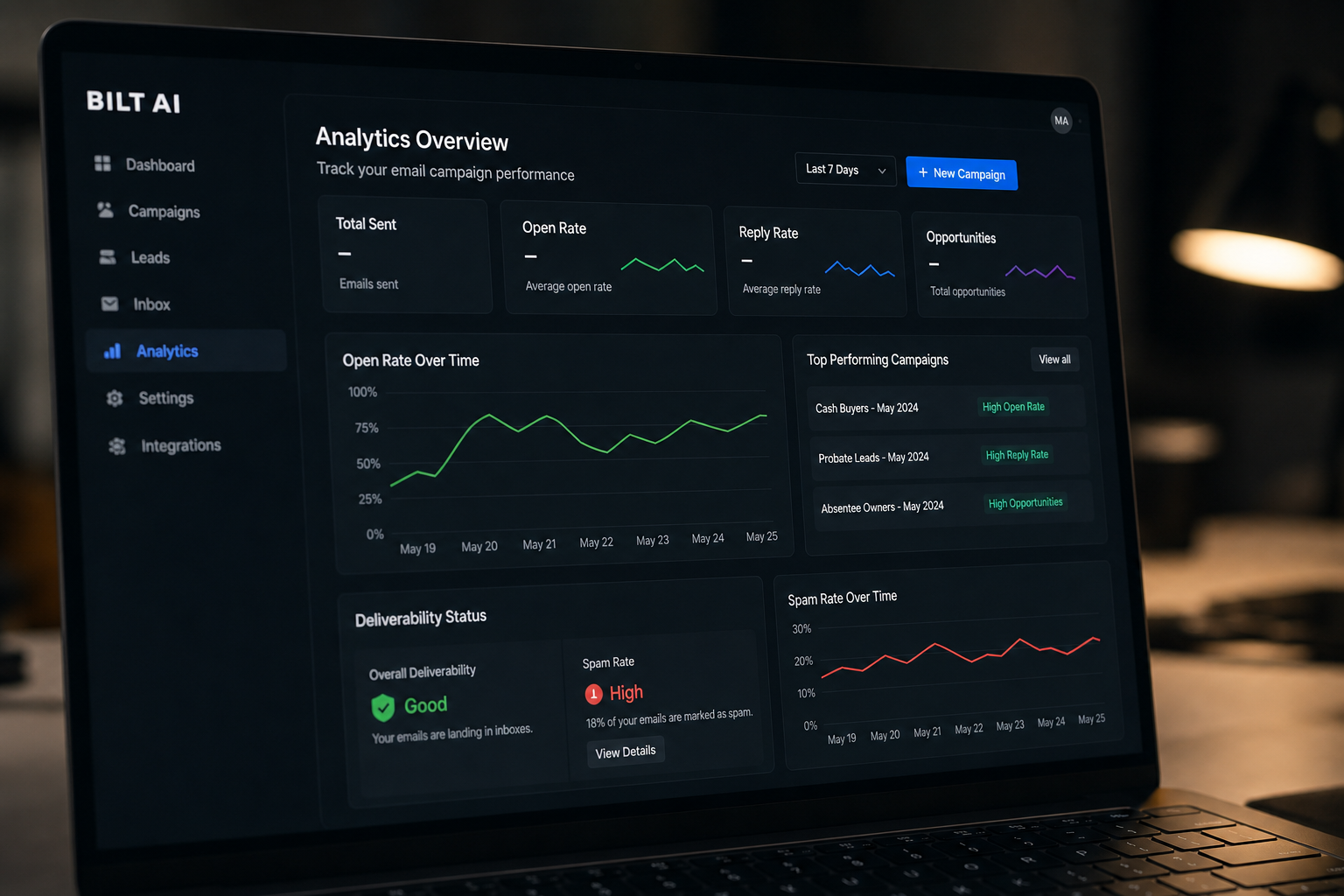
Google and Yahoo drew a hard line in 2024. Send more than 5,000 emails per day from a domain and you are treated as a bulk sender, whether you are a wholesaler in Phoenix or a national brokerage.
The enforcement is documented in Google’s sender guidelines, and it changed how cold outreach behaves overnight. Google Postmaster bulk sender rules now require authentication, low spam complaint rates, and consistent sending patterns.
This matters in real estate because LOI blasting and off-market outreach often cross that threshold quickly. A single list pull of multifamily owners in a metro can push you into bulk territory within a day.
Operators who ignore this see the same pattern. Open rates collapse. Replies disappear. Deals slow down. It looks like a list problem, but it is usually a deliverability problem.
Cold email deliverability for real estate is not about writing better copy first. It is about staying in the inbox long enough for your offer to be seen.
Why a clean list still lands you in spam in real estate outreach
List quality gets blamed for everything, but inbox providers care more about behavior than intent. A clean list of property owners can still perform poorly if your sending pattern looks automated.
The Federal Trade Commission makes it clear that consent and transparency matter in outreach, but deliverability systems focus on signals like complaint rates and authentication. FTC CAN-SPAM guidance explains the legal side, not the inbox placement side.
Real estate operators run into this when they scrape LLC owners, skip trace emails, and push volume immediately. Even if the data is accurate, the sending behavior triggers filters.
An investor running LOIs across multiple submarkets often rotates domains. Without warming those domains or setting SPF, DKIM, and DMARC correctly, Google treats the sender like a risk.
The result shows up as silent failure. Emails send successfully, but land in spam or never reach the primary inbox. That is why two operators can use the same list and see completely different outcomes.
The contrarian take: volume is not the problem, inconsistency is
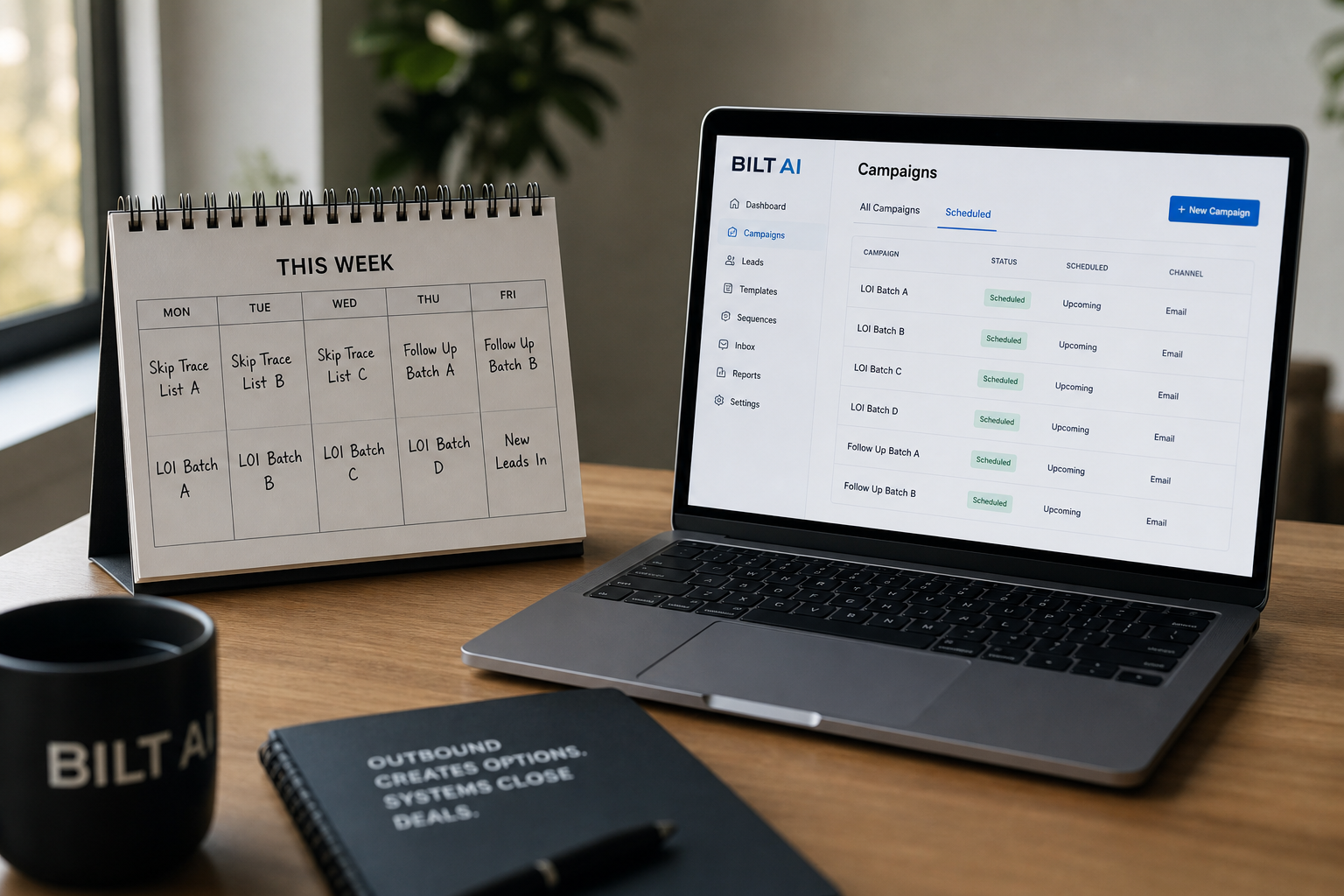
Most advice in the space says to keep volume low. That is incomplete. Volume alone does not kill deliverability. Inconsistent volume does.
Google’s systems are designed to detect patterns. A domain that sends a steady flow daily builds a reputation. A domain that spikes randomly looks like a campaign blast.
Real estate outreach naturally creates spikes. You pull a new county list, load it into your system, and hit send. Then nothing for days. Then another spike.
That pattern is what causes inbox placement issues, not just the number of emails.
Cold email deliverability for real estate improves when sending behavior becomes predictable. The operators who win treat outbound like a daily channel, not a campaign event.
This is where most wholesalers lose ground. They think in deals, not systems. Deliverability rewards systems.
Operator vignette: how one acquisitions manager fixed inbox placement
An acquisitions manager in Dallas was sending at the bulk threshold level using multiple domains. The issue was not volume. It was timing and setup.
He had domains that would sit idle, then push a full batch when a new list was ready. Spam placement followed within days.
After restructuring sending into a consistent daily schedule and setting up authentication through Google Postmaster Tools, inbox placement improved and replies returned to prior levels.
One line he said stuck:
"Nothing changed in my list or my offer. Just how I sent it."
The fix was operational, not creative. Same owners. Same LOIs. Different system.
The deliverability checklist real estate operators actually use
This is the piece most people save. Not theory. The actual thresholds and tools that keep emails landing in inboxes.
Cold Email Deliverability Checklist (Real Estate Edition)
- Authenticate every domain using SPF, DKIM, and DMARC before sending. Verify in Google Postmaster Tools.
- Stay under or intentionally structure above 5,000 emails/day. If above, treat it as a bulk sender setup with compliance requirements.
- Warm domains gradually using tools like Mailreach before sending to property owner lists.
- Send daily, not in bursts. Consistency builds reputation faster than sporadic campaigns.
- Monitor spam complaint rate and keep it low per Google guidelines.
- Rotate inboxes, not domains. Keep domain history stable and scale through inbox distribution.
- Use plain text emails for LOIs and off-market outreach. HTML-heavy emails trigger filters more often.
Every item above ties directly to how inbox providers evaluate senders today. Ignore one and performance drops. Stack all of them and outbound starts compounding.
Where most real estate CRMs break deliverability

Most CRMs were built for pipeline tracking, not outbound infrastructure. They let you send emails, but they do not protect your sender reputation.
That gap shows up fast when you scale LOI blasting. You can have a clean pipeline and still have zero inbox placement.
This is why purpose-built systems exist. When sending volume increases, you need controls around inbox rotation, domain health, and sending cadence.
If you are running consistent outreach at scale, you will outgrow spreadsheets and generic CRMs quickly. That is exactly why BILT AI CRM was built. It handles LOI blasting with deliverability controls designed for real estate operators, not marketers.
The difference is simple. It is built around how deals are sourced, not how emails are logged.
How to turn cold email into inbound deal flow
Deliverability is the gate. Once emails land in inboxes, the next shift is turning outbound into inbound.
Real estate operators who get this right stop chasing every lead. Owners start replying with interest, timelines, and price expectations.
This is where structure matters again. Consistent sending builds familiarity. Owners recognize your name. Replies become warmer over time.
Cold email deliverability for real estate is not just about avoiding spam folders. It is about building a channel that compounds.
Outbound done right becomes inbound. That is the shift most people are actually trying to make, even if they do not say it that way.
What to do in the next 48 hours to fix deliverability
- Audit your domains. Check SPF, DKIM, and DMARC using Google Postmaster Tools. Fix anything missing before sending another batch.
- Stabilize your sending schedule. Move from batch blasts to daily sends using your current list. Even distribution matters more than volume spikes.
- Warm any new domains before attaching them to outreach. Use Mailreach or a similar tool and do not skip this step.
- Review your CRM setup. If your current system cannot manage inbox rotation or sending consistency, evaluate a system built for outbound like BILT AI CRM.
If you want to structure this the right way for your market and list, book a walkthrough here: https://www.biltcrm.com/book-demo.
For operators building content and outbound systems together, Kompozy is where that workflow lives: https://kompozy.io.
Frequently Asked Questions
What is cold email deliverability in real estate?
Cold email deliverability in real estate is the ability for your outreach emails to land in the primary inbox instead of spam. Google’s 2024 bulk sender rules show that domains sending over 5,000 emails per day must meet stricter standards, which directly impacts wholesalers and investors running large lists.
Why do my real estate cold emails go to spam?
Your emails go to spam because of inconsistent sending patterns, missing authentication, or high complaint rates. Google Postmaster data often shows drops in reputation when domains send in bursts instead of steady daily volume.
How many emails can I send per day safely?
You can send under 5,000 emails per day without being classified as a bulk sender, according to Google’s guidelines. Once you cross that threshold, you must follow bulk sender requirements or risk deliverability issues.
Do I need multiple domains for LOI blasting?
You need multiple inboxes more than multiple domains. Operators using stable domains with distributed inbox sending see better results than those constantly rotating new domains without history.
What tool helps with email deliverability setup?
Google Postmaster Tools helps monitor domain reputation, and Mailreach is commonly used for warming inboxes. Both are standard in setups where real estate operators are sending at scale.