
Cold Email Mistakes Real Estate Operators Repeat
By 2027, most real estate cold email will fail before it gets opened
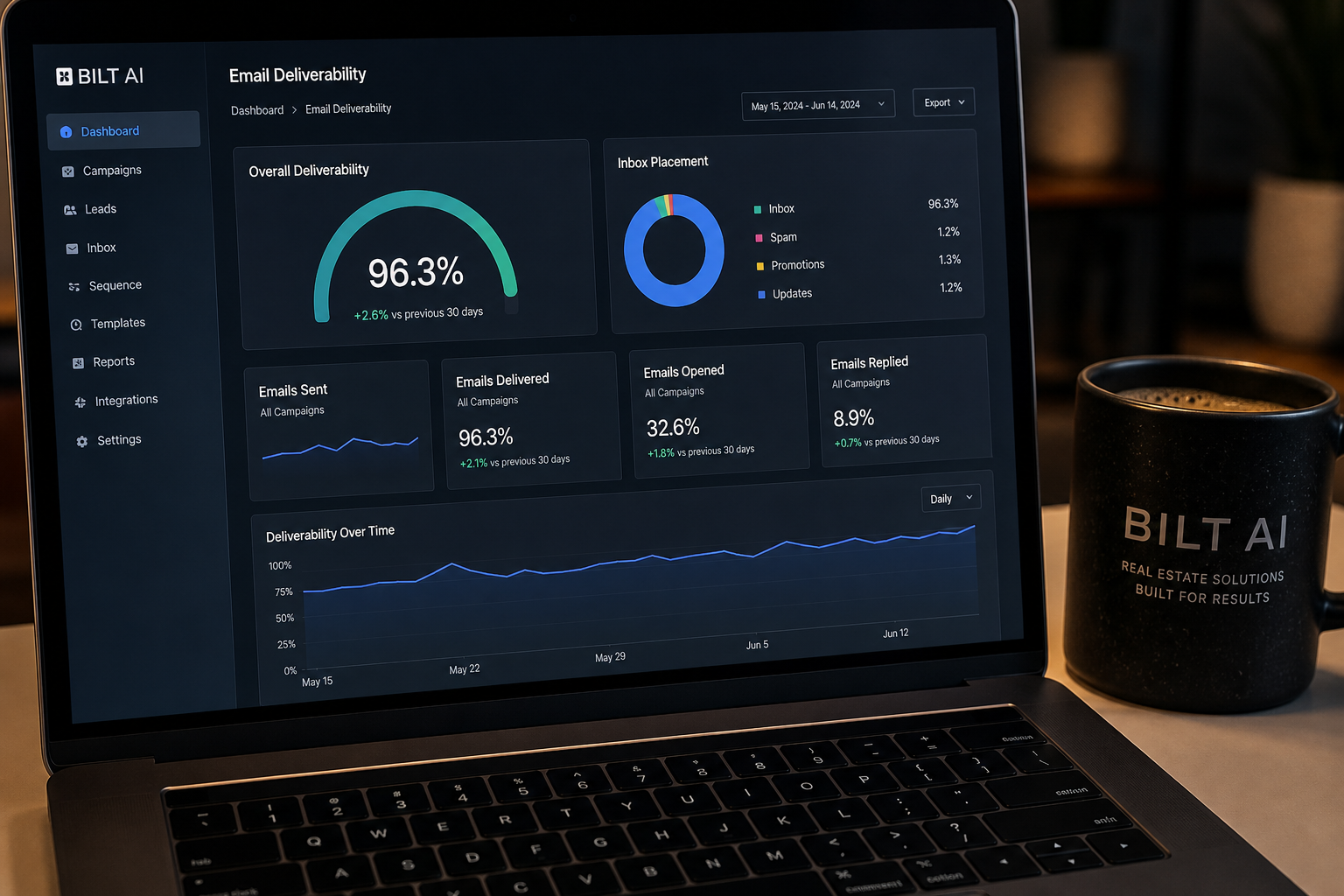
A Houston wholesaler sat staring at a Gmail Postmaster dashboard that showed near-zero inbox placement. Same list, same template, same city. Replies had dried up. The only thing that changed was how aggressively the system was pushing volume.
That pattern is getting more common, especially after the 2024 sender requirement updates from Google and Yahoo. Bulk senders now need proper authentication and consistent sending behavior or they get filtered hard. Google documented this directly in their sender guidelines, and most operators still treat cold email like a numbers game instead of an infrastructure problem.
Google sender guidelines and Google Postmaster Tools make it clear what the filters are watching. Authentication, complaint rates, and sending patterns all matter.
Real estate operators feel this differently than most industries. You are not sending newsletters. You are sending acquisition messages tied to real properties, contracts, and timelines. When those emails stop landing, deals slow down.
The mistake is thinking more volume fixes it. In most cases, more volume is what caused the drop in the first place.
Why blasting LOIs too early destroys domain reputation
Operators love speed. New domain, new inboxes, fresh list, hit send. That works for about a week, sometimes less.
Email providers interpret behavior, not intent. A brand new domain sending acquisition emails to hundreds of property owners immediately looks identical to spam patterns. There is no context for your legitimacy.
This is where most real estate cold email mistakes begin. The instinct is to scale before warming up. But inbox providers like Gmail and Outlook expect gradual sending increases and engagement signals first.
Per Google’s own documentation, sudden spikes in volume are a red flag. That applies whether you are selling software or sending LOIs to off-market property owners.
A better approach is controlled ramping. Start with low daily sends, mix in real replies, and build a sending history that looks human. It is slower upfront, but it keeps your domain usable long term.
Operators who ignore this end up cycling domains constantly, which kills continuity and burns time that should be spent locking up contracts.
The contrarian play: less volume, higher intent, better deal flow
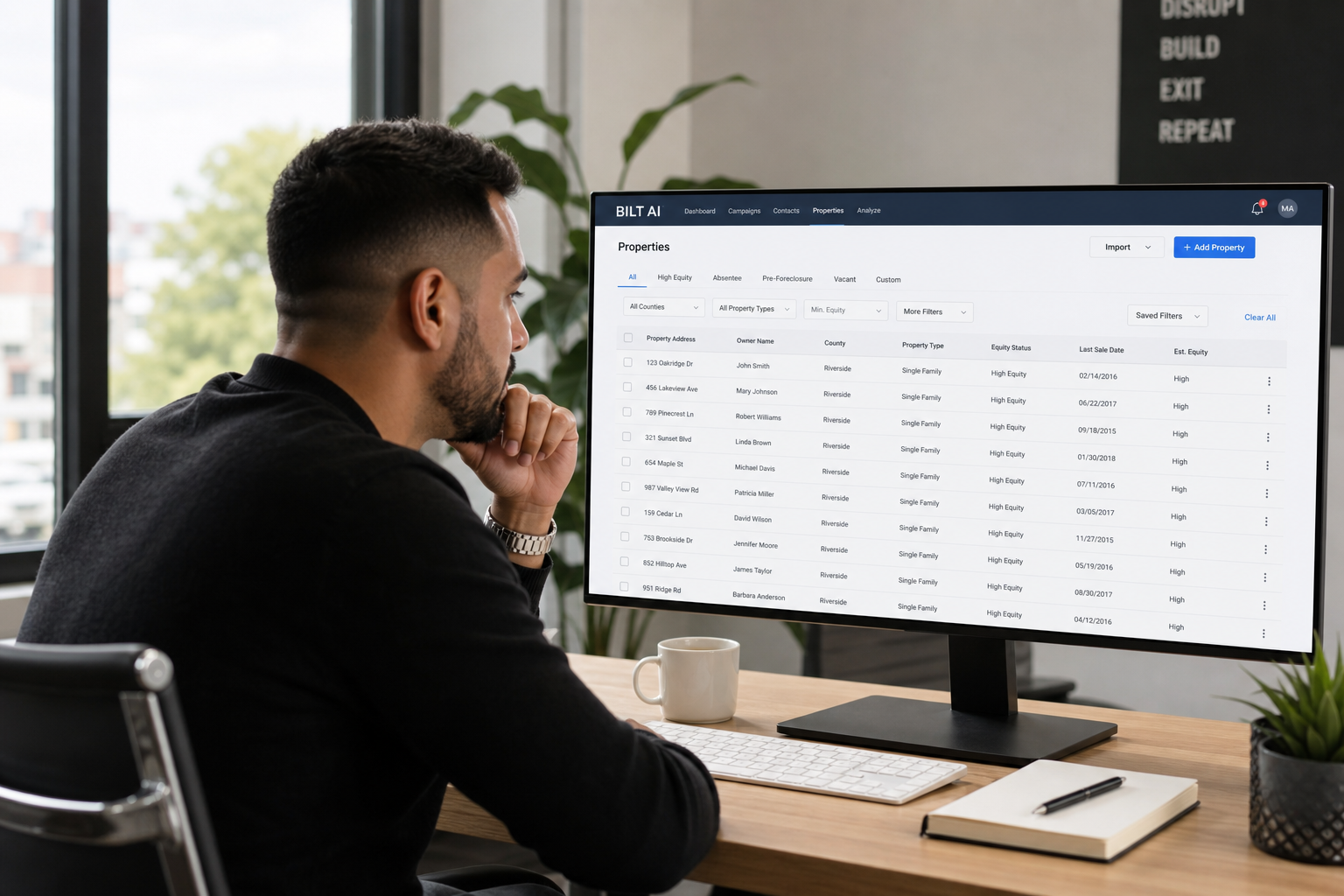
Most advice says increase volume to increase deal flow. In real estate cold email, that logic breaks once deliverability drops.
The operators consistently closing deals from email are not the ones sending the most messages. They are the ones controlling who they send to and how the message lands.
Instead of blasting entire lists, they segment by property type, ownership signal, or distress indicator. A smaller, cleaner list produces stronger replies and protects domain health.
There is supporting data behind this shift. The Pew Research Center has documented rising spam sensitivity among email users, which translates into more aggressive filtering behavior by providers.
For real estate, that means relevance beats reach. A targeted email about a specific property scenario will outperform a generic “looking to buy your property” message sent at scale.
This runs against what most wholesalers are told early on. But once you operate at scale, precision becomes the only way to maintain consistent inbound.
The inbox placement checklist operators actually keep
This is the piece operators screenshot and reuse. It is not theory. It is the baseline required to keep cold email working in real estate.
Cold Email Infrastructure Checklist
- Domain age: wait before sending acquisition emails, avoid brand new domains for outbound
- Authentication: set up SPF, DKIM, and DMARC correctly before any send
- Daily volume: increase gradually, do not spike sending behavior suddenly
- Inbox mix: use multiple inboxes per domain to distribute sending load
- Reply handling: respond to replies quickly to create positive engagement signals
- List quality: prioritize verified property owner data over scraped bulk lists
- Content variation: rotate subject lines and messaging to avoid pattern detection
- Monitoring: track reputation using Google Postmaster Tools
Every item above maps directly to how providers evaluate your sending behavior. Skipping even one creates risk.
This is where most operators hit a ceiling using spreadsheets and manual tools. Once volume increases, managing these variables becomes operationally heavy.
That is exactly why systems like BILT AI CRM were built. When you are running consistent LOI campaigns, you need automation that respects deliverability constraints, not just sends emails faster.
What actually turns cold emails into inbound deal flow
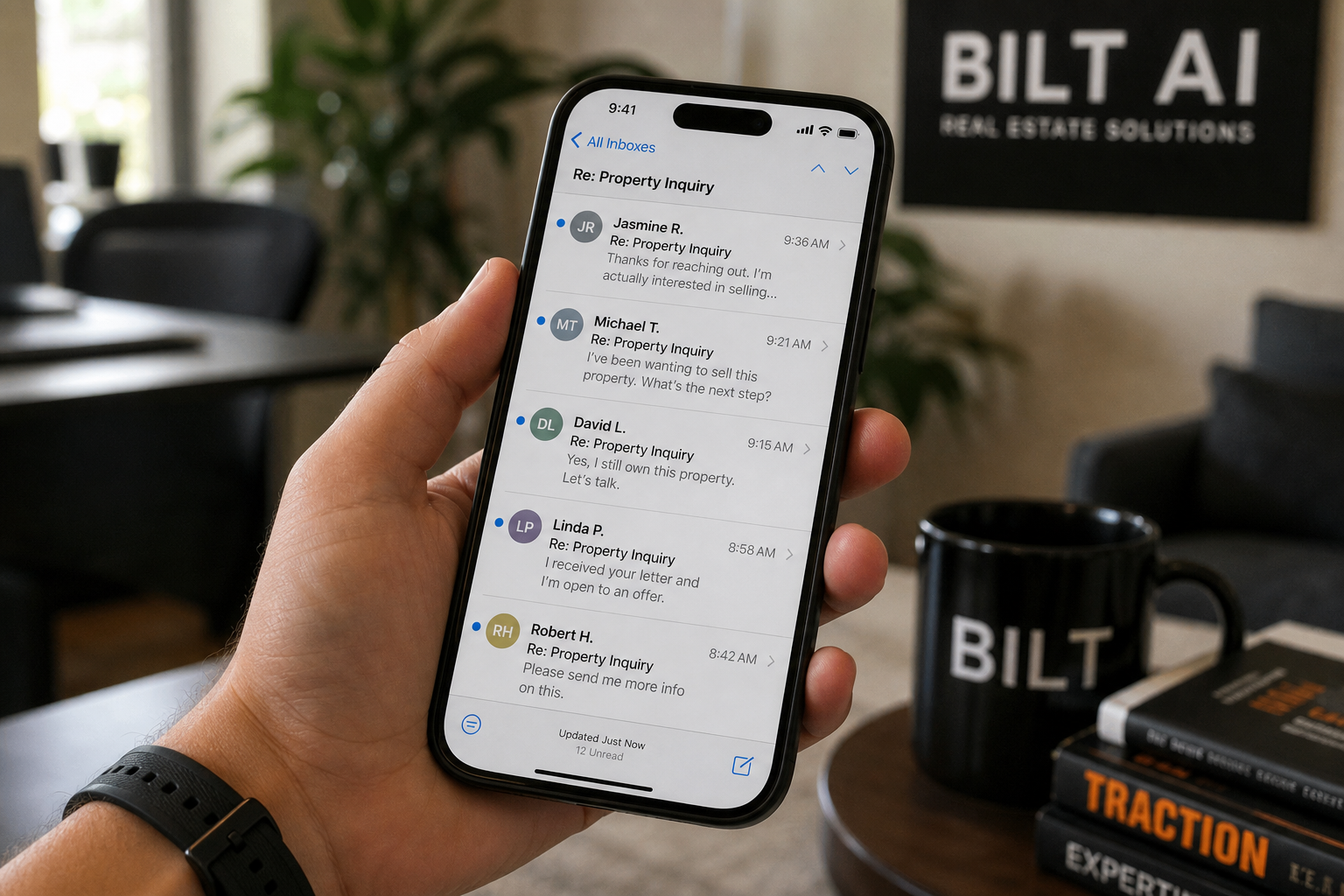
Cold email is not the end goal. It is the trigger that creates inbound conversations.
In real estate, the difference between noise and deals is context. A property owner does not care about your buying criteria. They care about their situation.
Messages that reference ownership timelines, property condition signals, or local market changes consistently outperform generic outreach. That is because they feel specific, even when automated.
The Bureau of Labor Statistics has shown continued mobility in housing and ownership patterns, which means more owners are open to selling under the right conditions. BLS data supports the idea that timing and context matter in outreach.
Operators who win here build messaging around scenarios. Pre-foreclosure, inherited properties, tired landlords. Each one gets its own angle.
Once replies start coming in, speed matters. Responding quickly and moving toward a conversation is what converts inbound interest into contracts.
This is where most cold email systems break. They generate replies but do not organize them into a pipeline that actually moves deals forward.
Fixing your system before your next outreach cycle
If your cold email is underperforming, the fix is rarely the template. It is almost always the system behind it.
Start with infrastructure. Then fix your list quality. Then adjust your messaging.
Trying to optimize copy before fixing deliverability is like negotiating a deal no one saw.
Real estate operators who treat cold email as a system rather than a tactic build consistent inbound pipelines. That is the difference between chasing deals and having them come to you.
If you are already sending LOIs and seeing inconsistent results, the next step is not more volume. It is tightening the system so every email has a real chance to land and convert.
- Audit your current setup using Google Postmaster Tools and check domain health
- Segment your next list by property signal instead of blasting everything at once
- Run a controlled campaign with gradual volume increases and track reply quality
If you want to see how this is structured for real estate operators running consistent outreach, book a walkthrough here: https://www.biltcrm.com/book-demo
And if you are building your own content and outbound systems, Kompozy is where we structure everything: https://kompozy.io
Frequently Asked Questions
Why do my real estate cold emails go to spam?
They go to spam because your domain lacks trust signals or your sending behavior looks abnormal. Google Postmaster data often shows low reputation when domains send too much too quickly without engagement.
How many emails should I send per day for real estate outreach?
Start low and increase gradually. Gmail’s sender guidelines flag sudden spikes, so controlled ramping protects inbox placement and keeps campaigns stable.
Does cold email still work for real estate investors?
Yes, when deliverability and targeting are handled correctly. Operators using segmented lists and monitored domains still generate consistent inbound replies tied to real property situations.
What tools help improve cold email deliverability?
Google Postmaster Tools provides domain reputation insights, while platforms like BILT AI CRM structure sending and reply management for real estate workflows.
Should I use one domain or multiple for cold email?
Multiple inboxes across domains reduce risk and distribute sending load. Single-domain setups often hit limits faster and lose deliverability sooner.