
Cold Email Real Estate Leads That Actually Convert
He thought it was a lead problem. It was an email problem.
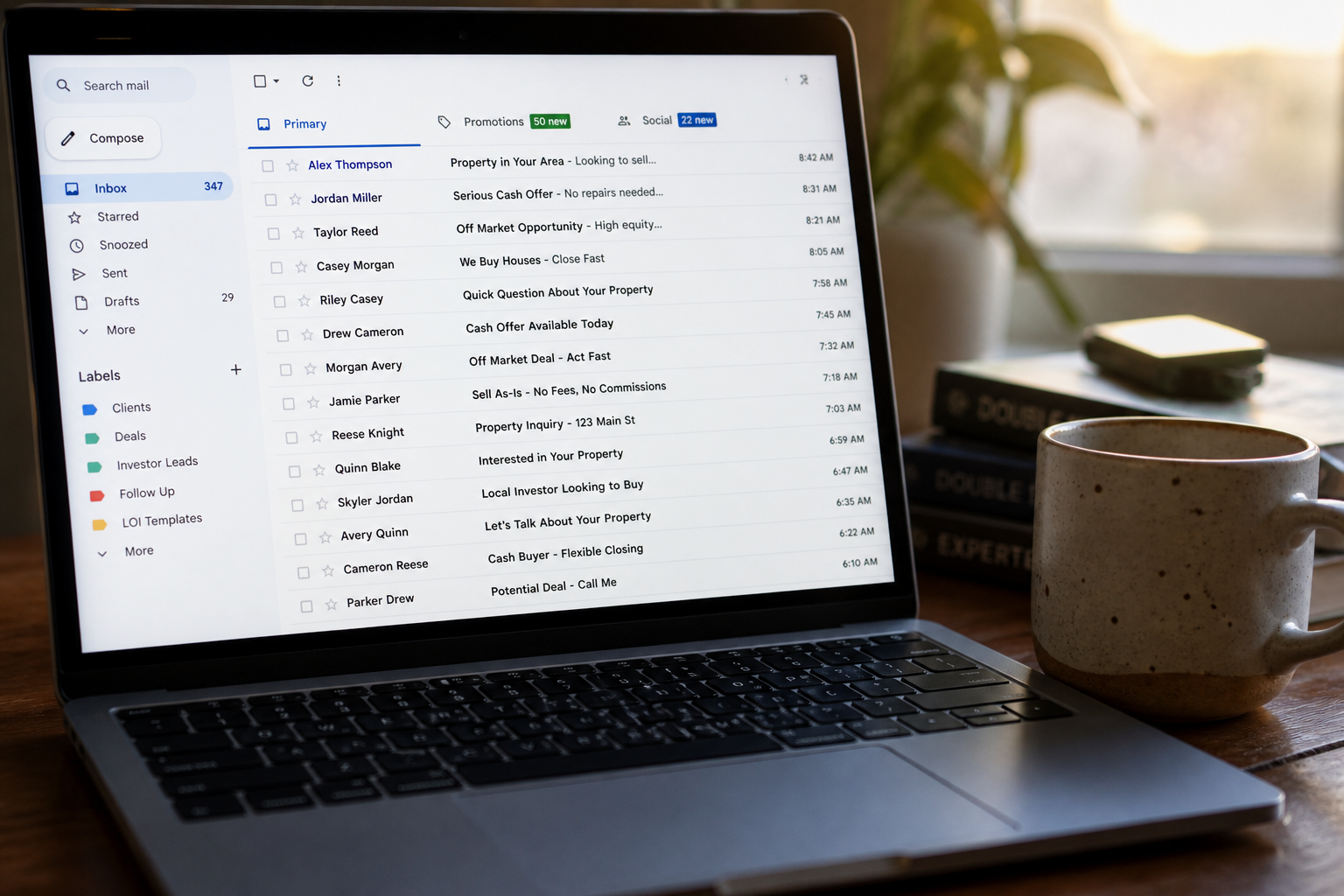
An operator sitting on a list of property owners usually assumes silence means bad data. That assumption burns months.
The pattern shows up the same way. Lists get pulled from a county source, skip tracing runs through a tool like BatchLeads, and thousands of emails go out. Replies barely move. The conclusion becomes “these owners aren’t motivated.”
That conclusion is wrong more often than people want to admit.
Since the 2024 sender requirements update from Google and Yahoo, inbox placement tightened in a way most real estate operators have not caught up to. Google documented the change directly in its sender guidelines, which now require authentication and complaint thresholds for bulk senders (Google Email Sender Guidelines).
Cold email real estate leads are not failing because owners stopped selling. They fail because the message never lands where a human sees it.
Why most real estate cold email campaigns look like spam to Google
Google Postmaster Tools tells the story most operators ignore. Domains that spike sending volume too quickly get flagged, even if the intent is legitimate outreach. That behavior mirrors phishing patterns.
When a new domain sends aggressively, filters react based on behavior, not intent. The system does not care that the message is an offer on a duplex. It sees velocity, low engagement, and inconsistent authentication.
Google’s own documentation highlights three core requirements: SPF, DKIM, and DMARC authentication, along with maintaining low spam complaint rates (Google Postmaster Tools).
Real estate operators often skip one of these because the focus stays on deal flow, not infrastructure. That gap shows up as poor inbox placement.
The uncomfortable part is this: a “perfect” list with bad deliverability performs worse than an average list with strong infrastructure.
The contrarian take: more volume makes you less money

Most wholesalers scale outreach by increasing volume. More emails, more markets, more lists. That feels logical.
In practice, higher volume without reputation control reduces total replies. The math flips because deliverability drops before volume compensates.
The Federal Trade Commission enforces CAN-SPAM compliance, but compliance alone does not guarantee inbox placement (FTC CAN-SPAM Guide).
Email providers reward consistency, not spikes. Operators who slow down sending, warm domains properly, and segment lists often see stronger reply rates without increasing send count.
That runs against the “blast harder” instinct, but the data from platforms like Mailgun and SendGrid consistently shows engagement-based filtering dominating outcomes.
The LOI framework that turns cold outreach into inbound conversations

Cold email real estate leads convert when the message resembles a real offer, not a marketing pitch. That is where LOI style outreach changes the game.
Instead of asking if an owner is interested, the message presents a clear intent to buy. Specificity creates credibility.
Copy structure operators are using right now
- Subject line references the property directly, not a generic pitch
- Opening line confirms ownership or context
- Body states buying intent with simple terms
- Close invites a yes or no, not a long conversation
A simple example:
“Saw you own the property on Elm. Looking to buy something similar in the area. Would you consider selling if the numbers made sense?”
This format works because it mirrors how actual deals start. No branding. No long explanation. Just intent.
Operators using LOI blasting at scale are not sending newsletters. They are sending lightweight offers repeatedly until timing aligns.
If the workflow behind that sounds messy, it usually is. That is exactly why tools built specifically for this process exist. Systems like BILT AI CRM were designed to handle LOI blasting without destroying domain reputation.
The one artifact worth saving: a deliverability checklist with real thresholds
This is the difference between guessing and controlling outcomes. Most operators never formalize this.
Cold Email Real Estate Deliverability Checklist
- Domain age: minimum warmup period before sending meaningful volume
- Authentication: SPF, DKIM, DMARC all verified before first campaign
- Daily send ramp: gradual increase instead of immediate scale
- Inbox rotation: multiple sending accounts instead of one overloaded inbox
- Reply handling: human responses within the same day to boost engagement signals
- List segmentation: separate by asset type or geography
- Bounce control: remove invalid emails quickly using tools like NeverBounce
Each line above ties directly to how providers score your domain. Ignore one, and the rest weaken.
Most real estate operators try to fix results by changing lists. The checklist shows why infrastructure usually deserves attention first.
What actually changes when this is done right
Email becomes an inbound channel instead of a guessing game.
Pew Research reported that email remains one of the most widely used communication channels among adults, with consistent daily usage across demographics (Pew Research Internet Fact Sheet).
That matters because property owners still read email. The opportunity never disappeared. Execution just got stricter.
Operators who fix deliverability and tighten messaging notice a shift. Replies become clearer. Conversations start faster. Time spent chasing unresponsive leads drops.
The work moves from hunting to filtering.
And that is where systems matter more than effort.
What to do next if you want inbound from cold email
The next moves should be operational, not theoretical.
- Audit your domain setup using Google Postmaster Tools and confirm authentication is complete
- Reduce sending volume temporarily and rebuild reputation through consistent daily activity
- Rewrite your outreach into LOI-style messages that sound like actual buying intent
If your current setup cannot handle that without breaking, it is worth seeing how others are running it at scale. The easiest way to understand it is to book a walkthrough and look at how LOI blasting is structured for real estate operators.
For operators building content and outreach systems alongside deal flow, Kompozy is where the backend workflow starts to make sense.
Frequently Asked Questions
Does cold email still work for real estate leads?
Yes, cold email still works when deliverability is handled correctly. Google’s updated sender requirements emphasize authentication and engagement, and campaigns that meet those standards continue to land in inboxes.
What is LOI blasting in real estate?
LOI blasting is sending simple, intent-based purchase messages to property owners at scale. Operators use short emails that resemble a letter of intent rather than a marketing pitch, which increases reply rates.
Why are my cold emails not getting replies?
Most campaigns fail due to poor inbox placement, not bad leads. Tools like Google Postmaster show when emails are filtered to spam, which prevents owners from ever seeing the message.
How many emails should I send per day for real estate outreach?
Start low and increase gradually to protect domain reputation. Email providers monitor sending behavior closely, and sudden spikes reduce inbox placement even if the list is strong.
What tools help with real estate cold email campaigns?
Operators commonly use platforms like Mailgun for sending, NeverBounce for list cleaning, and specialized systems like BILT AI CRM for managing LOI-based outreach workflows.