
Cold Email vs Content Marketing for Real Estate
Cold email vs content marketing in real estate
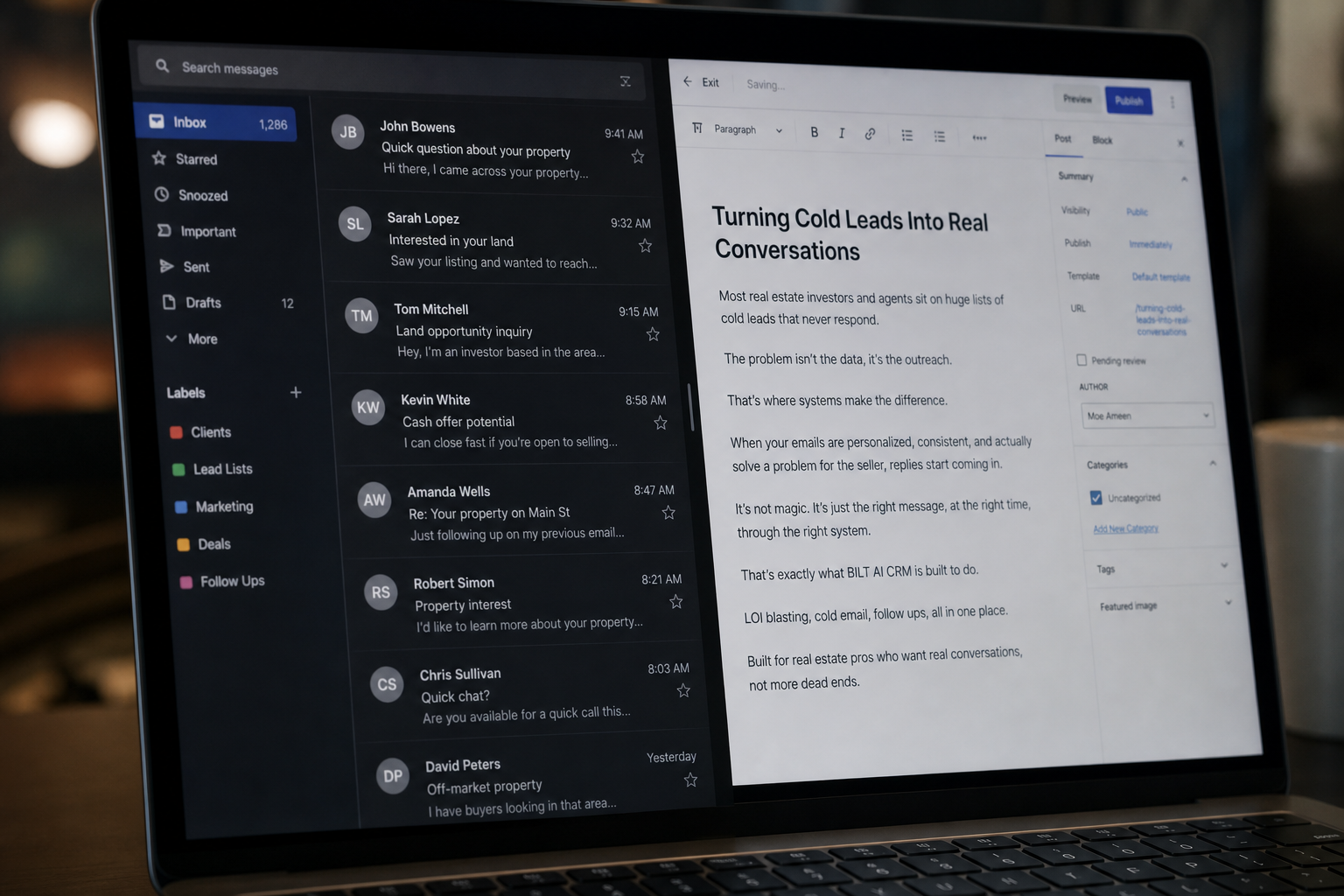
A wholesaler opens Gmail, stares at a campaign report, and mutters, "we sent everything and still nothing stuck." In another tab, a blog post sits unpublished for weeks because writing it felt like a gamble. That tension sits at the center of cold email vs content marketing real estate.
Both channels aim at the same outcome. Seller conversations that convert into contracts, assignments, or listings. The difference sits in how attention gets captured and how trust gets built.
Cold email pushes directly into a property owner's inbox. Content marketing pulls inbound interest through search, social, and long form assets. One starts the conversation. The other earns it.
Operators who treat this as an either or decision usually stall out. The real edge comes from understanding where each channel breaks, where it compounds, and how they connect inside an acquisition pipeline.
Why cold email wins early pipeline control

Cold email gives real estate operators something content cannot offer early on. Control over volume and timing. You decide who sees your offer, when they see it, and how often you follow up.
That matters when you are targeting absentee owners, tired landlords, or off market multifamily. Waiting for inbound interest from those segments rarely produces consistent deal flow.
Google and Yahoo updated sender requirements in 2024, forcing stricter authentication and spam thresholds. Google documented those changes publicly at https://support.google.com/mail/answer/81126. That shift made sloppy campaigns collapse overnight.
Deliverability now behaves more like reputation management than outreach. Domains need warming. Lists need segmentation. Copy needs restraint. Operators who ignore that see inbox placement drop fast.
One operator running acquisitions in Dallas described it plainly. "We thought it was our list. It was actually our domain setup. Once we fixed SPF, DKIM, and slowed down sends, replies came back."
Cold email works when the backend is disciplined. Without that, it burns domains and wastes lists.
Why content marketing compounds trust over time

Content marketing plays a different game. It trades speed for durability. A well positioned article about selling a distressed property or handling probate can bring inbound leads months after it goes live.
The Federal Reserve noted in its Small Business Credit Survey that marketing consistency directly impacts revenue stability for small operators. The 2024 report highlights how firms with repeat visibility outperform those relying on sporadic outreach. Source: https://www.fedsmallbusiness.org/.
For real estate investors, that shows up as brand familiarity. Sellers who read your content arrive warmer. They ask better questions. They convert faster.
Content also shapes perception before you ever speak. A seller who finds your article on "how to sell a tenant occupied property" already sees you as a specialist.
The tradeoff sits in time. Content rarely produces immediate deals unless paired with distribution or existing traffic. Most operators quit before compounding kicks in.
Those who stay consistent build an inbound engine that lowers acquisition costs over time.
The contrarian take operators miss
Most advice says pick one channel and go deep. That advice breaks in real estate.
Cold email without content creates conversations that stall. Content without outbound creates assets that sit idle.
The edge sits in using cold email as distribution for content, not just offers.
Instead of sending "are you interested in selling," operators can send a short note linking to a resource that solves a real problem. Probate timelines. Code violations. Tenant issues. That shifts the tone from solicitation to relevance.
Google Postmaster tools at https://postmaster.google.com/ show improved engagement signals when recipients interact with emails instead of ignoring them. Content inside outreach drives those interactions.
This hybrid approach changes reply quality. Sellers respond with context, not just yes or no. That creates better conversations and higher intent leads.
Ignoring this connection keeps both channels weaker than they should be.
The operator playbook that actually converts
This is where most breakdowns happen. Execution. Not theory.
Below is a working system operators can run without guessing.
Inbound plus outbound conversion loop
- Build one asset per week targeting a real seller scenario. Examples include inherited property, vacant homes, or pre foreclosure.
- Host the content on your site with clear contact paths. Forms, phone, or direct reply.
- Pull a segmented list that matches the topic. Probate list for inheritance content. Absentee owners for rental issues.
- Send a short email referencing the problem and linking the asset. Keep it plain text.
- Track replies and clicks using a system that shows engagement at the contact level.
- Follow up with context, not pressure. Reference what they read or asked.
One acquisitions manager in Phoenix ran a version of this loop and shared a before and after. "Our replies felt random before. After sending content first, people started explaining their situation in detail."
If you are running this at any scale, spreadsheets fall apart quickly. That is exactly why BILT AI CRM exists. It handles list segmentation, LOI blasting, and tracks engagement so you can see which owners are actually warming up.
Without that visibility, follow up becomes guesswork.
Where each channel breaks in real estate deals
Cold email breaks when volume replaces precision. Sending large batches to poorly segmented lists triggers spam filters and low engagement. Deals dry up not because sellers are uninterested, but because messages never land.
Content breaks when it stays disconnected from distribution. Publishing without outreach or SEO structure leads to zero visibility. Operators assume content does not work when in reality it never reached the right audience.
There is also a transaction layer most marketing advice ignores. Real estate deals involve timing constraints like EMD deadlines, inspection windows, and assignment clauses. Marketing that does not respect those timelines creates friction.
For example, a seller reading your content about foreclosure options may need immediate clarity on timelines. If your follow up takes days, the opportunity disappears.
Strong operators align marketing speed with deal speed. That means fast replies, clear next steps, and systems that track where each lead sits in the pipeline.
Tools matter here, but process matters more.
Next steps to implement this this week
- Create one piece of content focused on a single seller problem. Use your last three conversations as input and publish it on your site.
- Pull a targeted list that matches that scenario. Skip broad lists and focus on relevance.
- Set up email infrastructure correctly using Google Postmaster and proper authentication before sending anything.
- Send a short campaign linking to the content. Keep it simple and conversational.
- Track replies and engagement inside a system built for this workflow. If you need structure, book a walkthrough at https://www.biltcrm.com/book-demo and see how this runs inside BILT AI CRM.
If content production itself is slowing you down, Kompozy handles the creation and distribution side so your outbound actually has something worth sending.
Frequently Asked Questions
Is cold email still effective for real estate investors?
Yes, cold email still works when deliverability is handled correctly. Google’s 2024 sender requirements increased enforcement on authentication and spam rates, which means properly configured domains and targeted lists now matter more than volume.
How long does content marketing take to generate real estate leads?
Content marketing usually takes months to compound. The 2024 Federal Reserve Small Business Credit Survey shows consistent visibility correlates with stronger revenue stability, which reflects how ongoing content builds inbound over time.
Should wholesalers focus on inbound or outbound leads?
Both channels perform best together. Operators using outbound to distribute content see higher quality replies because sellers engage with context before responding.
What is the biggest mistake in cold email for real estate?
The biggest mistake is sending high volume without proper setup. Domains without SPF, DKIM, and warming often land in spam, which kills response rates regardless of list quality.
What kind of content converts motivated sellers?
Content that solves specific problems converts best. Articles addressing probate timelines, tenant issues, or foreclosure options attract sellers already looking for solutions, which shortens the sales cycle.