CRM Hygiene for Solo Agents That Saves Deals
The moment the deal slipped wasn’t when the lead went cold
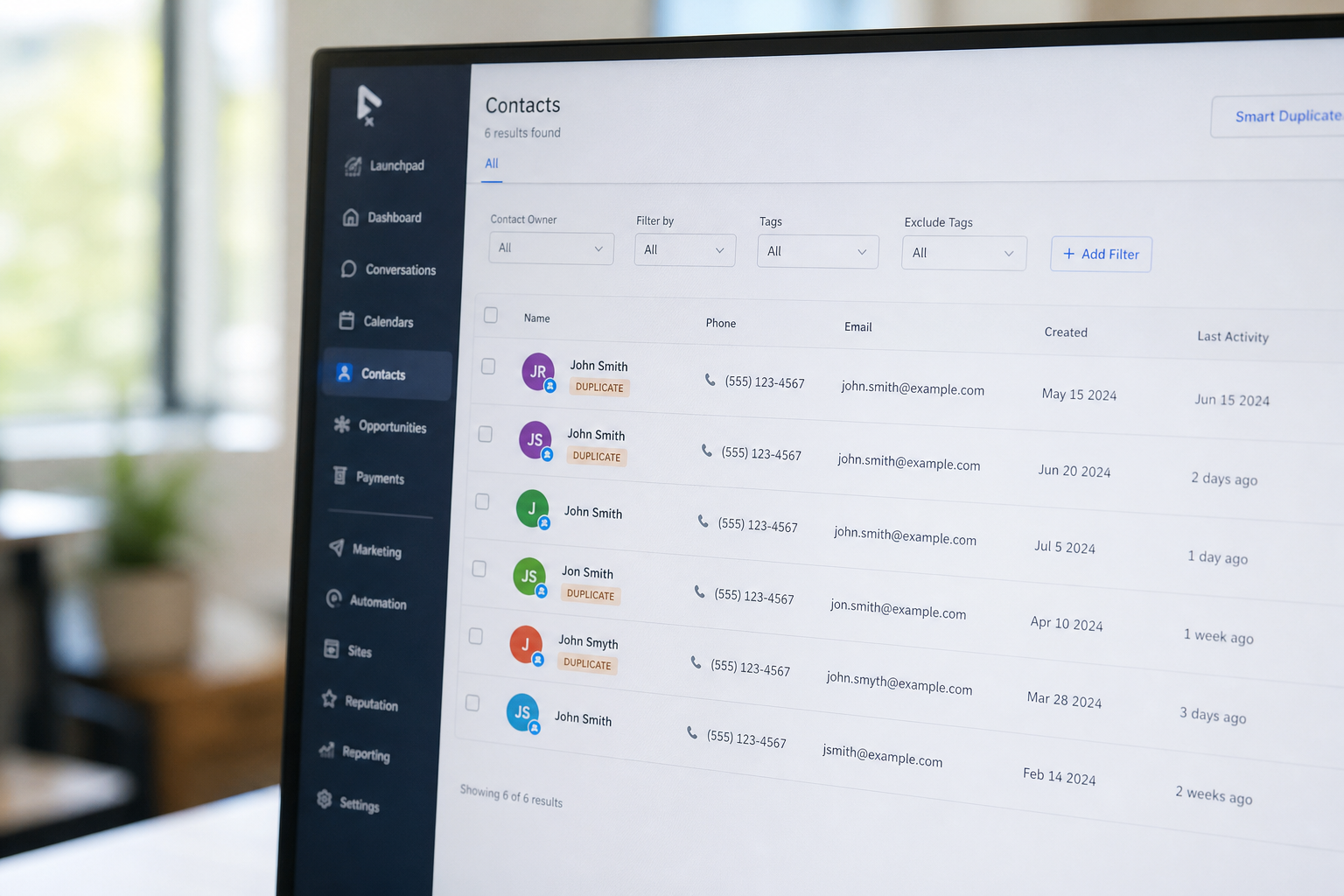
A Dallas solo agent opened her CRM and found three versions of the same seller record, each missing a different note. One had a phone number. One had a motivation tag. One had the last conversation. None had a follow up scheduled.
That lead had already replied once. The intent was there. The system just didn’t carry it forward.
This is what CRM hygiene for solo agents actually looks like behind the scenes. Not a messy dashboard. A broken chain between first touch and second touch.
The pattern repeats across accounts: 20–30% of contacts missing tags, duplicate records from imports, and no triggers after the first conversation. The agent ends up “cleaning” instead of fixing the mechanism that keeps making it dirty.
Per Experian’s 2023 Global Data Management report, contact data decays at an average rate of about 30% per year (source). In real estate, that decay shows up as missed follow ups, not just bad emails.
Why manual cleanup keeps making your CRM worse
Most agents try to fix CRM hygiene with effort. They block time, sort contacts, merge duplicates, and add tags. It feels productive. It also resets the clock on the same problem.
Manual cleanup fails because the inputs are still uncontrolled. New leads come in from Zillow, CSV uploads, website forms, and texting platforms. Each source formats data differently. Without rules at the point of entry, the CRM keeps degrading.
Google and Yahoo tightened sender requirements in 2024, pushing stricter authentication and spam thresholds (Google Postmaster Tools). That change made follow up consistency more important. If your CRM doesn’t trigger structured outreach, your deliverability drops alongside your response rate.
The counterintuitive part: a “clean” CRM you maintain manually is less valuable than a messy one with enforced structure. Structure compounds. Cleanup doesn’t.
The contrarian move: stop organizing contacts, start routing intent
Most advice tells agents to improve tagging discipline. That’s not where the leverage sits.
The real shift is routing every lead into a defined path the second it enters your system. Not later. Not after review. Immediately.
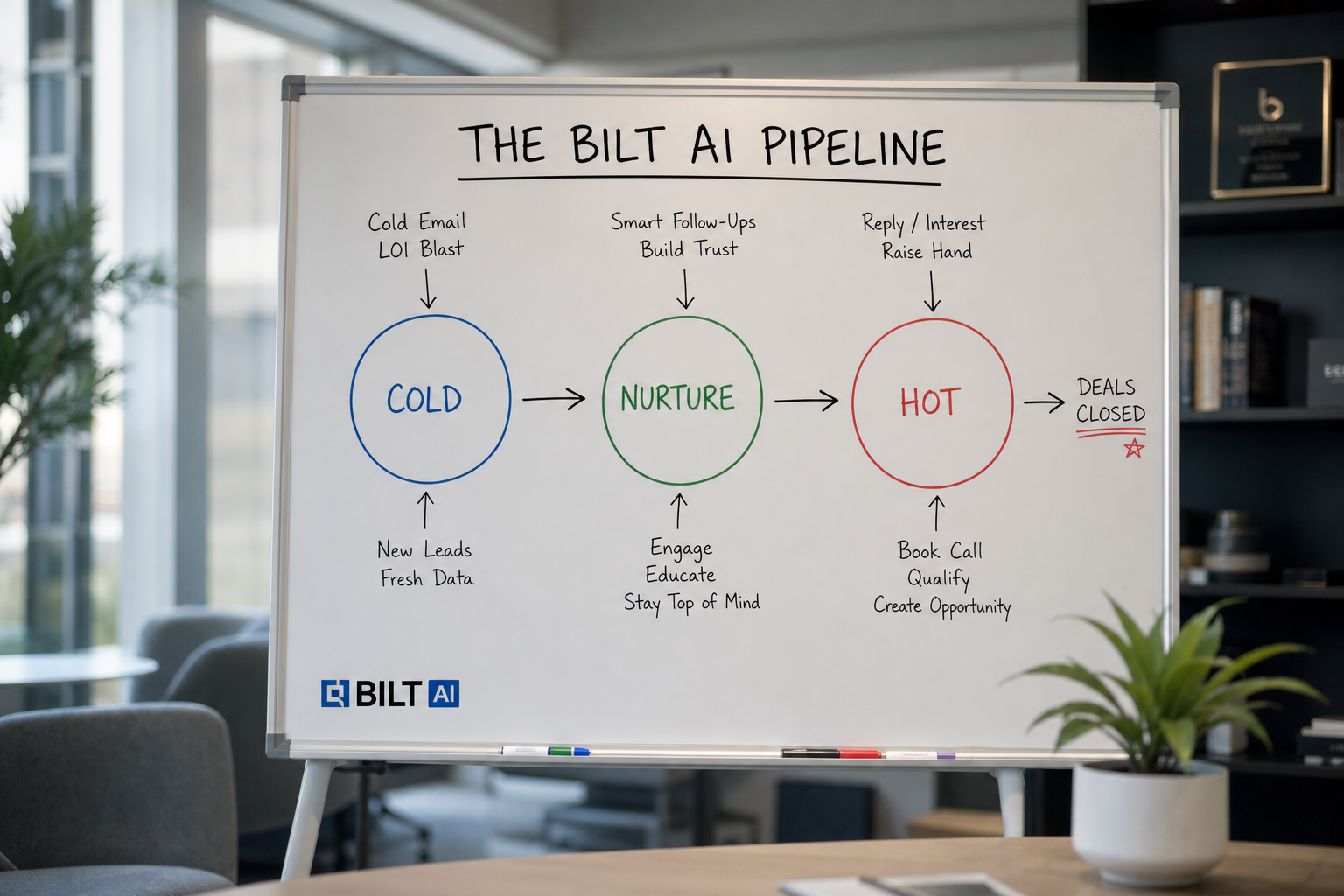
Instead of asking whether a contact is “organized,” the system should decide what happens next. Cold lead, nurture lead, or hot lead. Those three states drive everything.
This is how high volume operators run. The CRM is not a database. It’s a decision engine.
In practice, that means tying each stage to a content lane. Cold leads receive credibility and awareness. Nurture leads get case studies and light follow ups. Hot leads trigger direct outreach and offers.
Tools like HubSpot CRM allow stage-based automation, but most agents never wire content into those stages. The result is a pipeline that tracks deals but doesn’t move them.
The operator artifact: 3-stage CRM hygiene system you can screenshot
This is the simplest version that actually holds up under daily use. No fluff. No extra stages.
Stage 1: Cold
- Trigger: New inbound or imported lead
- Required fields: Email or phone validated on entry
- Action: Auto assign “Cold” tag within 60 seconds
- Content: Intro message + one credibility asset within 24 hours
Stage 2: Nurture
- Trigger: Any reply or engagement
- Required fields: Motivation tag added automatically
- Action: Move to nurture pipeline instantly
- Content: 3–5 touch sequence over 14 days tied to seller intent
Stage 3: Hot
- Trigger: Explicit interest or appointment request
- Required fields: Timeline + deal notes
- Action: Immediate task creation for call or offer
- Content: Direct outreach plus offer follow up within same day
The key is not the stages. It’s the enforcement. Each stage must auto assign tags, trigger content, and create the next action without manual input.
When this runs correctly, duplicates matter less, missing tags disappear, and follow ups happen on time.
How Kompozy turns content into your hygiene layer
Most CRMs treat content as an afterthought. Operators know content is what actually moves the deal forward between touches.
Kompozy was built around that gap. Instead of writing random posts or emails, you define a Persona Brief and connect it to your CRM stages.
Each lead automatically maps into a content lane. Cold leads get awareness content. Nurture leads receive targeted follow ups. Hot leads trigger direct messaging sequences.
No manual tagging. No guessing what to send next.
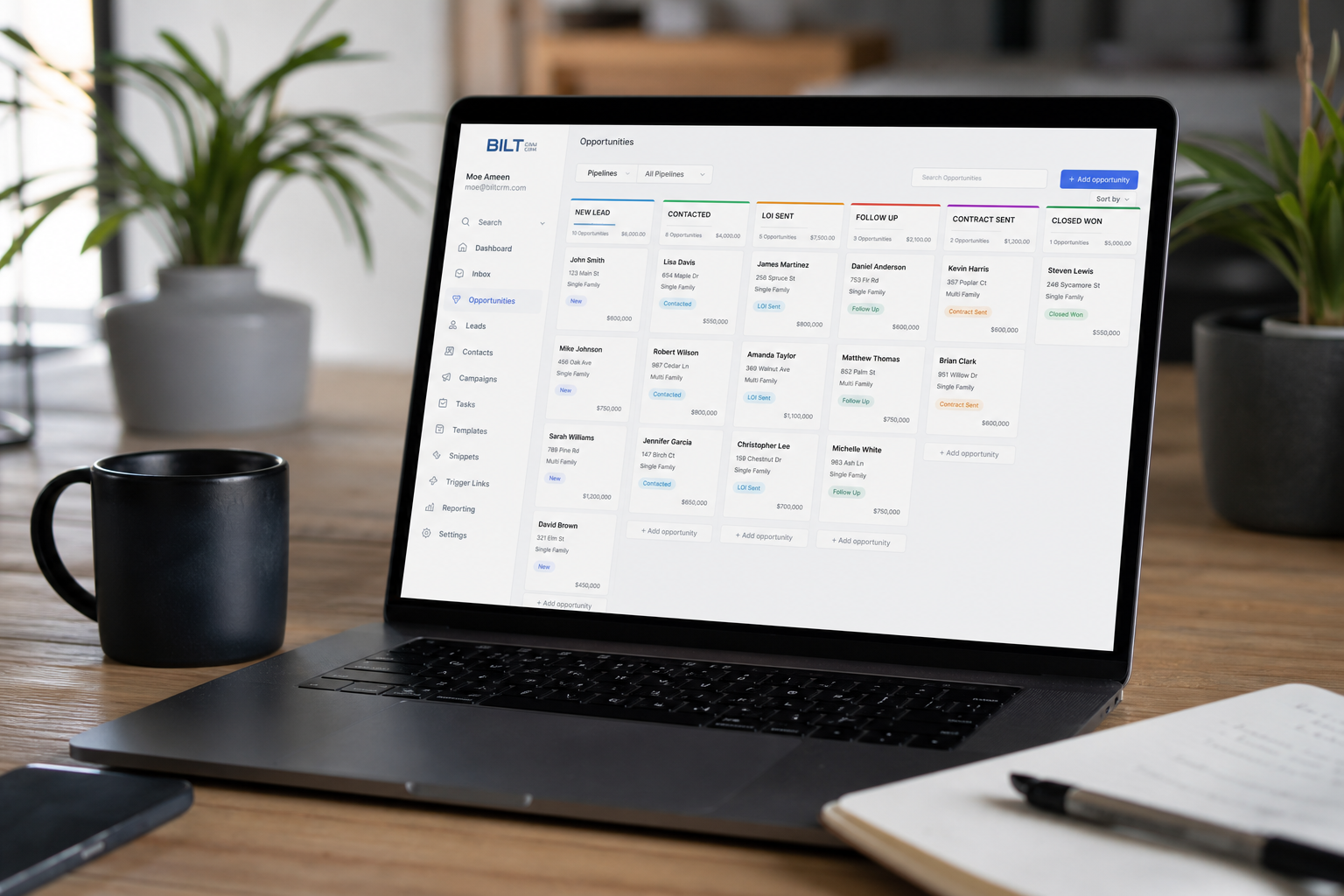
If you are running volume and your pipeline looks like the Dallas example earlier, you outgrow spreadsheets fast. This is where BILT AI CRM fits, paired with Kompozy to handle the content layer that keeps the system clean.
The combination removes the need for cleanup sessions entirely. The system maintains itself because every input has a defined output.
What changes when the system replaces the habit
Agents who switch from manual hygiene to automated routing notice a different kind of clarity. Not just fewer errors. Faster deal cycles.
Follow ups happen without thinking about them. Leads don’t stall between stages. Conversations pick up where they left off.
That’s where the real gain sits. Not in a cleaner interface, but in continuity.
The CRM becomes something you trust again. And that trust shows up in how quickly you move on opportunities.
If your current setup still requires weekly cleanup, it’s signaling a design issue upstream. Fix that layer, and the surface stops breaking.
If you want a walkthrough of how operators wire this into their pipeline, you can book a short demo. And if you’re building your own content system, take a look at Kompozy to structure it properly from day one.
Frequently Asked Questions
What is CRM hygiene for solo agents?
CRM hygiene for solo agents means ensuring every lead has complete data, no duplicates, and an automated follow up path. Experian’s 2023 research shows data decays by about 30% annually, which directly impacts missed follow ups if not controlled.
How do I stop duplicate contacts in my CRM?
Stop duplicates by enforcing validation at entry and using automated deduplication rules inside your CRM. Platforms like HubSpot include duplicate management tools that flag overlaps immediately.
Why do leads go cold in a clean CRM?
Leads go cold because there is no follow up trigger, not because the CRM is messy. Google’s 2024 sender updates increased the need for consistent outreach, making automation more important than manual organization.
How many CRM stages should a solo agent use?
Three stages are enough for most solo agents: cold, nurture, and hot. This keeps routing simple and ensures every lead has a defined next action without overcomplicating the pipeline.
What tool helps automate CRM hygiene for real estate?
Tools like HubSpot CRM handle automation rules, while systems like BILT AI CRM integrate outreach and follow ups. Pairing that with Kompozy connects content directly to pipeline stages for full automation.