
Deal Tracking KPIs: Spreadsheet vs System
Spreadsheet deal tracking vs stage-based KPIs in real estate
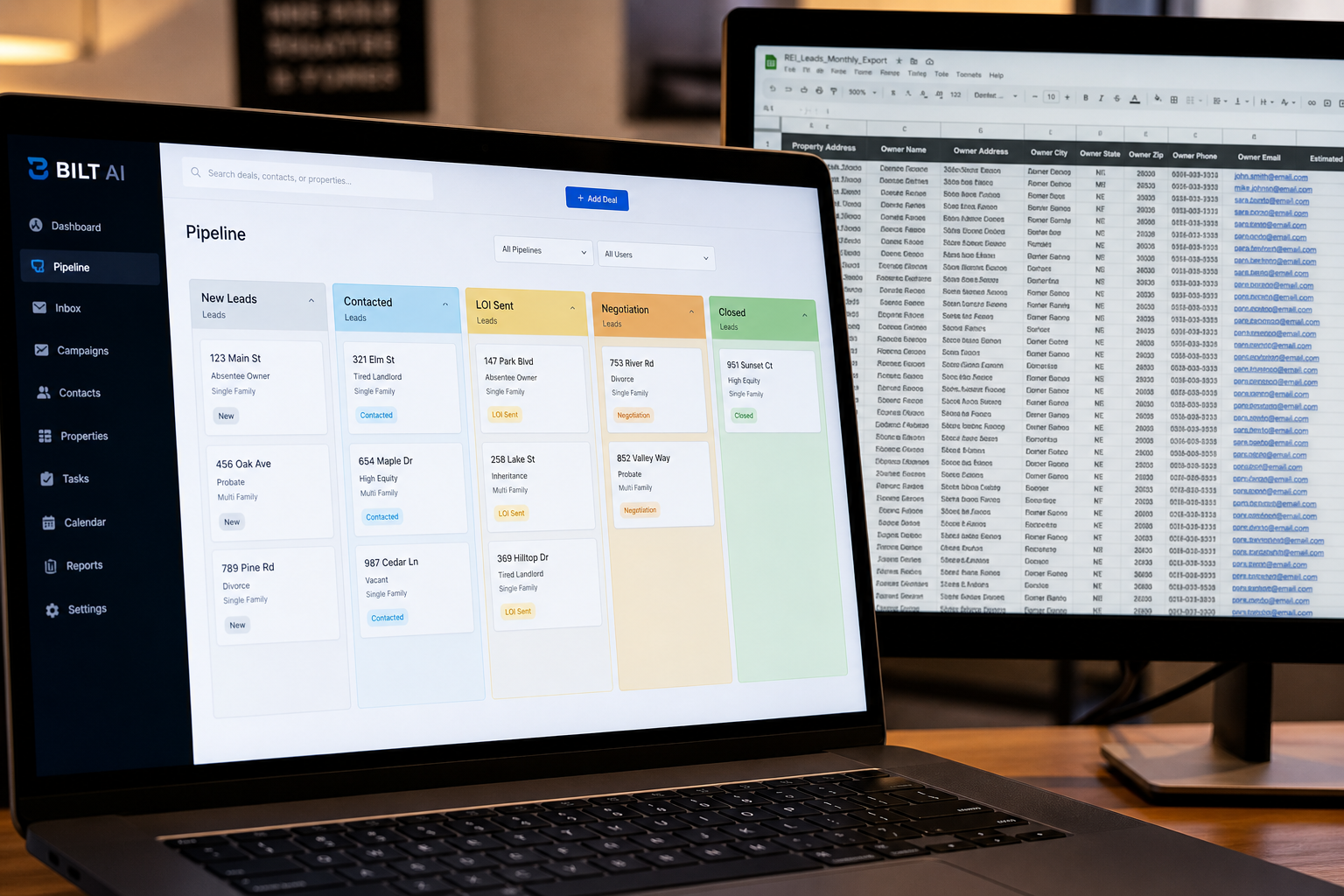
A wholesaler opens a Google Sheet and sees a clean column labeled “Closed.” That column looks healthy. Deals marked won, assignment fees logged, everything feels fine.
What is missing is everything that never made it there. The leads that replied but stalled. The owners who asked for a price and never saw an LOI. The follow-ups that slipped a day, then three, then disappeared.
This is where deal tracking KPIs split into two camps.
- Spreadsheet tracking: shows outcomes after the fact. Revenue, closed deals, maybe a rough pipeline count.
- Stage-based KPI tracking: shows movement. Where leads are sitting, how long they sit, and where they drop off.
Operators scaling in markets like Phoenix, Dallas, and Atlanta eventually hit the same wall. Volume increases, but clarity drops. The sheet grows, but decision speed slows. By the time a problem shows up in “closed,” the fix is already late.
Stage-based KPIs flip that. They turn the pipeline into something you can read daily, not monthly. And that shift changes how quickly you fix leaks before they cost you deals.
Why closed-deal tracking hides where money leaks
Most investors track deals like accountants. They log what closed, tally assignment fees, and maybe track marketing spend. That works for taxes. It does not work for operations.
The Federal Reserve’s Small Business Credit Survey has repeatedly shown that cash flow volatility is one of the top reasons businesses struggle to access capital (2024 SBCS report). In real estate, that volatility often comes from pipeline inconsistency, not just deal size.
A spreadsheet that only shows outcomes hides three critical problems:
- Leads sitting too long without movement
- Conversion drops between stages
- Inconsistent daily activity from acquisitions
Google’s own deliverability guidance makes a similar point in a different domain. Systems degrade gradually before they fail (Google Postmaster Tools). Pipelines behave the same way. You do not lose deals all at once. You lose them step by step.
Operators who rely on closed-deal tracking end up reacting. Operators who track movement fix problems the same day they appear.
The three KPI shifts that change how deals move
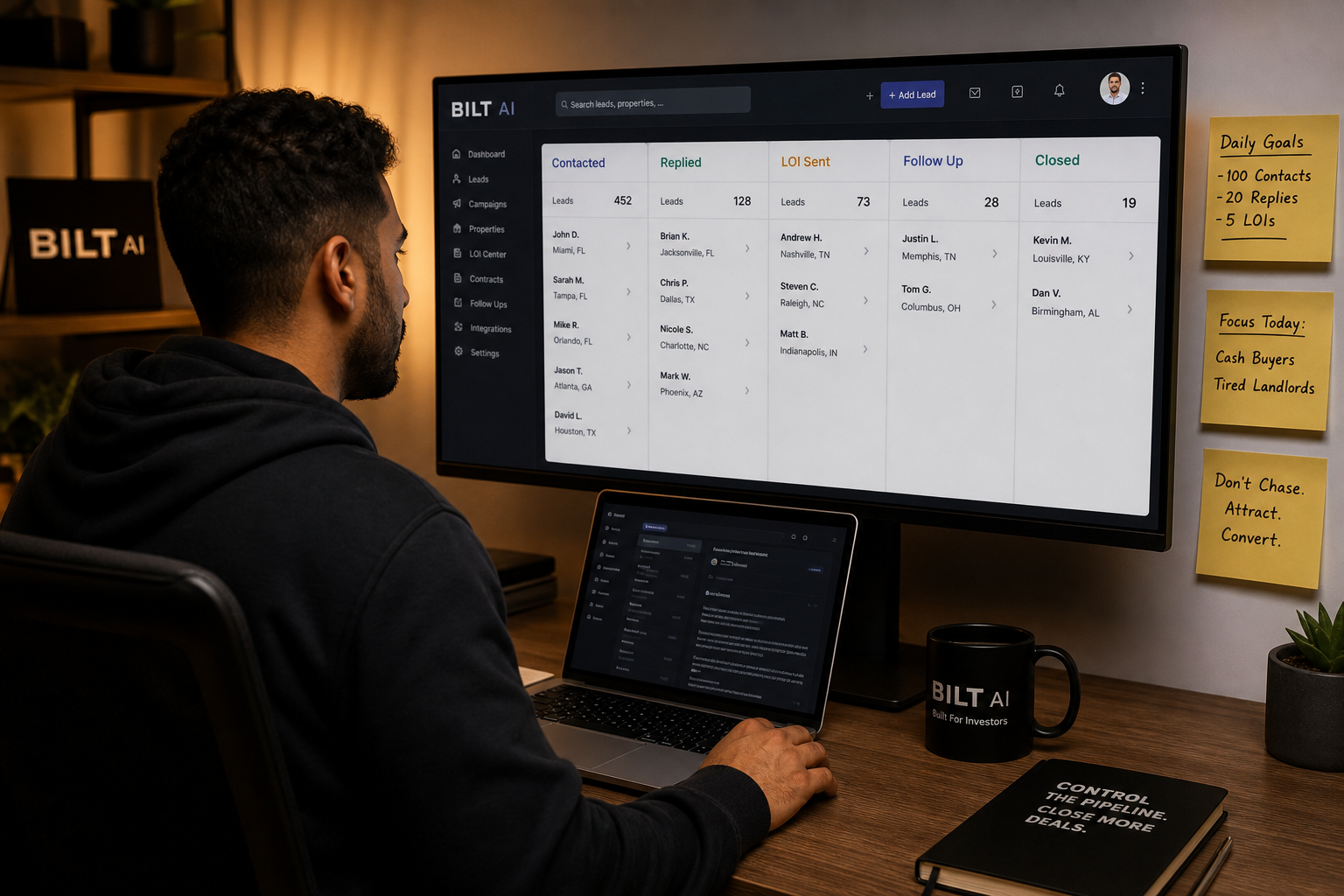
The shift is not adding more metrics. It is tracking the right ones at the right time.
1. Pipeline stages with time caps
Define clear stages. For most wholesalers and investors, four is enough: list pulled, contacted, replied, LOI sent, signed.
Now add a rule. If a lead sits in “contacted” longer than five days, it gets flagged. Not reviewed later. Forced into follow-up immediately.
This alone surfaces dead zones in your process. You stop assuming leads are progressing and start seeing exactly where they stall.
2. Conversion rates between each step
Track the movement between stages. List to reply. Reply to LOI. LOI to signed.
If reply rate drops below eight percent, something is off. Either the list quality degraded or messaging stopped landing. That is a same-day adjustment, not a weekly review.
Tools like Mailchimp or Apollo show similar patterns in outbound campaigns. Response rates tell you more than send volume ever will.
3. Activity tied directly to pipeline growth
Daily quotas keep the system fed. A common baseline looks like:
- 50 new records added
- 30 follow-ups completed
- 10 LOIs sent
No activity means no pipeline. No pipeline means no deals later. Simple, but easy to ignore without visibility.
These three shifts turn KPIs into something you actually act on. Not something you review after the fact.
The operator dashboard you actually check daily
There is one artifact that tends to stick with operators once they implement it. A simple daily dashboard that answers one question. Where is money leaking right now?
Here is the structure that works inside most real estate pipelines:
Daily Deal Tracking KPI Checklist
- Stage aging: Any lead over 5 days in a stage gets flagged
- Reply rate: Below 8 percent triggers list or messaging review
- LOIs sent today: Minimum threshold hit or missed
- Follow-ups completed: Compared against daily quota
- New records added: Pipeline input for the day
- Deals stuck at LOI: Awaiting response beyond expected window
This is not a report you run once a week. It is something you check daily, usually before starting outbound.
Platforms like HubSpot or Pipedrive can approximate this, but they are not built around investor workflows like LOI blasting or disposition cycles.
That gap is where most teams start stitching together tools, spreadsheets, and reminders. It works for a while. Then volume breaks it.
The contrarian take: more deals do not fix your pipeline

Most advice in real estate says to increase lead volume when deals slow down. More lists. More calls. More emails.
That advice breaks once you already have activity.
Adding more leads to a leaking pipeline does not increase revenue. It hides the leak. You feel busy, but conversion drops quietly in the background.
Data from the U.S. Bureau of Labor Statistics shows productivity gains come from process efficiency, not just increased input (BLS Productivity Data). Real estate pipelines follow the same pattern.
When reply rates dip or leads sit too long, the issue is rarely volume. It is timing, follow-up consistency, or message-market fit.
Operators who scale clean pipelines often send fewer total messages than beginners. They just convert a higher percentage at each step.
This is where systems outperform effort. A system surfaces the exact point of failure. Effort alone tends to spread attention thinner.
Where BILT AI CRM fits once you outgrow spreadsheets
Spreadsheets handle tracking. They do not enforce behavior.
Once you are sending consistent outbound, whether cold email or SMS, you need something that connects activity to movement automatically.
This is where BILT AI CRM comes in. It ties LOI blasting, follow-ups, and stage tracking into one loop. Leads move through stages automatically, time-in-stage is tracked without manual updates, and follow-ups are triggered instead of forgotten.
The difference shows up in speed. Instead of checking a sheet and deciding what to do, the system surfaces what needs attention right now.
For operators running daily outbound, that removes a layer of friction that usually slows teams down as they grow.
What to set up in the next 48 hours
If the current setup is a spreadsheet or a loosely managed CRM, the fastest improvement comes from tightening the structure, not adding complexity.
- Define four stages in your pipeline inside your current tool or CRM. Keep it simple. List pulled, contacted, replied, LOI sent.
- Set time caps for each stage. Start with five days for early stages and adjust based on your market response speed.
- Track one conversion rate between each stage. Use your email platform or CRM reporting to monitor reply and LOI rates daily.
- Assign daily activity minimums for acquisitions. Use your outbound tool to verify completion.
- Review the dashboard daily before starting outreach. Fix the bottleneck before adding more leads.
Once that is running, the gaps become obvious. That is usually the moment operators decide whether to keep patching spreadsheets or move to a system built for this workflow.
If you want to see how teams are running this without manual tracking, book a quick walkthrough and look at how the pipeline, LOIs, and follow-ups connect.
For content and workflow systems around this kind of outbound, Kompozy is where we build and manage it.
Frequently Asked Questions
What are the most important deal tracking KPIs for real estate investors?
The most important deal tracking KPIs are stage aging, reply rate, LOI conversion, and daily activity volume. For example, when reply rate drops below eight percent, it usually signals a list or messaging issue that needs immediate adjustment.
How do I track my real estate pipeline effectively?
Track your pipeline by stages with time limits instead of just outcomes. A simple four-stage pipeline with a five-day cap per stage will immediately show where leads are getting stuck.
What is a good reply rate for cold email in real estate?
A good reply rate is around eight percent or higher. When it drops below that threshold, operators typically see weaker deal flow within the same pipeline cycle.
Why is my real estate pipeline not converting?
Pipelines usually fail due to delays between stages or inconsistent follow-up. Leads sitting too long without movement often convert at much lower rates compared to leads handled within a few days.
Do I need a CRM for deal tracking or is a spreadsheet enough?
A spreadsheet works early on, but breaks once volume increases. CRMs track time-in-stage and automate follow-ups, which removes the manual gaps that cause deals to stall.