
Disposition Automation for Faster Real Estate Sales
Why most deals stall after going under contract

A wholesaler locks up a clean off-market property. Seller signed. Title opened. Everything looks solid.
Then nothing happens for days.
This gap between “under contract” and “assigned” is where most operators quietly lose deals. Buyers go cold. Pricing gets fuzzy. Follow-ups slip. By the time someone circles back, the urgency is gone.
Disposition automation exists to remove that gap entirely.
Across real estate transactions, speed matters less than sequencing. The National Association of Realtors has consistently shown that delayed buyer engagement reduces transaction certainty, especially in competitive or off-market environments (NAR Research).
Operators who win here are not guessing. They are running a repeatable system that moves every deal through the same steps without hesitation.
Disposition automation is not about speed
The common advice says move faster. Blast the deal. Push urgency. Chase buyers.
That framing misses the real issue.
Disposition automation is about getting paid faster with less friction on every deal.
Friction shows up in small ways. A buyer asking for details that should have been in the first email. A follow-up that never gets sent. A deal that reaches the wrong list.
Each one slows the assignment process.
After the 2024 Google and Yahoo sender updates, consistency in outreach timing and structure also started affecting inbox placement (Google Postmaster Tools). That means sloppy disposition workflows now hurt both response rates and deliverability.
The operators who tightened this saw a shift. Not more emails. Better sequencing.
They pre-built who sees the deal, when it gets sent, and how follow-ups happen without manual effort.
The three systems that actually compress your disposition cycle
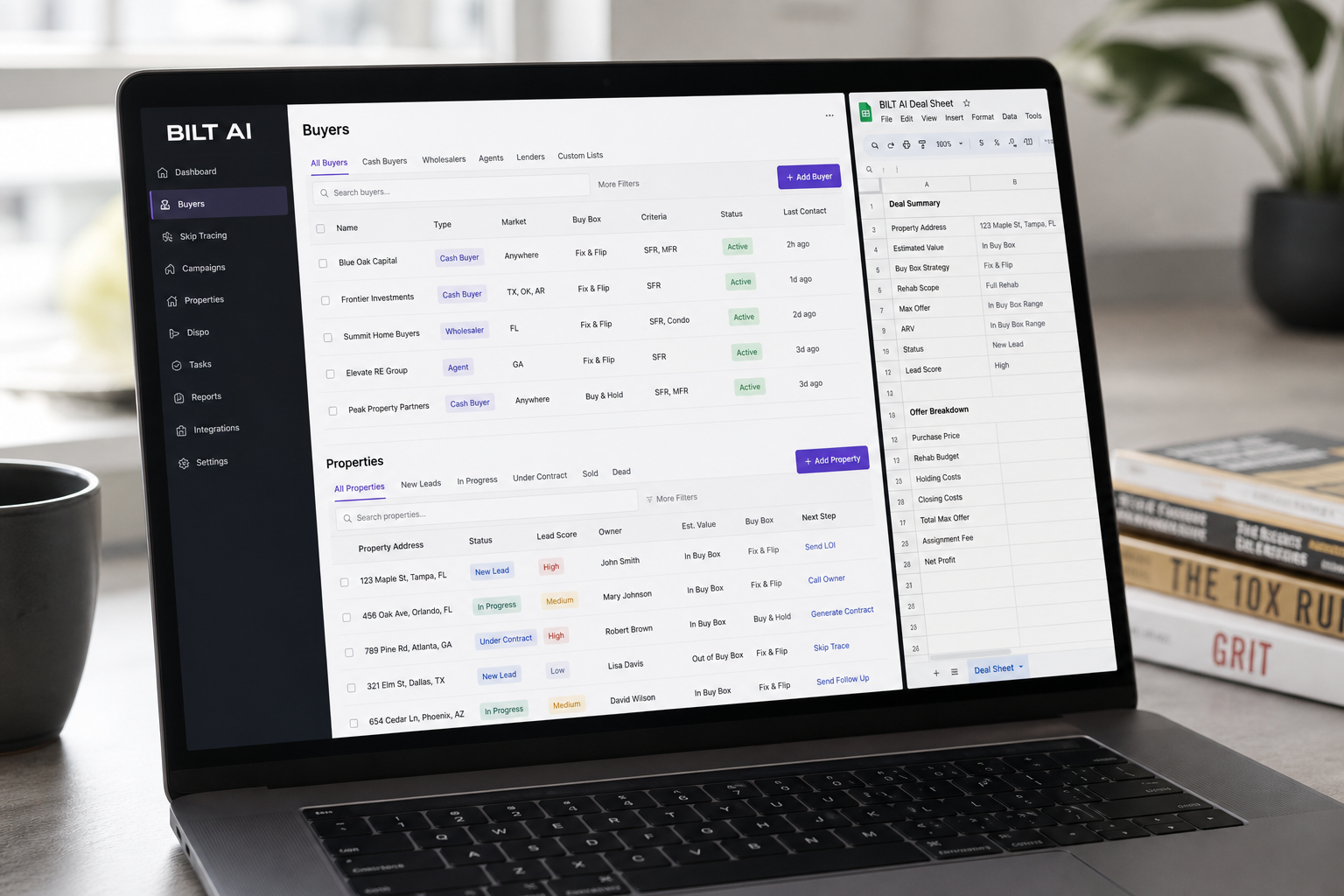
Every high-volume operator ends up building the same three systems whether they realize it or not.
Segmented buyer lists by real behavior
Not who said they are interested. Not who downloaded a PDF. Who actually closed.
Segment by zip, asset type, and price band. If a buyer closed on small multifamily in a specific area, they should never receive a land deal across the state.
This sounds obvious, yet most lists are still messy exports from spreadsheets or CRMs like Mailchimp or ActiveCampaign.
According to Pew Research (2023), relevance is one of the top drivers of engagement across digital communication (Pew Research Center). That applies directly to buyer outreach.
LOIs sent within hours, not days
When a deal is locked, hesitation kills momentum.
The buyers most likely to act are the ones who see it first while the opportunity still feels fresh. Waiting even a day introduces competition, distractions, and doubt.
Operators using structured LOI workflows send clean, consistent deal summaries immediately. No rewriting. No formatting delays.
Follow-ups every 48 hours until resolution
Most deals are not lost on the first send. They are lost in silence after.
Automated follow-ups ensure every buyer either responds or explicitly passes. That clarity tightens the entire pipeline.
These three systems together reduce decision lag across the board. That is where real gains come from.
Operator vignette: what changed when this was systemized
An acquisitions manager running a small wholesaling operation was moving deals consistently but struggled with unpredictable disposition timelines.
Each deal required manual outreach. Buyer lists were broad. Follow-ups depended on memory.
After restructuring the process, the team focused only on buyers who had previously closed similar deals. Outreach went out immediately after contracts were signed. Follow-ups were scheduled automatically.
The difference showed up quickly. Conversations became more direct. Buyers responded with clear intent instead of vague interest. Deals stopped lingering.
“We stopped wondering who might be interested and started talking only to people who already proved they buy.”
This shift did not increase workload. It removed wasted motion.
The Federal Reserve’s Small Business Credit Survey (2024) highlights that operational efficiency directly impacts cash flow stability for small operators (Federal Reserve SBCS). In real estate, disposition is one of the biggest levers on that stability.
The save-worthy artifact: buyer segmentation and LOI flow checklist
This is the exact structure that holds the system together. If this is not dialed in, automation will not fix anything.
Disposition sequencing checklist
- Tag every buyer by last closed deal type (single family, multifamily, land)
- Assign geographic tags based on actual purchase zip codes
- Group buyers into price bands based on prior transactions
- Prepare a standardized LOI template with clear terms and contact details
- Send initial outreach immediately after contract execution
- Schedule automated follow-ups at consistent intervals until response
- Remove unresponsive buyers after repeated non-engagement
This is not theory. This is the baseline system.
Tools like ActiveCampaign or investor-specific platforms can handle parts of this, but stitching it together manually introduces friction.
At scale, most operators outgrow generic tools. That is where purpose-built systems come in.
Where most CRMs break for dispositions
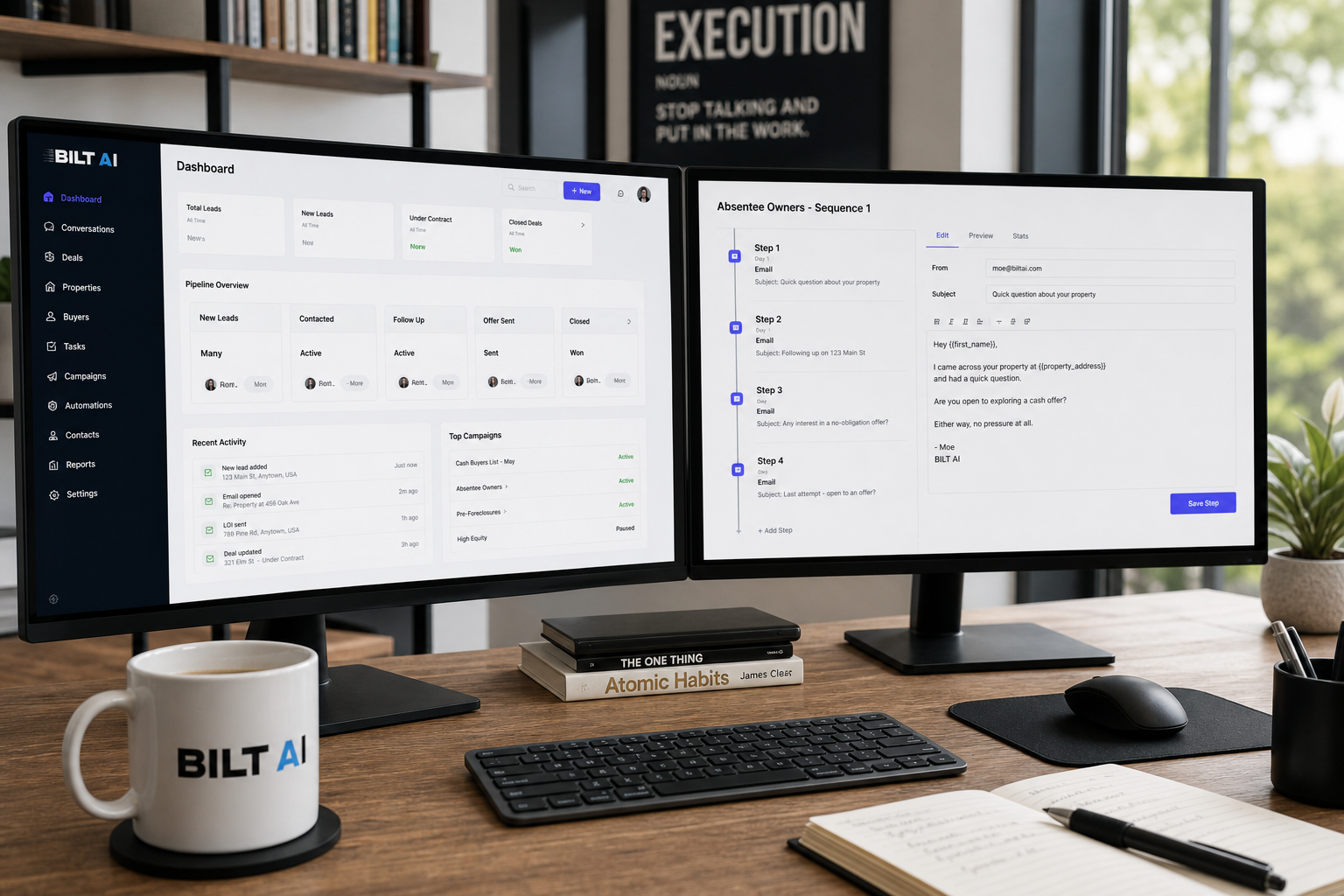
Traditional CRMs were built for pipeline tracking, not deal distribution.
They store contacts well. They log notes. They fail when you need to move a deal to the right buyers instantly.
There is a difference between managing relationships and activating them.
Email platforms like Mailchimp were designed for newsletters. They struggle with real estate deal velocity, especially when segmentation needs to reflect actual transactions instead of marketing tags.
This is where systems built specifically for investors start to matter.
If your current setup requires exporting lists, rewriting emails, or manually tracking follow-ups, it is already costing you deals.
Operators running volume eventually standardize this into one motion. Deal in, buyers notified, follow-ups handled.
If that workflow sounds familiar, it is exactly why BILT AI CRM was built. LOI blasting, buyer segmentation, and automated follow-ups happen inside one system instead of across five disconnected tools.
Fast disposition comes from sequencing, not effort
Adding more effort does not fix a broken process.
Sending more emails to the wrong buyers creates noise. Waiting longer to refine pricing slows momentum. Chasing responses manually burns time that should be spent locking new deals.
The operators who consistently close faster are not working harder on disposition. They are removing decisions from the process.
Each deal follows the same path. The same type of buyers see it. The same communication goes out. The same follow-up cadence runs.
That consistency compounds.
The Bureau of Labor Statistics has long tied process standardization to productivity gains across industries (U.S. Bureau of Labor Statistics). In real estate, disposition is one of the cleanest areas to apply that principle.
When the system is right, deals stop feeling unpredictable. They move.
What to do in your next 48 hours
- Export your last 20 closed buyers from your CRM or title records. Tag each one by property type, location, and price range using a tool like Google Sheets.
- Build one clean LOI template that includes price, terms, and contact method. Save it in your email platform or CRM so it can be reused without edits.
- Take your next deal and send it only to the segment that matches prior buyer behavior. Do not blast your full list.
- Set up automated follow-ups using a platform that supports sequencing, whether that is ActiveCampaign or a real estate specific system.
Run this once and you will feel the difference immediately.
If the process feels clunky or requires multiple tools, that friction is the signal. Systems that remove those steps tend to win over time.
For operators building content and outbound systems alongside dispositions, Kompozy helps structure the content side of deal flow so inbound and outbound work together instead of separately.
Frequently Asked Questions
What is disposition automation in real estate?
Disposition automation is the process of systemizing how deals are marketed and sold to buyers using segmented lists, automated outreach, and scheduled follow-ups. Investors using structured CRMs reduce manual work and improve response rates by sending deals only to relevant buyers.
How do I build a cash buyer list that converts?
Build your list from actual closed transactions, not sign-ups or downloads. Pull buyers from title companies or past deals, then tag them by location and property type so each deal matches their buying history.
How fast should I send a deal after getting it under contract?
Send the deal immediately after the contract is secured and details are verified. Operators who delay outreach often lose buyer attention and reduce engagement on the first touch.
Do automated follow-ups really increase deal conversions?
Yes, consistent follow-ups capture buyers who do not respond on the first message. Many investors report improved response clarity when every buyer is prompted multiple times until they reply or pass.
What tools are best for disposition automation?
Tools like ActiveCampaign handle email automation, but real estate-specific platforms provide better segmentation and deal workflows. Systems designed for investors reduce the need for multiple tools and manual coordination.