
Distressed Property Data Isn’t Scarce
The operator who thought there were no deals

A wholesaler in Maricopa County stared at a list with a few hundred rows and said, “This is all there is?” The file came from a paid data vendor. It looked thin, stale, already worked. He assumed the problem was supply.
It wasn’t supply. It was how the data was being pulled, combined, and used.
Distressed property data shows up in multiple public systems before it ever appears in a polished list. County recorder filings, probate court dockets, and tax assessor delinquency rolls all move on their own timelines. When those sources stay separated, the dataset feels small. When they are combined and tracked over time, the volume changes completely.
ATTOM’s 2024 U.S. Foreclosure Market Report documented more than 300,000 properties with foreclosure filings across the year, a reminder that distress is not rare, it is distributed and constantly updating (source).
The gap most operators run into has nothing to do with access. It comes from fragmentation.
Why distressed property data feels scarce when it isn’t
Most investors are trained to think in terms of “lists.” One list for pre-foreclosure. Another for probate. Another for tax delinquent. Each gets worked once, maybe twice, then archived.
Public data does not behave like a static list. County-level systems update on their own cadence:
- Pre-foreclosure filings (Notice of Default, Lis Pendens) update continuously through county recorder offices
- Probate filings move through court systems and often lag weeks behind the triggering event
- Tax delinquent rolls are typically refreshed on a monthly or quarterly basis through assessor or treasurer offices
Those systems are public by design. The U.S. government requires transparency in property records, which is why county recorders and assessors publish filings and tax status data (usa.gov property records).
The perceived scarcity shows up when operators rely on a single vendor snapshot instead of tracking these sources over time. A one-time export compresses a moving dataset into a static file. That file ages fast.
Operators who treat data as a stream instead of a list see a different reality. Volume increases. Timing improves. Signal becomes clearer.
The contrarian take: the edge is not finding lists
The standard advice says to find better data sources. That advice misses the real bottleneck.
The edge is not access. The edge is normalization.
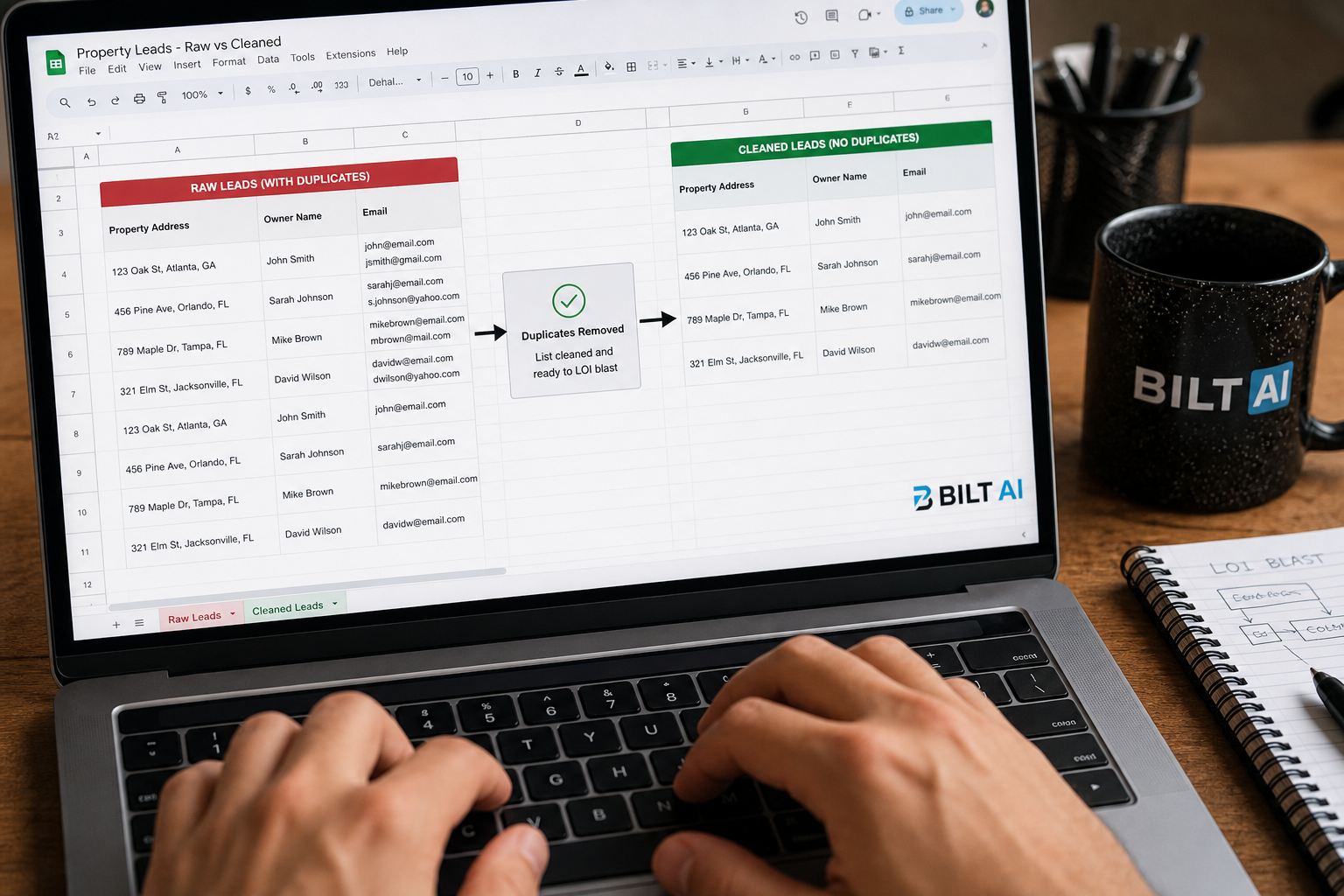
Raw distressed property data is messy. Owner names appear in different formats. Mailing addresses don’t match property addresses. The same property can show up in pre-foreclosure and tax delinquent datasets at the same time.
An operator pulling directly from a county recorder and a tax office will see duplication immediately. Without cleanup, outreach becomes inconsistent. Sellers get hit multiple times with conflicting messaging. Deals slip through because no one tracks the stage correctly.
A Chicago-based investor working Cook County records described it clearly: “We thought we needed more leads. Turns out we needed fewer duplicates.” After consolidating three sources into one pipeline, their outbound became more consistent and response quality improved.
The market does not reward whoever downloads the biggest list. It rewards whoever understands what stage each property is in and communicates accordingly.
A working pipeline for pre foreclosure, probate, and tax delinquent data
Building a usable distressed property pipeline starts with three sources and one rule: everything gets standardized before outreach.
Source 1: County recorder (pre-foreclosure)
Pull Notice of Default or Lis Pendens filings directly from the county recorder. Many counties provide online access portals. Maricopa County and Cook County both publish searchable records.
Source 2: Probate court filings
Probate data carries strong ownership signals. Estates often need liquidity. Courts publish filings, though access varies by county. These records typically lag but are cleaner in terms of decision-maker identification.
Source 3: Tax assessor or treasurer
Tax delinquent lists often contain properties with equity. Owners who fall behind on taxes may still have significant ownership value, which creates deal flexibility.
Normalization layer
Every record gets standardized into a single format:
- Property address normalized through USPS formatting
- Owner name cleaned and matched across datasets
- Stage tagged (pre-foreclosure, probate, tax delinquent)
- Duplicate records merged into a single profile
This is where most operators stall. Spreadsheets break once volume increases. Outreach becomes inconsistent. Follow-up gets missed.
If the pipeline is running at any meaningful scale, systems like BILT AI CRM handle this normalization and automate outbound sequencing so each property gets consistent communication tied to its stage.
The artifact: a 7 step distressed data normalization checklist
This is the piece operators actually keep. Not theory. The exact workflow used before any outbound starts.
- Ingest three sources weekly
Pull fresh data from county recorder, probate court, and tax office at least once per week. - Standardize addresses using USPS format
Run all property addresses through USPS verification to remove formatting inconsistencies. - Match owner records across datasets
Use name + mailing address to identify duplicates appearing in multiple lists. - Assign a single stage tag
Prioritize stage hierarchy: pre-foreclosure first, then probate, then tax delinquent. - Merge duplicate entries into one record
Create a unified profile for each property with combined signals. - Attach timeline notes
Record filing dates, court updates, or tax delinquency status changes. - Trigger outbound based on stage
Pre-foreclosure gets urgency messaging. Probate gets empathetic, slower cadence. Tax delinquent gets equity-focused outreach.
Most lists fail before step three. That is why response rates look inconsistent across channels.
Turning distressed property data into daily deal flow

Raw data does nothing on its own. It needs to be turned into consistent outbound and content.
Operators who win here do two things at the same time. They run outreach and they publish insights from the same dataset.
A Phoenix investor shared a simple shift: “We started posting what we were seeing in probate each week. Sellers started recognizing our name before we reached out.” That kind of familiarity compounds.
This is where systems matter. Kompozy by BILT AI was built to take a single dataset and turn it into platform-native content. One CSV becomes multiple daily posts. Topics come directly from the data:
- Recent probate activity in a specific county
- Patterns in tax delinquent properties
- Overlap between foreclosure and tax lists
That content feeds inbound while outbound continues running. Both are driven by the same underlying data.
Instead of guessing what to post, the dataset becomes the content calendar.
Where most operators still get stuck
The common failure point is not data access. It is consistency.
Pulling data once feels productive. Doing it every week, normalizing it, tagging it, and acting on it is where pipelines are built.
Another issue shows up in messaging. Pre-foreclosure, probate, and tax delinquent owners are in different situations. Sending the same message across all three groups reduces response quality. Stage-based communication matters.
There is also a timing gap. Probate records lag. Tax lists refresh on a cycle. Pre-foreclosure moves faster. Without tracking those timelines, outreach hits too early or too late.
Operators who treat all distressed leads the same end up blaming the list. The problem sits in how the data is used.
What to do in the next 48 hours
- Pick one county and pull three datasets
Use the county recorder, probate court, and tax assessor portals. Start with a single market instead of spreading across multiple counties. - Normalize and tag every record
Standardize addresses, merge duplicates, and assign stage tags before sending any outreach. - Launch one outbound sequence and one content stream
Send stage-specific emails or mail while publishing one insight per day based on the dataset.
If that process feels manual or inconsistent, it usually is. The operators scaling this are not doing it in spreadsheets. They are running structured pipelines.
For teams who want to see how that pipeline is set up end-to-end, including how outbound and content run off the same data, book a walkthrough here.
If content production becomes the bottleneck, Kompozy shows how to turn one dataset into a full week of posts without guessing topics. See how it works at Kompozy.
Frequently Asked Questions
How do I find distressed property data for free?
Use county-level sources first. Recorder offices publish pre-foreclosure filings, probate courts publish estate cases, and tax assessors publish delinquent rolls. These are public records available through county portals such as Maricopa County or Cook County systems.
What is the best distressed property list to target?
Pre-foreclosure typically moves fastest because filings signal immediate pressure. ATTOM’s 2024 foreclosure report shows consistent national activity, which makes this dataset time-sensitive and actionable.
How often should I update my property data?
Weekly updates keep the dataset usable. County recorder filings update continuously, while tax delinquent lists refresh monthly, so a weekly pull keeps everything current enough for outreach.
Why do my distressed property lists have duplicates?
Duplicates happen when the same property appears across multiple datasets. A single address can show up in pre-foreclosure and tax delinquent records at the same time, which requires normalization before outreach.
Can I use spreadsheets to manage distressed data?
Spreadsheets work at very small scale, but they break once multiple datasets are combined. Operators handling consistent volume move to systems that merge records, tag stages, and automate follow-up.