Entrepreneur Uncertainty vs Career Stability
Entrepreneur uncertainty vs career stability in real estate

A wholesaler opens their inbox after pushing a batch of outreach through Gmail and sees silence. No replies. No counters. No inbound. The spreadsheet still shows activity, but nothing feels like traction.
That moment gets labeled as failure by most operators. It gets misread as a signal to change strategy, switch lists, or worse, step away entirely.
Entrepreneur uncertainty sits on one side. Career stability sits on the other. One gives predictable inputs and predictable outputs. The other gives unpredictable inputs and delayed feedback loops that don’t line up with effort.
Real estate operators don’t quit because deals stop existing. They quit because they interpret uncertainty as incompetence. That misread shows up right when the activity is finally getting close to working.
Career stability rewards consistency with immediate reinforcement. You show up, you get paid, the loop closes quickly. Entrepreneur uncertainty breaks that loop. You can send outreach, underwrite deals, follow up for weeks, and still feel like nothing is happening.
That gap between effort and feedback is where most pipelines die.
Why uncertainty in wholesaling feels like losing
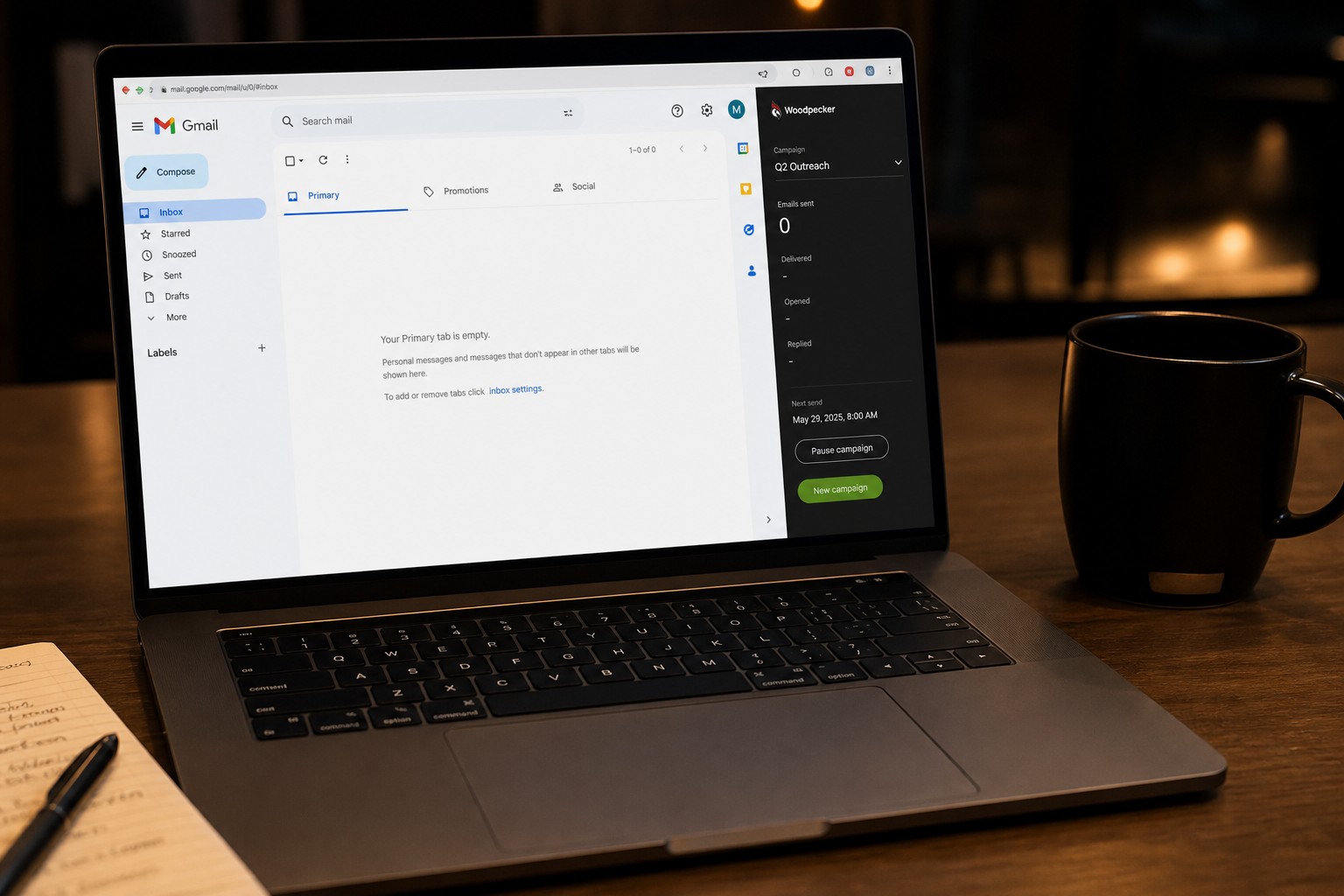
Cold outreach in real estate has a delayed payoff curve. You send emails, text follow-ups, and LOIs, but the seller response cycle doesn’t match your daily activity. That disconnect creates the illusion that nothing is working.
Google and Yahoo tightened sender requirements in 2024, which made cold email deliverability more sensitive to setup and behavior. Google Postmaster shows how reputation impacts inbox placement, and most operators never check it. They assume the message is bad when it’s not even being seen.
So the operator reacts emotionally. They change copy too early. They abandon a list before it matures. They stop following up before the seller is ready.
Career paths don’t train you for this. There’s no equivalent to sending a hundred LOIs and getting no immediate response. In a job, that kind of output would trigger immediate feedback from a manager.
In wholesaling, silence is normal. That’s the part that gets misinterpreted.
According to the 2024 Federal Reserve Small Business Credit Survey, uncertainty about revenue and demand remains one of the most common challenges for operators. Real estate amplifies that because each deal is binary. It either closes or it doesn’t.
That creates emotional volatility tied to pipeline gaps, not actual opportunity gaps.
The contrarian take: feeling behind is often the signal you are early, not failing
Most advice says reduce uncertainty as fast as possible. Stabilize. Simplify. De-risk.
That sounds right, but in real estate outbound, it often kills momentum.
Entrepreneur uncertainty is not something to eliminate early. It’s something to extend long enough for compounding to kick in.
Operators who win in outbound don’t feel less uncertainty. They sit in it longer without changing direction every time the signal goes quiet.
Cold email, especially after the 2024 deliverability changes, behaves like a lagging system. Domain reputation builds gradually. Seller responses stack unevenly. Conversations start long after the first touchpoint.
If you keep resetting your approach every time things feel slow, you never let the system mature.
This is where most operators unknowingly sabotage themselves. They optimize for emotional comfort instead of pipeline maturity.
The uncomfortable stretch where nothing seems to happen is often the exact stretch where systems are warming up.
That applies directly to outbound. It also applies to follow-up. Most deals in wholesaling don’t come from the first touch. They come from consistent contact over time.
So the question isn’t how to remove uncertainty. It’s whether you can stay consistent long enough for it to convert.
What stable operators do differently inside uncertain pipelines
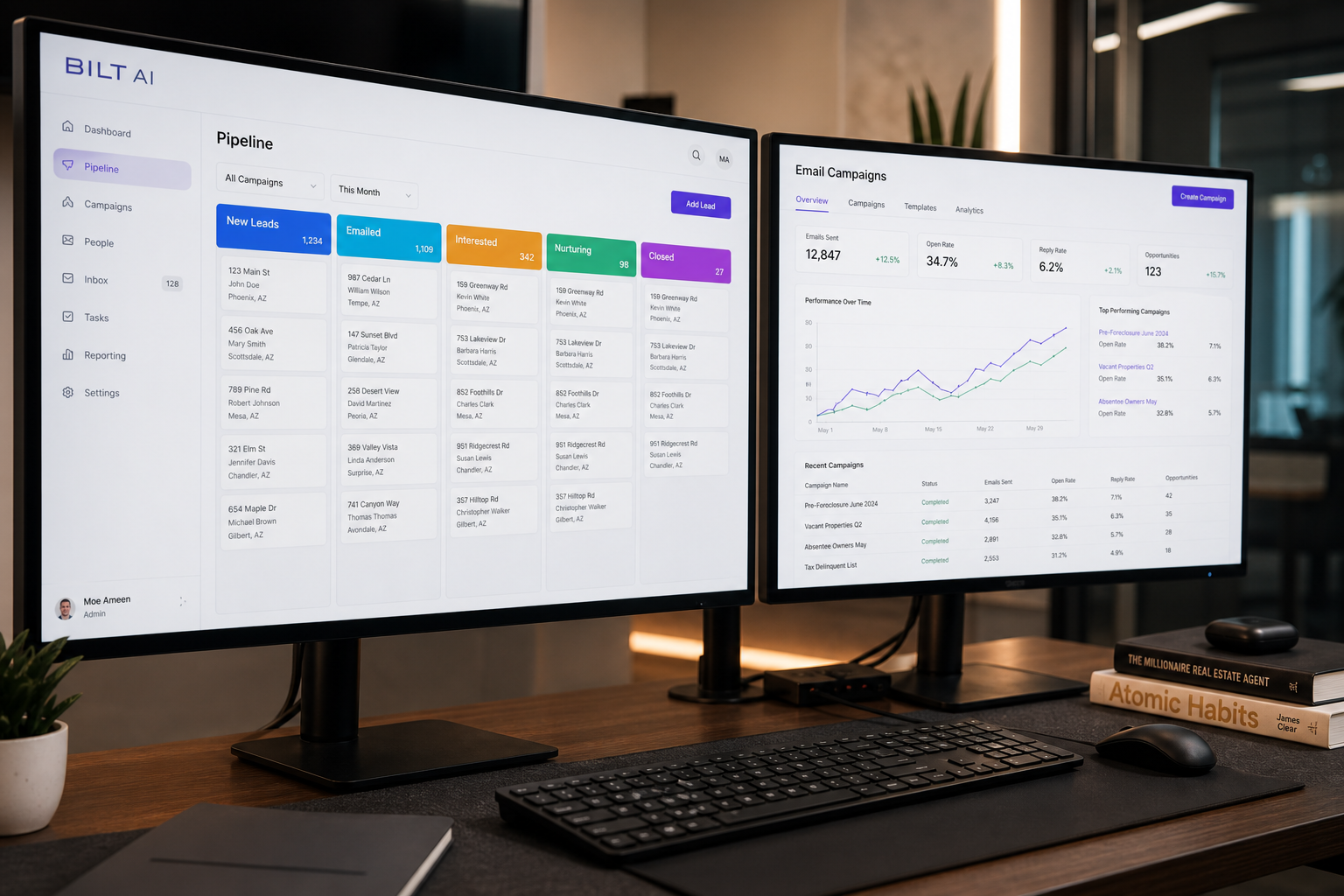
Operators who build consistent deal flow treat outbound like infrastructure, not activity. They don’t rely on motivation or daily wins to keep going.
They build systems that run whether they feel good about it or not.
That includes tools like Mailgun for sending, Google Postmaster for monitoring, and structured CRMs that track follow-ups across long cycles.
More importantly, they separate actions from outcomes. Sending outreach is a controlled variable. Seller replies are not.
That sounds simple, but most operators tie their identity to response rates instead of consistency of execution.
Stable operators also resist the urge to constantly tweak messaging. They let data accumulate before making changes.
If you’re running any meaningful volume, you already know spreadsheets break quickly. Tracking replies, follow-ups, and deal stages becomes messy fast. That’s exactly why tools like BILT AI CRM exist. It handles LOI blasting and keeps outbound organized so you can stay consistent without losing visibility.
Because consistency is the real edge here. Not creativity. Not motivation.
The operators who stick to a process long enough are the ones who eventually see inbound pick up in waves instead of isolated wins.
Save this: outbound consistency thresholds for real estate operators
This is the checkpoint most operators never define clearly. Without thresholds, everything feels random.
Outbound consistency checklist
- Run outreach from warmed domains only, verified through Google Postmaster before scaling volume
- Hold messaging constant until enough conversations accumulate to justify a change
- Track follow-ups separately from first touches inside your CRM
- Commit to a fixed outreach cadence instead of reacting to daily results
- Monitor inbox placement, not just send volume
- Keep lists segmented by asset type or seller motivation, not mixed batches
- Review pipeline weekly, not daily, to avoid emotional decision-making
This isn’t theory. It’s what keeps outbound from collapsing under uncertainty.
When you follow a structure like this, the emotional swings flatten. Not because results change instantly, but because your inputs stop changing every time you feel behind.
That shift alone keeps most operators in the game long enough to see deals materialize.
Uncertainty vs quitting: where most pipelines actually break
The breaking point isn’t lack of opportunity. It’s misinterpretation of signals.
Entrepreneur uncertainty tells you nothing is working. In reality, it usually means not enough time has passed or not enough volume has compounded.
This is especially true in inbound-driven outbound systems. You’re planting conversations that convert later.
Career stability conditions you to expect immediate reinforcement. Real estate doesn’t operate that way.
The operators who quit early often had the right actions in place. They just didn’t stay with them long enough.
And the ones who stay? They don’t feel confident the whole time. They just don’t interpret discomfort as failure.
That distinction decides whether your pipeline ever matures.
What to do in the next 48 hours if your pipeline feels stuck
1. Audit deliverability using Google Postmaster. Check domain reputation before touching your messaging.
2. Lock your outreach cadence for the week. Do not change copy or targeting mid-cycle.
3. Organize follow-ups inside a system like BILT AI CRM so older conversations don’t disappear.
4. Review your pipeline once at the end of the week instead of reacting daily.
5. Keep sending even if responses are quiet. That’s part of the cycle, not a signal to stop.
If you want to see how we structure this for wholesalers running outbound at scale, you can book a quick walkthrough here. It’s the exact system we use to turn cold outreach into inbound conversations without resetting every time things go quiet.
Frequently Asked Questions
Why does entrepreneurship feel so uncertain in real estate?
Because deal flow has delayed feedback loops, especially with cold outreach. Tools like Google Postmaster show that emails may not even reach inboxes immediately, which creates a gap between effort and visible results.
Is feeling behind in wholesaling a bad sign?
No, it usually means you are in the phase where outreach volume hasn’t compounded yet. Many operators experience silence before consistent inbound starts showing up from earlier touchpoints.
How long should I stick with one outreach strategy?
Long enough to collect meaningful response data. Changing messaging too early resets learning cycles and prevents you from identifying what actually works.
What causes most outbound pipelines to fail?
Inconsistent execution. Operators stop or pivot too quickly based on short-term results instead of letting outreach and follow-up cycles mature over time.
Do I need a CRM for cold email in real estate?
Yes, once volume increases beyond basic tracking. Platforms like BILT AI CRM keep follow-ups organized and prevent missed opportunities across longer deal cycles.