Facebook Live for Real Estate Leads vs Cold Outreach
Facebook Live vs Cold Outreach in real estate lead generation
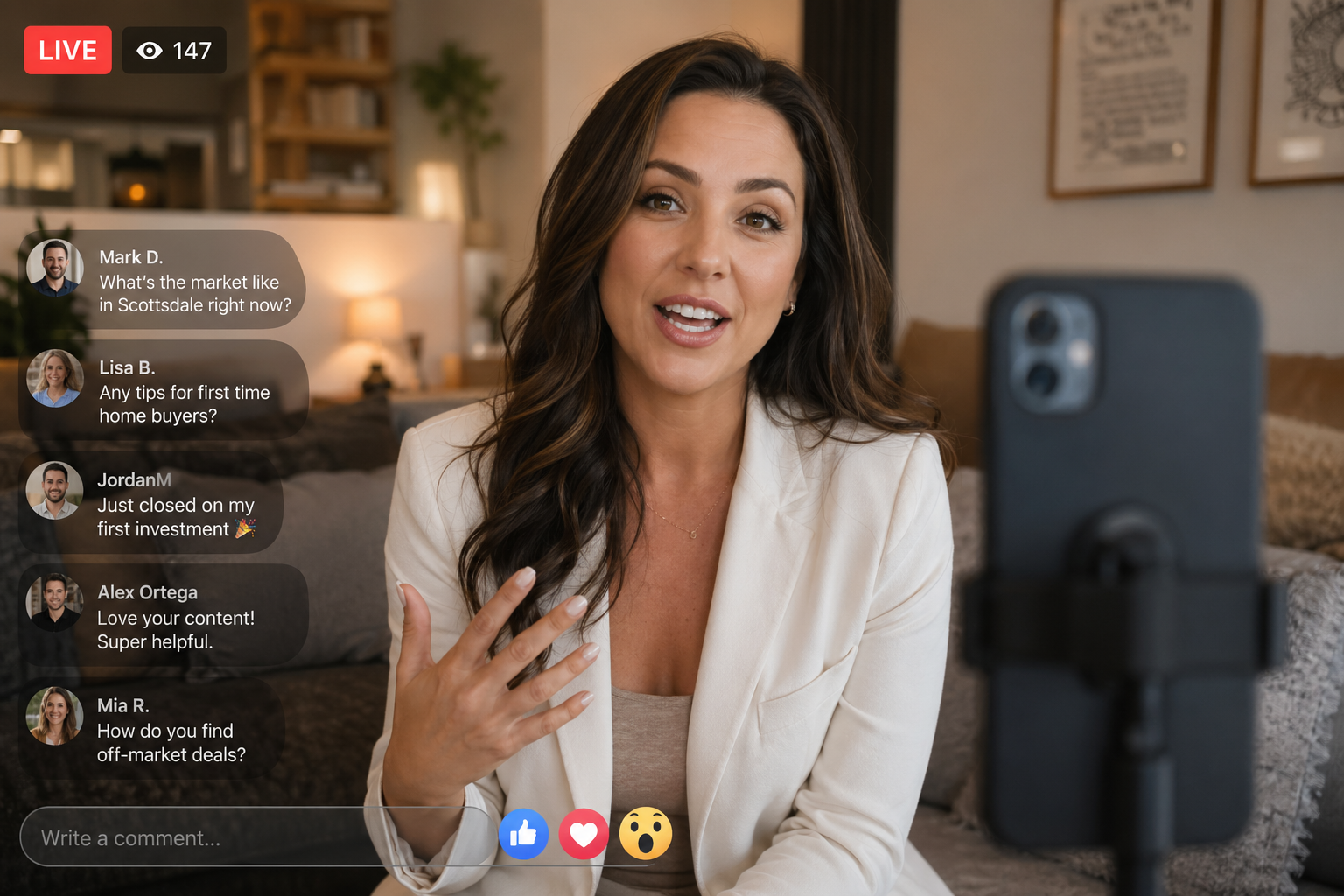
An agent selling residential inventory leaned heavily on Facebook Live and referrals, and it turned into a meaningful revenue channel. She was on pace to move around $25M in volume in a year, with roughly $10M tied directly to Facebook Live sessions. The math on her time looked unusual, with an estimated $13,000 per hour of live streaming based on closed deals.
Compare that to the standard outbound path most operators follow. Cold calls, SMS, and email campaigns that require consistent follow up, list hygiene, and deliverability work just to stay neutral. Both paths can work. They behave very differently.
Operators tend to overcomplicate the scaling decision. They look for a new channel instead of pressing harder on the one already producing deals. That instinct is expensive.
- Facebook Live: compounds trust, inbound DMs, referral loops
- Cold outreach: predictable volume, controllable inputs, slower trust curve
According to the National Association of Realtors, repeat clients and referrals accounted for a majority of an agent’s business in 2024 (NAR Research). Facebook Live behaves closer to referrals than cold outreach because it builds familiarity before the first conversation.
Why Facebook Live compresses the trust timeline faster than outbound
Cold outreach starts with skepticism. A seller receiving an unsolicited message is filtering for risk first. That is baked into the channel.
Facebook Live flips that sequence. The prospect watches before they ever speak. They hear tone, see how objections get handled, and observe how properties are evaluated. By the time they send a message, the initial barrier is already lower.
There is platform behavior behind this. Meta prioritizes live video in feed distribution because it drives session time, which increases visibility compared to static posts (Meta ranking overview). That means each session is not just content, it is distribution.
For real estate specifically, this matters because decisions are emotional and high stakes. Seeing an operator walk a property, break down comps, or explain a contract clause in real time creates familiarity that text cannot match.
Outbound still plays a role. It fills gaps when inbound slows. It allows targeting specific zip codes or asset types. But it rarely builds the same level of pre-call trust without multiple touches.
The constraint is not channel, it is frequency
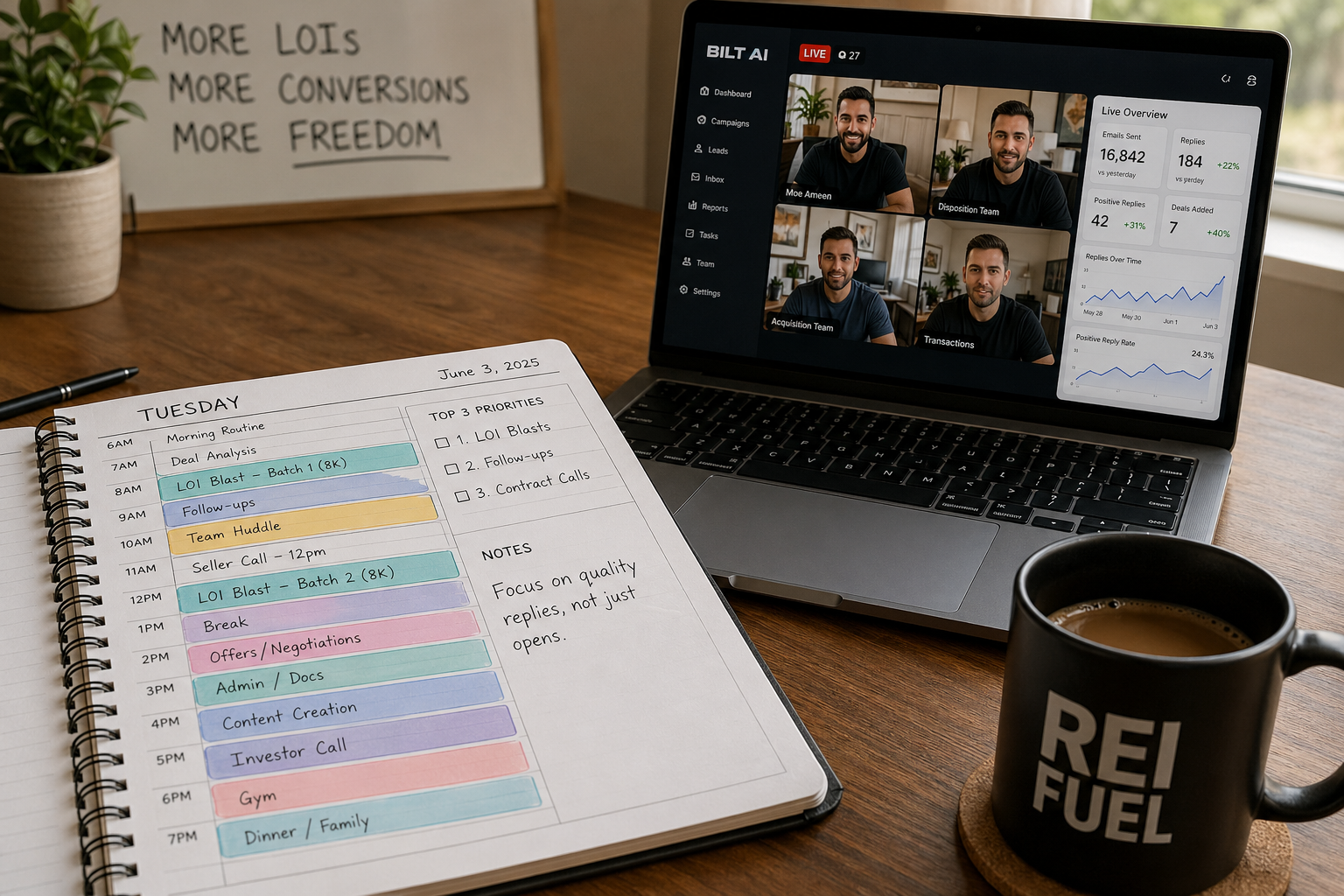
The agent example above did not need a new funnel. The constraint was output. She was going live only a couple of times per month despite the channel producing a meaningful portion of her volume.
This is where most operators stall. They treat a working channel as an occasional tactic instead of a system. Scaling did not require new tools or a rebrand. It required increasing frequency to something closer to daily or near-daily sessions.
That recommendation sounds simple because it is. It is also where execution breaks.
Barriers show up quickly:
- Time blocking conflicts with showings and closings
- Uncertainty about what to talk about each session
- Inconsistent follow up on inbound messages
The pattern shows up across markets. When a channel produces deals, the next move is usually optimization. In practice, volume tends to outperform optimization until a clear ceiling appears.
From an operator standpoint, frequency is a multiplier. If one session produces inbound conversations, more sessions increase the surface area for those conversations to happen.
A save-worthy system: the 5x Live Conversion Loop
Running five live sessions per week without structure turns into noise. Running them with a repeatable loop turns them into a pipeline. This is the exact system used by operators who sustain inbound from content.
The 5x Live Conversion Loop
- Pre-frame the session (15 minutes before going live): Pull one active deal, one recent objection, and one local market shift. Use tools like Redfin Data Center to anchor talking points in current data.
- Open with a real scenario: Example, a seller asking about pricing after sitting on market. Avoid generic intros. Start inside a deal.
- Engage during the live: Call out commenters by name and answer questions in real time. This increases retention and signals activity to the platform.
- Immediate DM follow-up (same day): Every comment or reaction gets a short message. Not a pitch, just context. “Saw you on the live, are you buying or selling right now?”
- Log and route leads: Track every inbound conversation in a CRM. Tag by intent, timeline, and property type.
- Repurpose within 24 hours: Clip the live into short segments for Instagram Reels and email. Extend the reach of a single session.
- Review weekly: Which topics produced conversations. Double down on those in the next week’s sessions.
This loop turns content into a predictable input. Without it, most sessions end as one-off events with no follow-through.
Where outbound still wins and how to pair it with Live
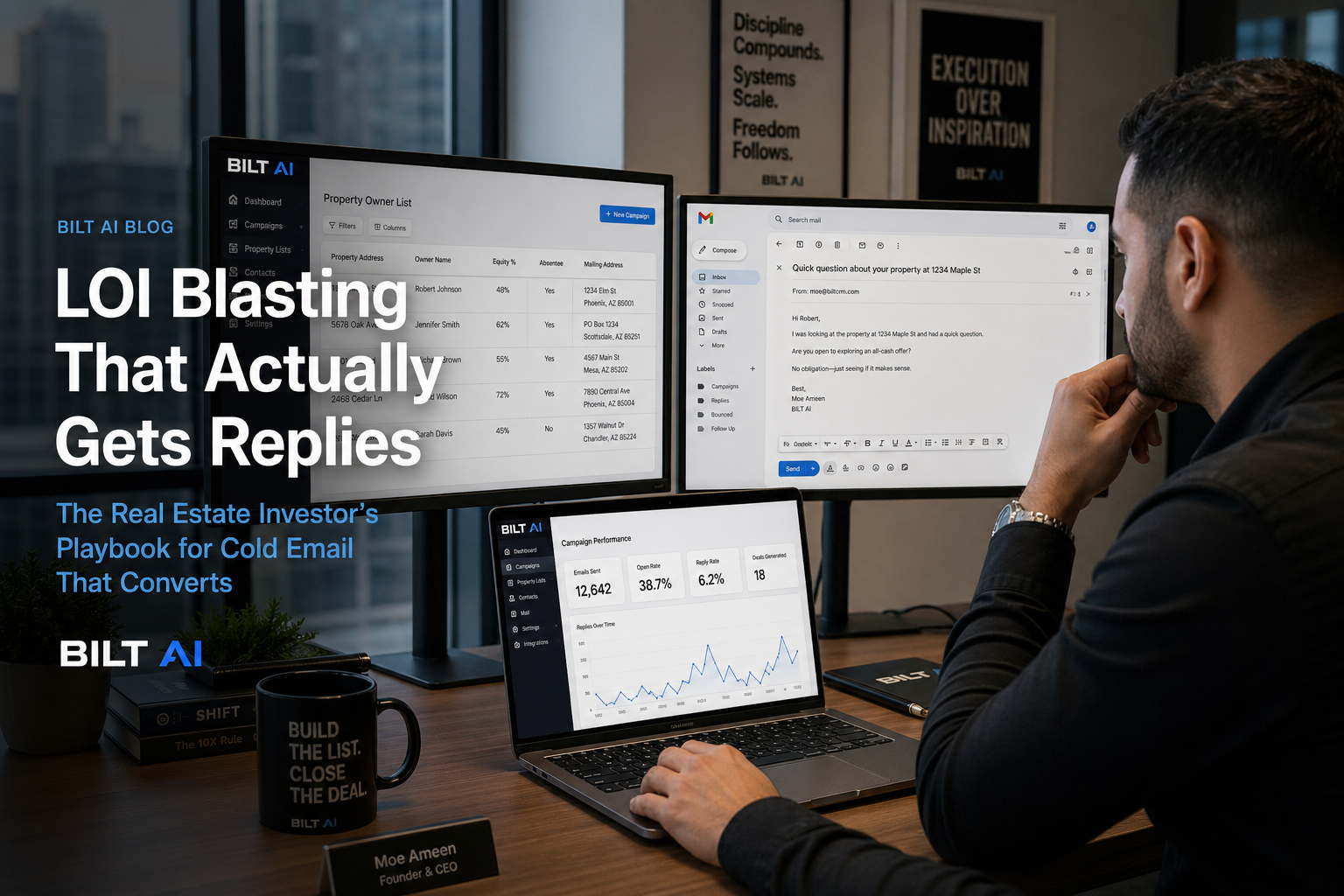
Outbound remains the fastest way to target a specific list. If you are a wholesaler trying to lock up off-market inventory in a tight zip code, waiting for inbound alone will slow you down.
Cold email and LOI campaigns allow precise targeting. Lists can be built from county records or platforms like Reonomy. Messaging can be tailored to distress signals, ownership duration, or asset class.
The stronger play is not choosing one over the other. It is sequencing them.
Live content warms the market. Outbound captures the segments that are not yet watching.
Operators using both channels effectively often see better response rates on outbound because prospects have already encountered their content. Recognition reduces resistance.
If you are running outbound at scale, managing replies and tracking conversations becomes the bottleneck quickly. That is where systems matter. Tools built specifically for real estate operators, like BILT AI CRM, handle LOI blasting and inbound tracking in one place so you are not stitching together spreadsheets and inboxes.
The contrarian take: scaling is usually subtraction, not addition
The common advice is to add more channels when growth stalls. More platforms, more funnels, more tools.
In practice, most operators already have a working channel. It is underused.
Data from the U.S. Small Business Administration shows that marketing consistency is a primary driver of small business growth, not channel diversity (SBA). Consistency compounds. Fragmentation resets momentum.
For the agent running Facebook Live, the fastest path to growth was not expanding into new platforms. It was increasing output in the channel already producing deals.
This runs against how most people think about scaling. Adding feels like progress. Repeating feels basic. Yet repeating what works is where most of the upside sits.
Once frequency is maxed and results plateau, then optimization and expansion make sense. Before that, new channels often dilute focus.
What to do in the next 48 hours to turn content into deals
- Schedule five sessions: Block specific time slots on your calendar for the next week. Treat them like listing appointments. No cancellations.
- Prepare three scenarios per session: Pull from active deals, recent objections, and local data using Redfin or MLS dashboards.
- Set up lead tracking: Use a CRM that can capture inbound messages and tag them by intent. If volume is already high, review how BILT AI CRM structures conversations for real estate workflows.
- Commit to same-day follow-up: Every comment or DM gets a response within hours. Speed matters more than scripting.
If you want a second set of eyes on how your current lead flow is structured, you can book a quick walkthrough and see how other operators are tying inbound content to actual deals.
Frequently Asked Questions
Does Facebook Live actually generate real estate leads?
Yes, it generates inbound leads when sessions are consistent and tied to real scenarios. One agent attributed about $10M in closed volume to Facebook Live sessions, showing direct deal impact rather than just engagement.
How often should real estate agents go live on Facebook?
At least several times per week if the channel is producing results. Increasing frequency from occasional sessions to near-daily live streams is often the fastest way to grow inbound conversations.
Is cold outreach still effective for real estate investors?
Yes, especially for targeting specific property lists. Platforms like Reonomy allow precise data pulls, and outbound campaigns can reach owners who are not engaging with your content yet.
What should I talk about on Facebook Live as an agent?
Use active deals, real objections, and local market data. Referencing live scenarios keeps sessions relevant and mirrors the questions prospects are already asking.
How do I convert Facebook Live viewers into clients?
Follow up the same day with everyone who engages. A simple message tied to the live session creates a natural transition into a conversation, which is where deals start.