Focus on Yourself vs Competitor Obsession
Focus on yourself vs watching every other wholesaler
Daniel, a wholesaler in Phoenix, had three contracts fall apart in one month. His Slack messages were full of screenshots from Instagram, other investors posting checks, dispositions, wins. One line stuck: “Everyone’s closing but me.”
He wasn’t short on leads. He was short on attention. Every time a deal needed follow-up, he was in someone else’s comment section or reverse engineering another operator’s post.
This is the fork most operators hit. Focus on yourself, or track everyone else. One compounds. The other fragments.
What competitor obsession looks like in real terms
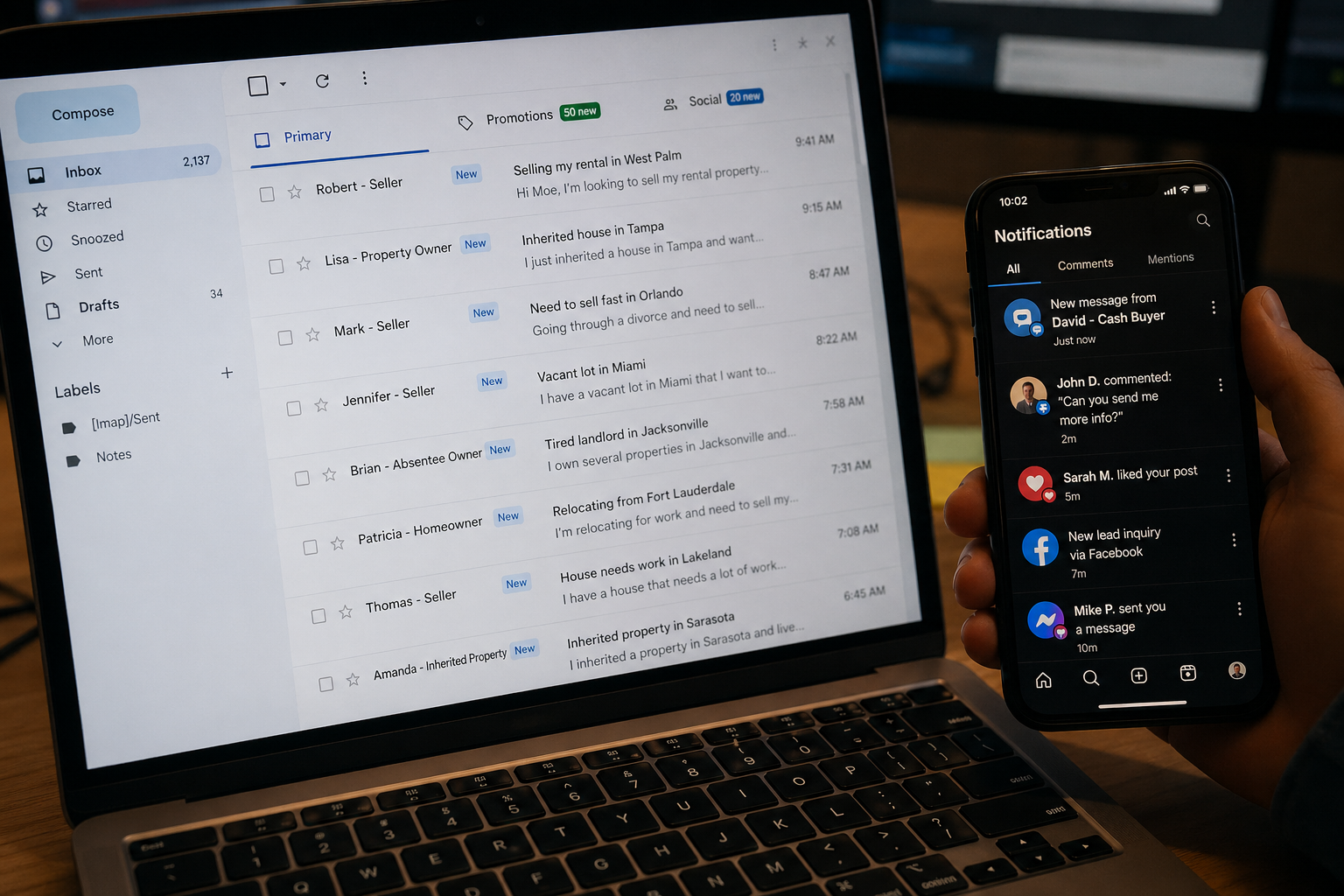
- Inbox full of half-replied seller threads
- CRM notes missing key data like motivation or timeline
- Offers sent late because you were “researching comps” from someone else’s deal breakdown
What operator focus actually looks like
- Daily follow-ups executed inside a system like HubSpot or a dedicated RE CRM
- Clear pipeline stages tied to contracts, not vibes
- Consistent outbound that turns into inbound replies
The shift isn’t philosophical. It shows up in how fast you respond to a seller asking, “Are you still interested?”
Why distraction kills deals faster than bad marketing
Most operators blame lead quality. In reality, deals die in the gap between first contact and consistent follow-up.
The Federal Trade Commission has repeatedly highlighted how response time shapes consumer trust in digital interactions (FTC.gov). In real estate, that gap is where contracts are won or lost.
Maria, an agent in Tampa handling multiple listings, tracked her own pipeline over a quarter. When she responded to inbound seller inquiries within the same working block, she converted conversations into signed agreements at a noticeably higher rate. When responses slipped into the next day, conversations cooled or disappeared.
Her note in the CRM was simple: “Fast reply = control of the deal.”
Watching competitors doesn’t delay your marketing. It delays your response loop. That’s the real cost.
Cold outreach vs inbound attraction in 2026

Cold outreach and inbound are not enemies. They are phases of the same system.
Cold outreach (execution heavy)
- Pull list from a data source like PropStream
- Send direct messages or emails
- Manually track replies
Inbound attraction (system driven)
- Consistent email sequences that warm leads over time
- Replies that come back days or weeks later
- Conversations that start with “I saw your email…”
The operators who win stop treating cold outreach as a one-time blast. They build systems that recycle attention.
Per a 2024 report from Pew Research Center, digital behavior is heavily influenced by repeated exposure rather than single touchpoints. Real estate sellers are no different. One email rarely closes a deal. A sequence does.
This is where focus matters. If your attention is scattered, your sequences break. If your system runs, your pipeline grows without you chasing every post in your feed.
The operator artifact: the 5-step deal focus loop
This is the exact loop used to keep attention on revenue-producing actions instead of noise. Screenshot it, use it.
- Lead capture: Every new seller lead enters a single system within the same day. No spreadsheets split across devices.
- Initial response: First reply sent within the same working block using a saved template.
- Qualification: Capture four data points, property condition, timeline, motivation, asking price.
- Offer cadence: Send initial offer, then structured follow-ups across multiple days.
- Pipeline review: Daily review of active deals, not social feeds. Focus stays on contracts in motion.
When Daniel implemented this loop, his comment shifted from “everyone’s winning” to “I missed that follow-up.” That’s a fixable problem.
If you’re running this at scale, spreadsheets collapse under volume. That’s exactly why BILT AI CRM exists, to handle LOI blasting and structured follow-ups without deals slipping through.
The contrarian take: ignoring competitors is a growth strategy

Most advice says study your competition. In real estate, overconsumption of competitor content often creates hesitation.
Operators second-guess offers because they saw someone else get a better spread. They delay sending contracts because another investor mentioned a different pricing approach.
Jared, a wholesaler in Dallas, ran a simple test over a month. He muted industry content and tracked only his own pipeline activity. His note after closing multiple assignments: “I stopped negotiating against ghosts.”
There is no award for having the most informed opinion in your market. There is revenue for sending offers, following up, and staying in conversations long enough to convert.
Focusing on yourself removes artificial competition. The only deals you lose are the ones you didn’t execute on.
What to do in the next 48 hours to refocus your pipeline
Execution fixes this fast if you keep it tight.
- Audit your last 20 leads: Open your CRM or inbox and identify which conversations stalled. Look for gaps longer than a day between replies.
- Install a follow-up system: Use a platform like Mailchimp or a dedicated RE CRM to automate sequences tied to seller responses.
- Block distraction sources: Remove or mute competitor-heavy feeds during work blocks. Replace that time with pipeline review.
- Send pending offers: Any lead that reached qualification but never received an offer gets one immediately.
If your current setup makes this hard, that’s the bottleneck. Most operators don’t need more leads. They need a system that converts the ones already in motion.
If you want to see how we structure this for wholesalers and investors, you can book a quick walkthrough and map it to your current pipeline.
Frequently Asked Questions
How do I focus on yourself in real estate investing?
Focus on your pipeline, not other investors’ results. Track your own leads, follow-ups, and offers inside a CRM and measure progress by contracts sent and conversations active.
Why does comparing to other wholesalers hurt deal flow?
It delays execution. When responses and offers are pushed back while you analyze others, seller conversations go cold and deals drop off.
Is inbound better than cold outreach for real estate leads?
Inbound converts better over time because sellers respond after multiple touches. Cold outreach starts the conversation, but sequences create the deal flow.
What is the best system to manage real estate leads?
A centralized CRM with automated follow-ups works best. Tools like HubSpot or purpose-built systems like BILT AI CRM keep conversations active without manual tracking.
How quickly should I respond to seller leads?
Respond within the same working block whenever possible. Faster replies maintain control of the conversation and increase conversion into contracts.