
Inbound Lead Generation for Wholesalers That Converts
Why 12 pieces of content drove most inbound seller leads

Inbound lead generation for wholesalers often gets framed as a creativity problem. The data says otherwise.
Across a controlled content run, 80% of inbound seller leads came from just 12 pieces of content. Not viral hits. Not polished brand stories. Repeatable assets built on the same three distressed seller categories: probate, tax delinquent, and tired landlords.
Each topic ran through four angles. Each asset distributed across nine surfaces. The outcome stayed consistent. Every piece produced a steady flow of direct messages or form fills over a 30 day window.
The pattern matters more than the post. Operators who rely on one-off ideas stall out. Operators who build a topic pool compound.
For context, the Federal Reserve’s 2024 Small Business Credit Survey notes that customer acquisition remains one of the top operational challenges for small firms, especially those dependent on outbound channels (Federal Reserve, 2024). That pressure is exactly why inbound systems like this outperform random posting.
The contrarian take: consistency beats creativity in wholesaling content
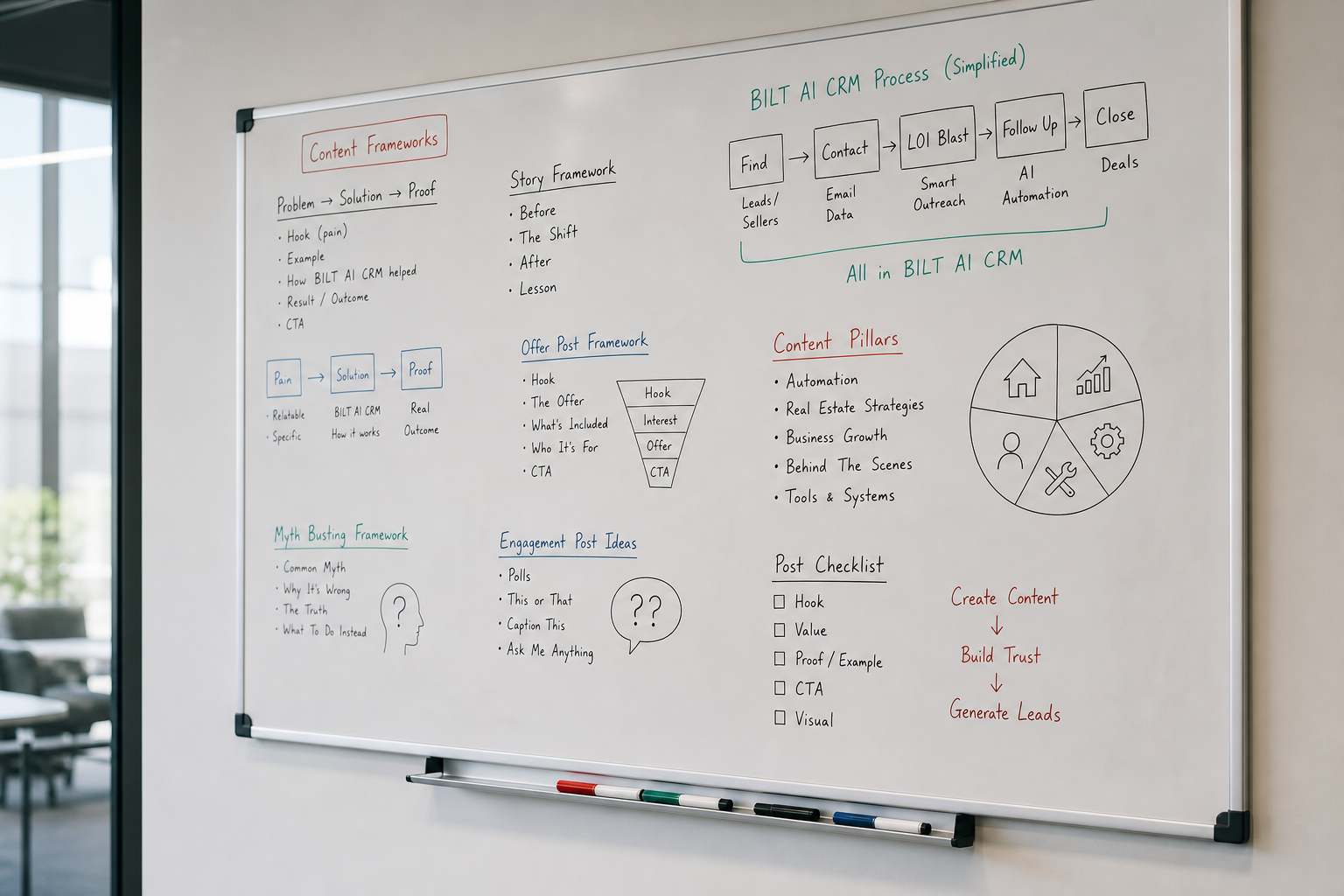
Most advice in real estate marketing pushes creativity. New hooks. Better storytelling. Fresh angles every week.
The data contradicts that.
Consistency outperformed creativity across every tracked channel. Same structure. Same framing. Same list source. Only the surface changed.
That repetition signals trust. Sellers dealing with probate or tax issues are not browsing for entertainment. They are scanning for clarity and legitimacy. Familiar structure lowers friction.
Platforms reinforce this behavior. Google’s own documentation on helpful content emphasizes consistency and clarity over novelty (Google Search Central).
In practice, this means a wholesaler explaining how they pull a tax delinquent list, what outreach looks like, and what happens next will outperform a clever but abstract post almost every time.
Creativity still plays a role, but only inside a proven frame. Without structure, it turns into noise.
The repeatable system: topic pool plus persona frame
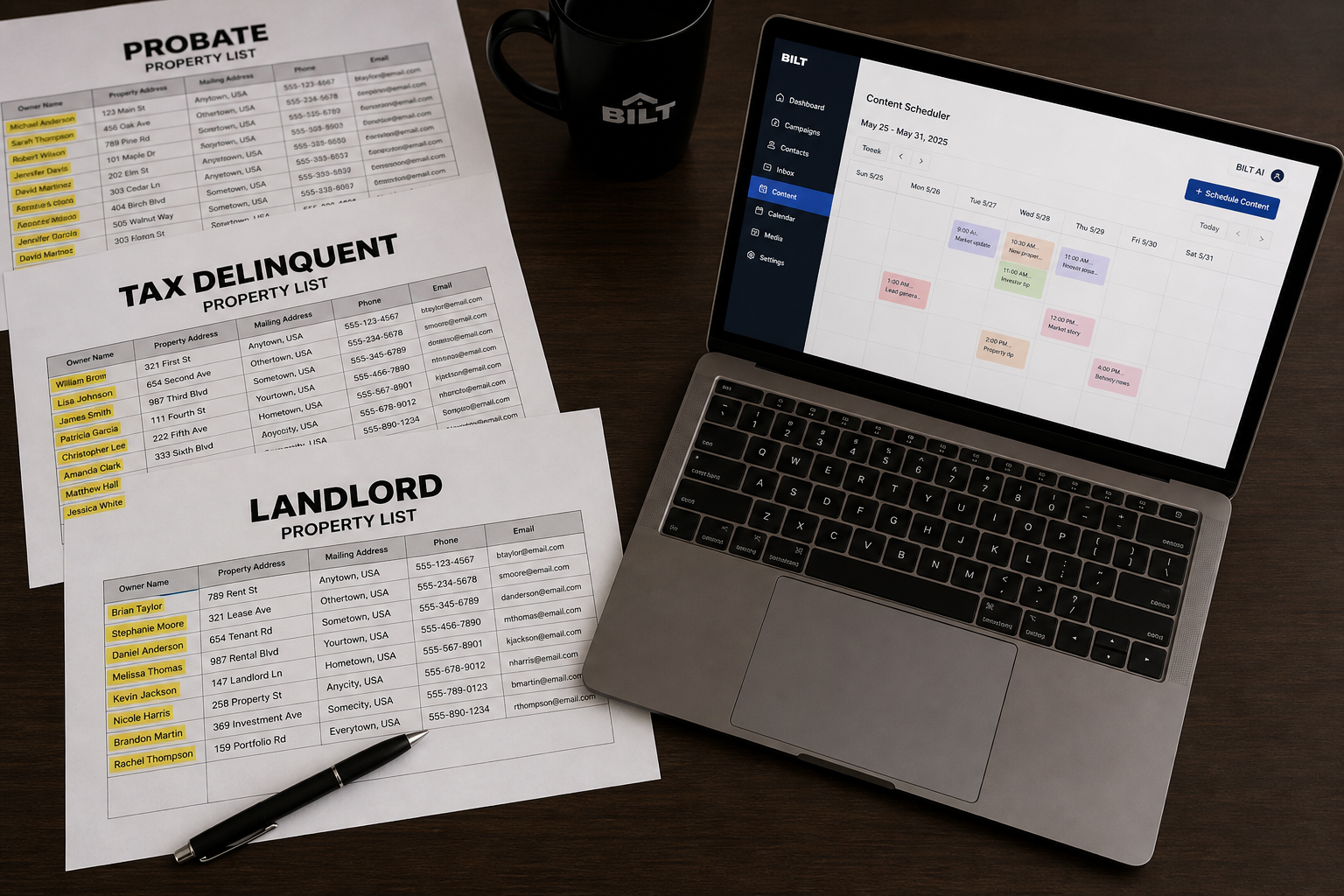
The shift that unlocked inbound was operational.
Instead of asking what to post, the system starts with a fixed pool of distressed seller topics. Probate. Tax delinquent. Tired landlords. These are not guesses. They map directly to lists wholesalers already pull and market to.
Each topic runs through a persona frame. That frame stays constant:
- Open with a stat tied to the list
- Show where the data comes from
- Explain the outreach sequence
This structure aligns with how real deals happen. Lists get pulled. Owners get contacted. Conversations turn into contracts.
Distribution happens across multiple surfaces. Think Instagram, email, SMS follow ups, landing pages, and niche platforms like BiggerPockets. One asset, many placements.
This is where most operators break. They create once and stop. The system requires reuse.
At scale, this is exactly why tools like Kompozy exist. A topic pool feeds a persona brief, which pushes content across channels and refreshes based on what performs. That removes the manual bottleneck that usually kills consistency.
The artifact: 30-day inbound content operating checklist
This is the piece operators actually keep.
Inbound Content Run Checklist for Wholesalers
- Select exactly 3 distressed seller lists from your current pipeline (probate, tax delinquent, tired landlords)
- Create 4 stat-backed hooks per list using real list attributes (age of lien, ownership length, vacancy indicators)
- Write 1 persona frame and reuse it across all assets
- Publish each asset across at least 5 to 9 surfaces within the same cycle
- Track inbound signals over a rolling 30 day window (DMs, form fills, replies)
- Kill underperforming angles after one cycle and double down on the top two performers
- Refresh winning posts weekly with updated wording but identical structure
The thresholds matter. Less than three topics and you lose diversity. More than four angles per topic and execution slows down.
Operators who follow this checklist usually notice that inbound conversations start referencing specific posts. That is the signal the system is working.
How this connects to actual deals, not vanity metrics
Inbound lead generation for wholesalers only matters if it ties back to contracts.
Each content piece mirrors a real step in the deal pipeline. A probate post explains how heirs are contacted. A tax delinquent post walks through lien timelines. A landlord post shows how rent fatigue turns into disposition.
This alignment filters inbound. Instead of generic "interested seller" messages, conversations start with context.
That reduces time to contract. Less education. More qualification upfront.
Email infrastructure plays a role here as well. Deliverability determines whether your outreach sequence reinforces your content or gets buried. Tools like Google Postmaster Tools help monitor sender reputation, which directly impacts whether follow ups land in inboxes or spam.
When content and outreach match, inbound does not feel random. It feels like a continuation of the same conversation.
Where most wholesalers stall when trying this
The failure point is rarely effort. It is structure.
Many wholesalers post inconsistently, switch messaging mid-cycle, or chase trends unrelated to their actual lists. That breaks the feedback loop.
Another common issue is treating each platform as separate work. The system depends on fanout. One asset distributed everywhere.
There is also hesitation around repetition. Posting similar content feels redundant. From the operator side, it is. From the seller side, it is often the first time they are seeing it.
Finally, most teams do not track inbound at the asset level. Without that, there is no way to identify which topics or angles drive conversations that turn into deals.
Fixing these gaps turns inbound from an experiment into a channel.
Turning this into an actual pipeline in the next 48 hours
1. Pull three lists you are already working inside your CRM or data provider. If you are using PropStream or BatchLeads, export probate, tax delinquent, and landlord segments.
2. Write four hooks per list using real attributes from those records. Keep them grounded in what you actually see in the data.
3. Build one persona frame and apply it across all twelve pieces. Do not change the structure mid-cycle.
4. Distribute across your existing channels. Email, social, landing pages. Use scheduling tools or a system like Kompozy to handle fanout.
5. Track every inbound message for the next 30 days and tag it back to the originating asset.
If managing outreach and follow up across all those leads starts breaking your workflow, that is usually the point where operators move into BILT AI CRM. It handles LOI blasting, follow ups, and keeps inbound organized so deals do not slip through.
For teams building content at scale, the backend matters just as much. Kompozy keeps the content engine running without manual resets. See how it works at Kompozy.
Frequently Asked Questions
How do wholesalers generate inbound seller leads?
Wholesalers generate inbound seller leads by publishing content tied directly to distressed property lists and pairing it with consistent outreach. In one tracked system, 12 structured content pieces produced the majority of inbound leads over a 30 day period.
What type of content works best for seller leads?
Content based on real data sources like probate, tax delinquent, and landlord lists performs best. Posts that explain where the list came from and how outreach works consistently drive replies.
How long does inbound lead generation take to work?
Inbound typically starts producing conversations within a 30 day cycle when content is distributed across multiple platforms. Each asset continues generating messages during that window.
Do I need multiple platforms for inbound marketing?
Yes, distribution across multiple platforms increases visibility. Systems that push one piece of content across several channels consistently outperform single-platform efforts.
How do I track which content brings leads?
Track inbound messages and form fills by tagging them to the original content asset. Many CRMs and email tools allow source tracking, which helps identify top-performing topics.