
Inbound Lead Generation for Wholesalers That Converts
Why most inbound lead generation for wholesalers breaks at 3%
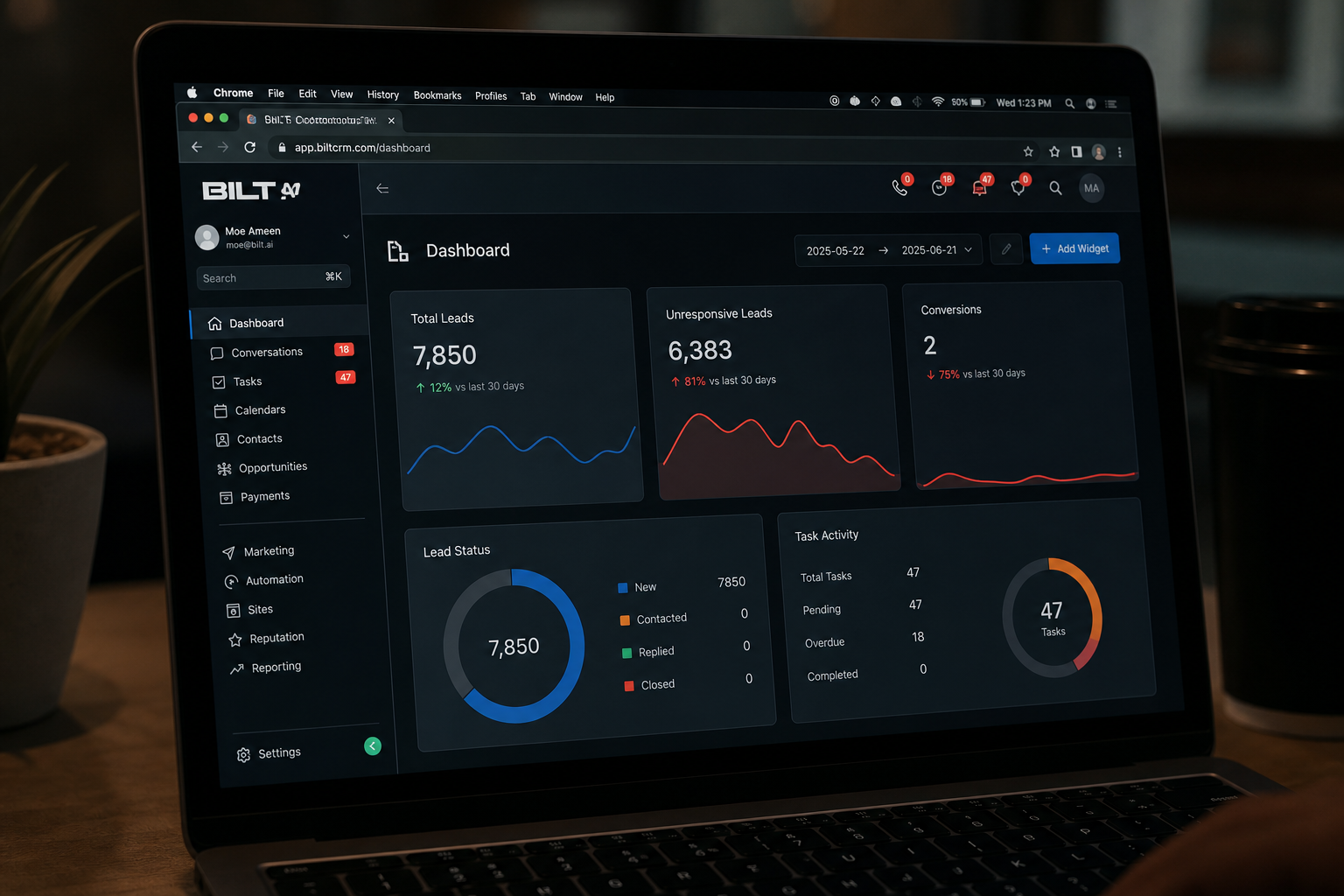
A wholesaler running inbound campaigns tracked every lead for a full cycle and landed on a hard number: 3% of inbound leads closed. The remaining 97% either never replied again, showed up too late, or were never qualified in the first place. The frustrating part was not traffic. Traffic was steady. The breakdown happened after the form fill.
That number lines up with broader marketing benchmarks. HubSpot’s 2024 conversion data shows that inbound leads vary heavily by response speed and qualification structure, not just volume (hubspot.com/marketing-statistics). Most wholesalers stop at “more leads” and never build the system that converts them.
The industry default still looks like this: a generic “we buy houses” page, a contact form, and a delayed follow-up. That setup attracts curiosity, not commitment. Sellers dealing with probate, code violations, or tenant issues do not respond to generic messaging. They respond to specificity and speed.
Inbound fails when it treats every seller the same. A landlord with problem tenants behaves differently than someone navigating probate. The funnel has to reflect that reality or the 3% ceiling stays in place.
The contrarian shift: less variety, more repetition
Most advice pushes wholesalers to constantly create new content. That approach burns time and resets learning every time a new angle is tested. The shift that actually moved performance came from repetition, not novelty.
Top-performing inbound systems reuse the same proven hooks on a 14-day cycle. Instead of chasing new ideas, they double down on what already triggered replies. This runs against how most operators think about content, but platform behavior supports it.
After the 2024 Google and Yahoo sender updates, consistency and engagement signals started carrying more weight in deliverability and visibility (postmaster.google.com). Repeating high-performing content reinforces those signals. New content, by contrast, starts cold every time.
An operator running inbound for distressed sellers documented this clearly: “The second time we posted the same probate hook, replies came faster than the first.” No new angle. Just better distribution and timing.
Inbound lead generation for wholesalers improves when patterns compound. Not when creativity resets every day.
Publishing 5–7 niche-specific posts daily beats generic messaging
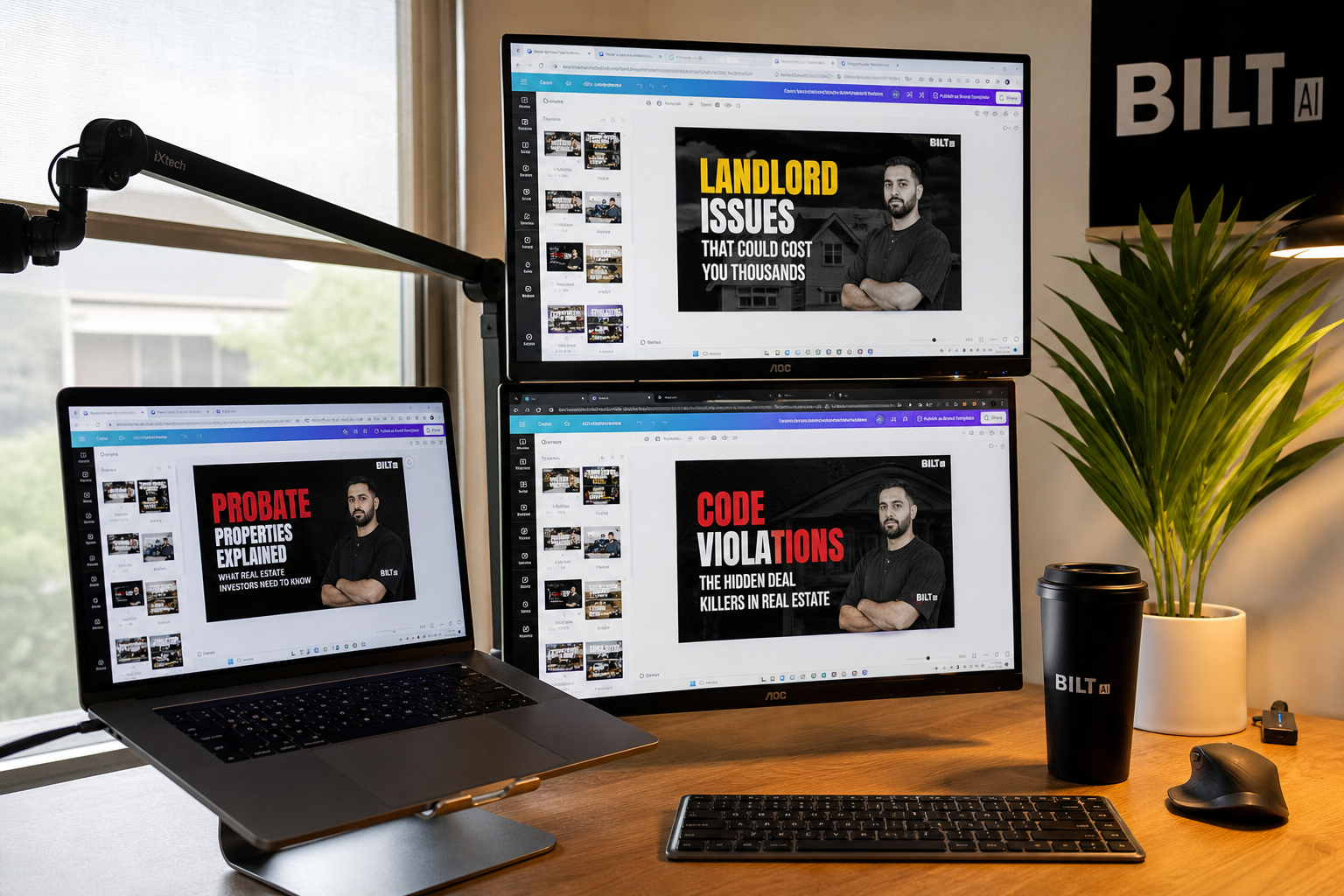
Generic messaging attracts noise. Niche messaging filters intent. That distinction changes everything about inbound lead quality.
Instead of broad “we buy houses” content, high-performing wholesalers publish 5 to 7 niche-specific posts daily. Each one speaks directly to a seller type: probate, tired landlords, code violations, inherited properties. The message matches the situation.
This aligns with how search and social platforms categorize content. Google’s documentation on helpful content emphasizes relevance and specificity over broad coverage (developers.google.com). A probate seller searching for answers will engage with probate-specific language, not generic investor claims.
One operator shifted from general posts to niche targeting and described the change simply: “Leads started referencing the exact problem in their message.” That is the signal that content is filtering correctly.
Each niche becomes its own micro-funnel. Each funnel builds its own data. Over time, those datasets reveal which hooks, phrases, and formats convert. That is where inbound starts compounding instead of plateauing.
Speed to lead is not a tactic, it is the filter
Response time determines whether an inbound lead is real or already gone. A 10-minute response window separates operators who convert from those who collect dead leads.
The Federal Trade Commission has repeatedly highlighted how consumer expectations for response speed have shortened in digital channels (ftc.gov). Sellers reaching out online expect immediate acknowledgment. Delay signals disinterest.
A wholesaler tracking inbound behavior noted: “Anything past 10 minutes felt like chasing.” The same leads that ignored later follow-ups engaged when contacted immediately with a structured script.
Speed alone is not enough. The response must qualify. A pre-built script ensures consistency. It asks about timeline, property condition, and ownership situation in a way that feels conversational, not interrogative.
Inbound lead generation for wholesalers is often framed as a traffic problem. In practice, it behaves like a response-time problem paired with qualification discipline.
The one artifact: inbound qualification script with thresholds
This is the piece most operators skip. Without a consistent script, every conversation becomes improvisation. That creates uneven results and wasted time.
Below is a field-tested inbound qualification script designed for wholesalers. It filters quickly while keeping the conversation natural.
Inbound qualification script
- Opening: “Saw your request about the property. Are you looking to sell this as-is or explore options?”
- Timeline check: “How soon are you hoping to make a decision?” (Flag immediate vs flexible)
- Property condition: “Any major repairs needed right now?” (Roof, foundation, vacancy)
- Ownership clarity: “Is the property fully in your name or shared with anyone else?” (Probate or title complexity)
- Motivation signal: “What’s prompting the sale at this point?” (Listen for urgency triggers)
- Price anchor: “Do you have a number in mind, or open to offers?”
- Next step: “If this fits, I can put together an offer quickly. Does that work?”
The thresholds matter more than the questions. Immediate timeline plus clear ownership and visible distress signals move forward. Everything else gets nurtured, not chased.
This script becomes the backbone of inbound operations. It standardizes conversations across channels and keeps follow-up focused on deals, not distractions.
How Kompozy turns inbound into a repeatable system
Running this manually breaks fast. Content creation, distribution, and feedback loops require structure. That is where most wholesalers stall.
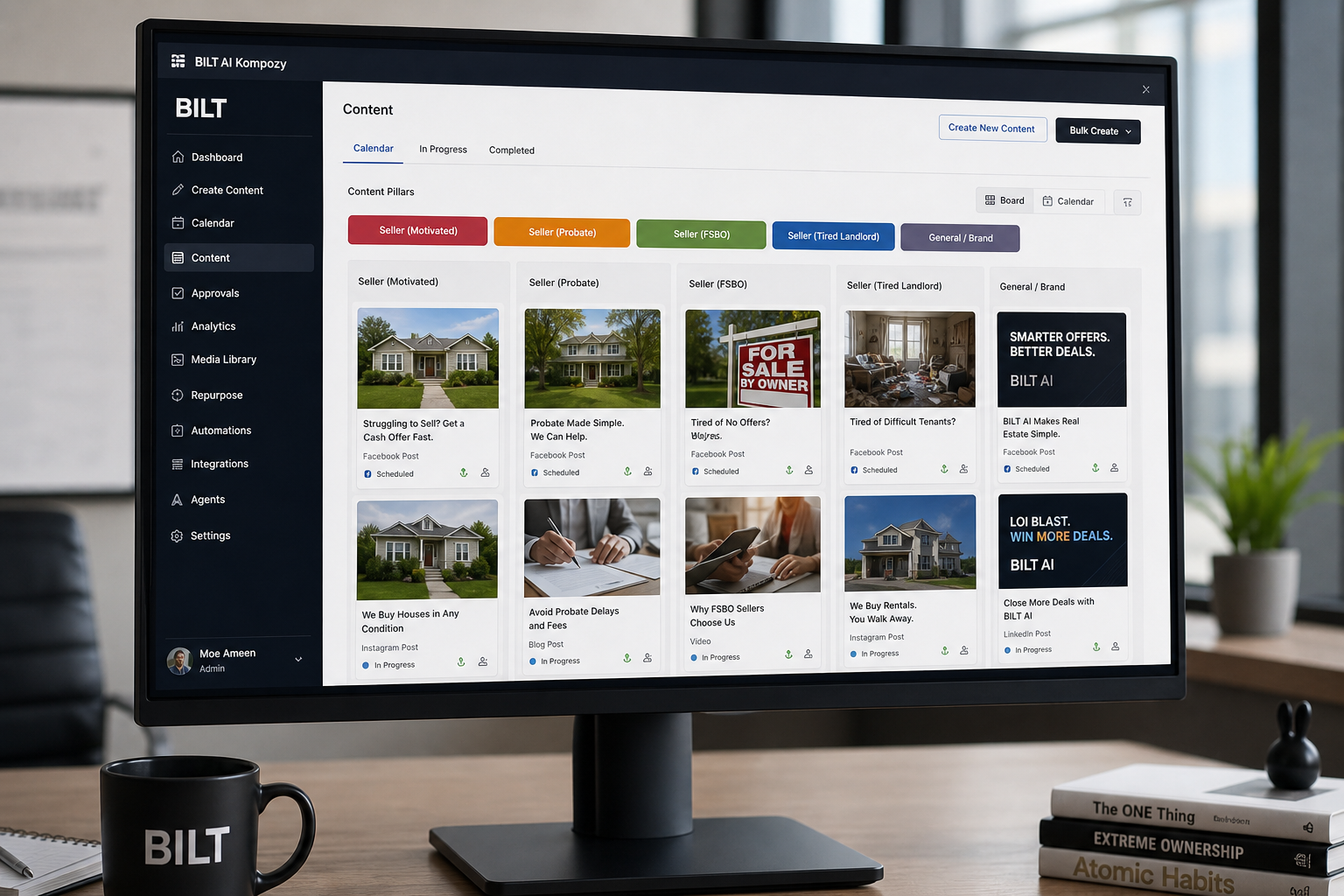
Kompozy was built to handle exactly this workflow. A centralized topic pool feeds content across multiple platforms, while persona frames keep messaging aligned to specific seller types. Winning posts are not lost. They cycle back into the system on a 14-day reuse loop.
Instead of guessing what to post, operators build libraries of proven hooks tied to probate, landlord distress, or code violations. Each hook evolves based on performance data.
One operator using this structure described the difference clearly: “We stopped asking what to post. We started tracking what repeats.” That shift removes randomness from inbound.
If this is already part of your workflow, scaling it manually will slow you down. That is where Kompozy fits, especially once volume increases and patterns start to matter more than ideas.
What to do in the next 48 hours to fix inbound
Inbound improves when the system tightens, not when more content gets pushed out randomly. The next steps are straightforward and grounded in execution.
- Define three seller personas using actual deal types you have seen, such as probate or landlord distress. Write down their specific problems and language.
- Create ten repeatable hooks per persona and store them in a central tool like Notion or Airtable. Focus on clarity over creativity.
- Set a 14-day reuse cycle for top-performing posts. Do not replace what is already working.
- Implement a 10-minute response rule using automation or notifications. Route all inbound into a single system.
- Use the qualification script on every lead without deviation. Track which responses move forward.
If your inbound still feels inconsistent after this, the issue is not volume. It is structure. That is the part worth fixing before anything else.
Frequently Asked Questions
How many inbound leads should a wholesaler expect to close?
About 3% is a common baseline for inbound leads in wholesaling. That figure comes from operator-level tracking and aligns with broader inbound conversion data from HubSpot.
Why are most inbound seller leads unqualified?
Most inbound leads lack urgency or clear ownership. Without a qualification script, wholesalers spend time on conversations that never reach contract stage.
How fast should I respond to inbound leads?
Within 10 minutes. Operators consistently report that response delays beyond that window reduce engagement and lead to missed deals.
What type of content generates better inbound leads?
Niche-specific content performs better than generic messaging. Posts targeting probate or landlord distress attract more qualified sellers than broad “we buy houses” pages.
Should I keep creating new content every day?
No, repeating proven content every 14 days tends to outperform constant new ideas. Reuse strengthens engagement signals and improves conversion consistency.