
Inbound lead generation for wholesalers that scales
By 2027, inbound lead generation for wholesalers will look like parcel-driven media

By 2027, the wholesalers pulling consistent inbound will not be the ones writing clever captions. They will be the ones publishing against real parcels every single day.
The shift already started after the 2024 Yahoo and Google sender requirement updates, where deliverability began rewarding relevance over volume. You can verify the policy direction on Google Postmaster guidelines.
The operators who adapted stopped asking, “what should I post?” and started asking, “which property am I talking about today?” That single change forces specificity. Specificity pulls replies.
This is not theory. It comes directly from systems we run inside BILT AI and Kompozy, where parcel data feeds the content engine instead of random ideas.
Why most inbound strategies fail wholesalers before they start
Most inbound advice was written for creators, not operators moving contracts. That is why it sounds polished and performs terribly in a market like Phoenix or Tampa where sellers care about speed, not storytelling.
Generic posts miss the only thing that matters in wholesaling, proximity to a real deal. Sellers are not engaging with “tips to sell your house fast.” They engage with “we looked at your block and here is what is happening.”
There is also a distribution problem. One platform means one shot. Wholesalers need repeated surface area because sellers are not browsing like marketers. They are scrolling between life events.
Regulators have also made spray-and-pray outreach harder. The FTC’s CAN-SPAM rules still apply to investor outreach, and enforcement has only tightened in recent years. Details are outlined directly by the Federal Trade Commission.
The result is simple. Low-context content gets ignored. High-context content tied to real properties gets replies.
The 20-3-9 system that actually drives inbound lead flow
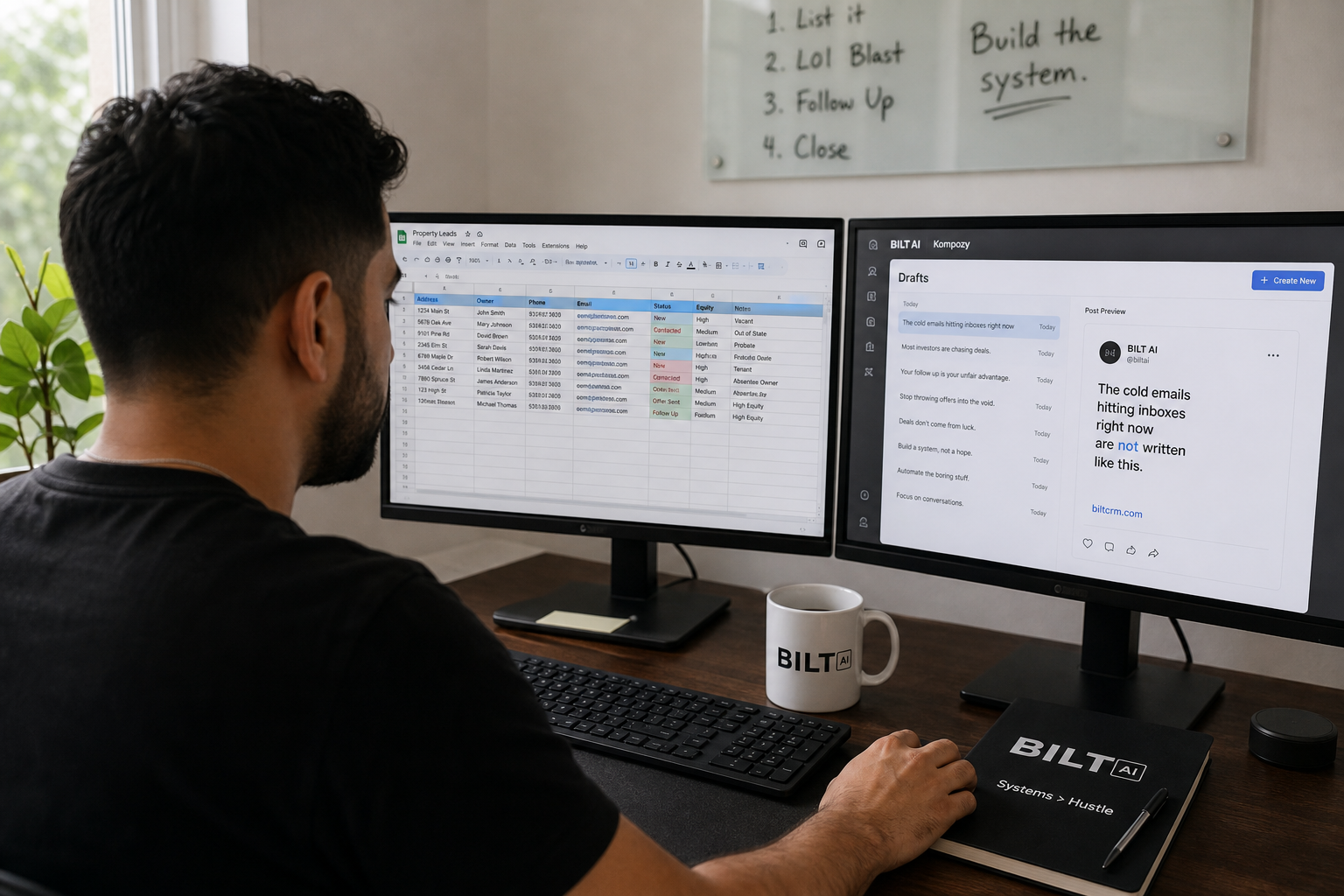
The system is simple enough to remember and strict enough to execute without overthinking.
20 parcels per day
Pick a single zip code and research 20 properties. Not random nationwide pulls. Hyper-local. This forces pattern recognition in pricing, condition, and seller behavior.
3 angles per property
Each property produces three content angles:
- Seller pain, what problem likely exists at this address
- Buyer demand, who would want this deal and why
- Deal math, what the numbers might look like based on comps
This multiplies output without multiplying research time.
9-platform distribution
Every insight gets distributed across nine surfaces where sellers and buyers already spend time. Think email, short-form video, long-form posts, and listing-style breakdowns.
This is where most operators stop too early. One idea should not live in one place. It should exist everywhere your market scrolls.
The contrarian part is this. Volume plus variation beats cleverness. The market rewards presence tied to reality, not creativity detached from deals.
Operator vignette: what changed when parcel volume increased
A wholesaler account running inside BILT AI CRM shifted from occasional posting to a strict 20 parcel workflow. The only numbers that mattered were the inputs: 20 properties, 3 angles, 9 distributions.
Before the change, content was inconsistent and inbound was sporadic. After adopting the system, replies started referencing specific streets and situations instead of generic inquiries.
“People started messaging about the exact house we mentioned instead of asking what we do.”
The difference was not better writing. It was tighter proximity to real properties and repeated visibility across channels.
If you are running this at any real scale, spreadsheets break quickly. This is exactly why BILT AI CRM exists. It ties parcel research directly into outbound and follow-up so nothing gets lost between content and contract.
Save this: the inbound engine checklist wholesalers actually use
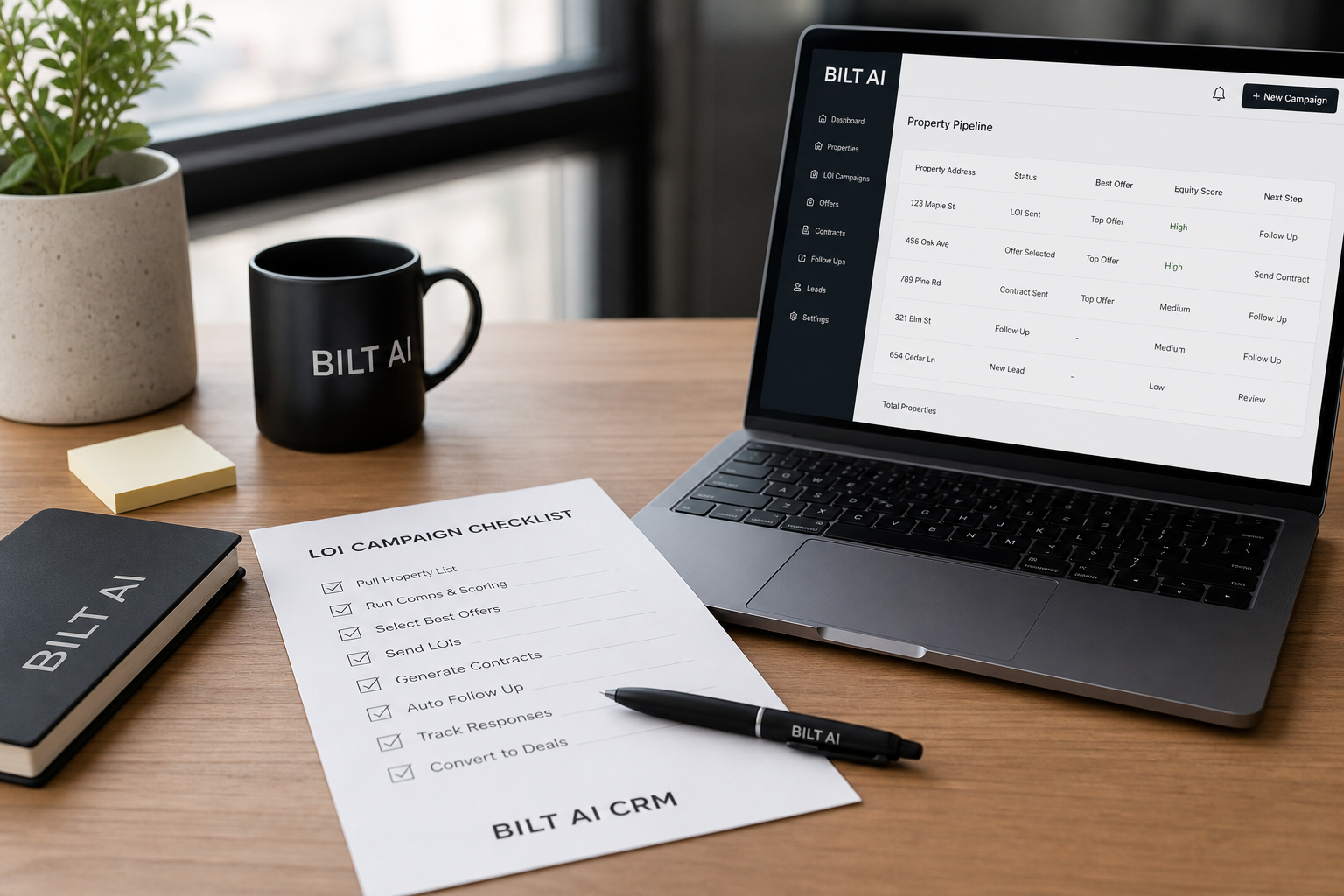
This is the exact operating checklist. If something is missing, inbound slows down.
- Zip focus: one zip code per day, no switching mid-session
- Parcel count: 20 researched properties minimum before publishing anything
- Angle output: 3 content angles per parcel, no skipping categories
- Distribution: 9 platforms scheduled same day, not spread across weeks
- Data source: county records plus comp verification before posting
- Follow-up: every inbound reply logged and routed within the CRM same day
- Consistency: repeat daily for one market before expanding
This checklist works because it removes decision fatigue. The work becomes mechanical, which is exactly what you want when scaling inbound.
How Kompozy turns one property into nine distribution points
Manually executing this system is where most operators stall. Writing 60 pieces of content from 20 parcels sounds simple until you try to do it after a full day of dispositions.
Inside Kompozy, parcel data feeds a topic pool. From there, Persona Frames generate the three required angles automatically, seller pain, buyer demand, and deal math.
Distribution then happens in one pass across all platforms instead of logging into each one individually. The time saved is not marginal. It is the difference between consistency and burnout.
This is not about automation replacing judgment. It is about removing friction so operators can stay focused on deal quality and conversations.
What to do in the next 48 hours to start seeing inbound
- Pick one zip code and pull 20 properties using your existing data source or county records.
- Write one short insight per property, then expand each into seller pain, buyer demand, and deal math angles.
- Schedule distribution across your available platforms the same day using a tool like Kompozy or your current scheduler.
- Track every reply inside your CRM and tag it to the originating property so patterns become visible.
If you want to see how this runs end-to-end without duct taping tools together, book a walkthrough of BILT AI and see how wholesalers are tying parcel data directly into inbound conversations: https://www.biltcrm.com/book-demo.
For content execution specifically, Kompozy shows how to run the 20-3-9 system without burning hours every day: https://kompozy.io.
Frequently Asked Questions
How do wholesalers generate inbound leads consistently?
By anchoring content to real properties instead of general advice. Operators using a 20 parcel workflow with three angles per property see more replies because each post references a tangible situation.
What is the best content strategy for real estate wholesalers?
A parcel-driven strategy works best. Using seller pain, buyer demand, and deal math angles from actual properties produces content that matches how deals are evaluated in real life.
How many platforms should wholesalers post on?
Nine distribution points create enough repetition to stay visible. Posting once in one place rarely produces consistent inbound because sellers are not always in the same channel.
Does cold email still work for wholesalers after 2024 updates?
Yes, but only with higher relevance and proper setup. Google’s 2024 sender requirements increased scrutiny on bulk sending, which you can review on Google Postmaster, making targeted messaging more effective than mass blasts.
Can beginners use this inbound system?
Yes, because the system is operational, not creative. Following the 20 parcels, 3 angles, 9 distribution structure removes guesswork and replaces it with repeatable actions.