LOI Blasting for Wholesalers That Actually Converts
Most wholesalers are not losing deals, they are under-sending
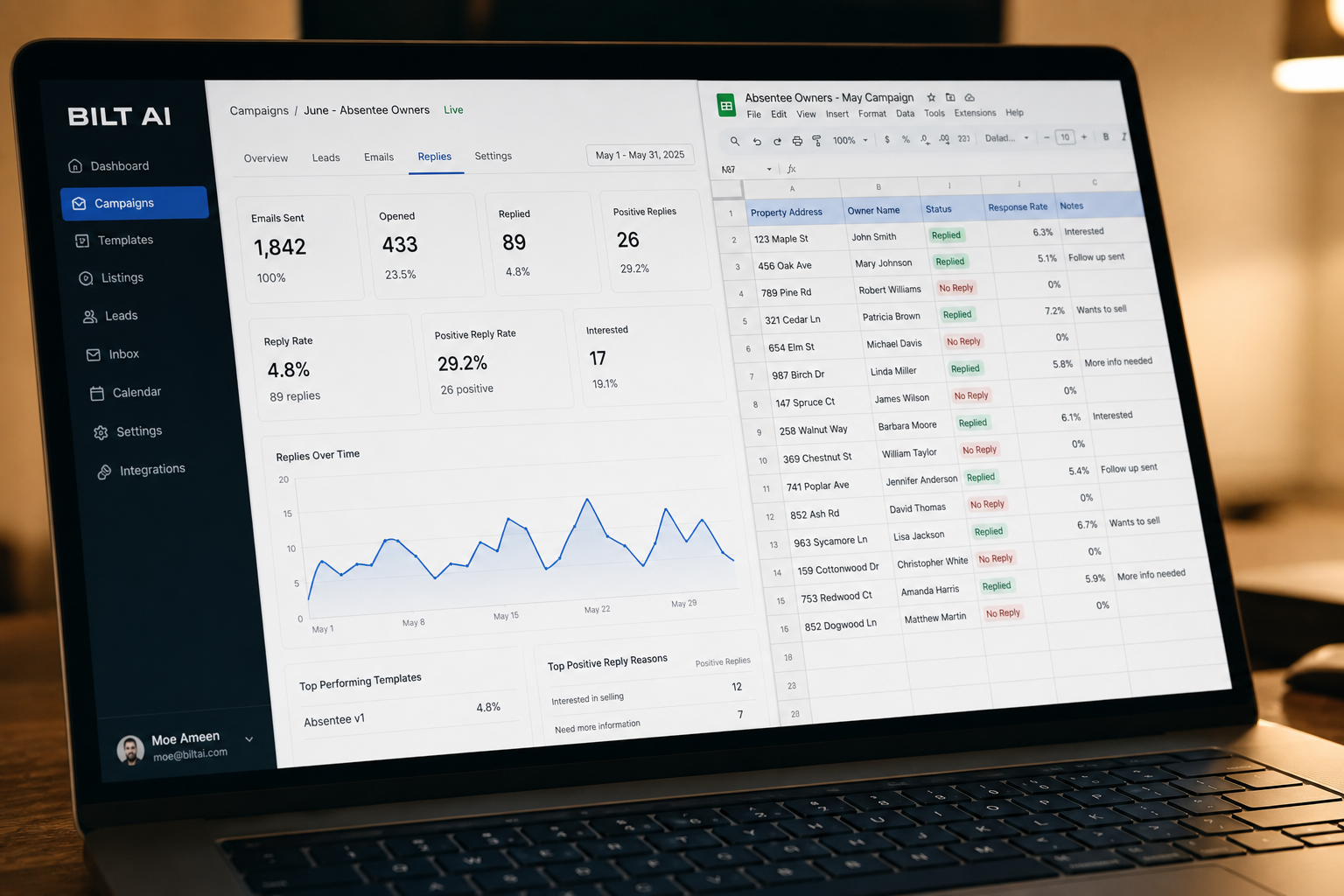
Across multiple campaigns run through BILT AI, a consistent pattern shows up. Most wholesalers cap out around 50 LOIs per day. The operators actually getting replies are pushing past 300 sends and treating response rate like a KPI, not a lucky outcome.
This is where LOI blasting for wholesalers breaks from the usual advice. The issue is not finding better deals. It is not even writing a perfect offer. The bottleneck sits in volume paired with tracking.
Per Pew Research (2024), email remains one of the most consistently used communication channels across industries. Real estate sellers still read email, but they only respond when timing, relevance, and clarity line up.
The uncomfortable truth is simple. Sending 50 LOIs a day does not produce enough signal to optimize anything. You cannot improve what you barely measure. Once volume increases, patterns start to show. Certain zip codes reply more. Certain offer formats get forwarded. Certain subject lines get ignored entirely.
That is where operators separate from dabblers. They stop guessing and start tracking every 100 sends like it is a campaign, not a one-off outreach.
Why 300 LOIs behave differently than 50
Sending 300 LOIs does not just triple output. It changes the system entirely. At low volume, randomness dominates. At higher volume, patterns emerge fast enough to act on.
This matters because email providers like Google and Yahoo tightened sender requirements in 2024, pushing stricter authentication and engagement signals. Google outlines these in its sender guidelines at Google Postmaster Tools. If your emails are not opened or replied to, deliverability drops quickly.
At 50 sends, a bad batch can go unnoticed. At 300, poor performance shows up within hours. That feedback loop lets you adjust subject lines, tweak pricing language, or shift markets before wasting a full week.
There is also a perception shift on the seller side. When multiple property owners in the same micro-market receive similar structured offers, it builds familiarity. One seller ignores it. Another replies. A third forwards it to a partner. Momentum builds inside the market itself.
Operators who stay at low volume never reach that tipping point. They are always restarting from zero.
The micro-market batching shift that doubled reply rates
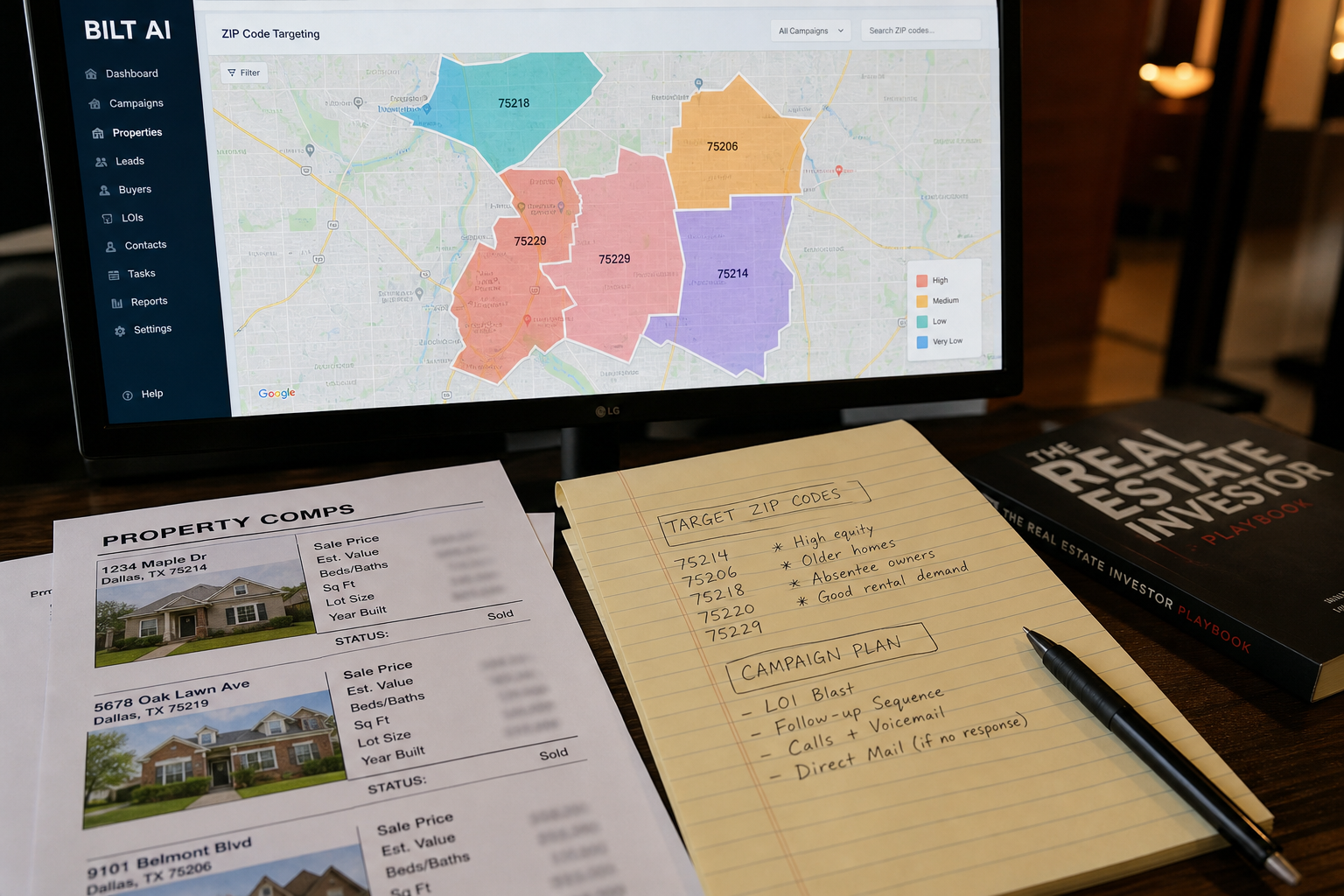
One of the biggest lifts came from a simple adjustment. Instead of blasting a mixed list, campaigns were batched by zip code and asset type.
An operator running deals through BILT AI CRM shifted from broad sends to tight micro-batches. Each batch focused on one zip code and one property class. Multifamily in one pocket. Small retail in another. Single family rentals separated entirely.
The result was immediate. Reply rates moved from around 2% to consistently landing in the 5 to 6% range. Same list quality. Same sender domains. The only change was relevance.
There is a reason this works. Sellers talk to each other. Brokers circulate emails. When messaging aligns with what is happening in a specific pocket, it feels intentional instead of automated.
Batching also improves internal clarity. You know exactly which segment is working. You are not guessing whether success came from pricing, copy, or market conditions.
This is where most wholesalers stall. They send everything everywhere and hope something sticks. Micro-market batching forces discipline and produces usable data fast.
The three-variant LOI system you can deploy today
This is the piece most operators skip. They send one LOI format repeatedly and assume poor results mean bad leads. In reality, the format itself is part of the test.
Here is the exact artifact used across campaigns. It is simple enough to execute today and structured enough to produce clean data.
The 3x100 LOI Testing Framework
- Variant A: Straight offer. Clear price, short timeline, minimal fluff. Target sellers who prefer direct communication.
- Variant B: Story-based. Reference local comps and recent activity. Slightly longer body. Designed for owners who need context.
- Variant C: Question-led. Opens with a soft inquiry about interest in selling before presenting the number.
- Send each variant to 100 contacts within the same micro-market batch
- Track replies per 100 sends, not overall campaign averages
- Pause any variant that drops below baseline performance after two batches
- Promote the highest-performing variant into your default template
This framework turns guesswork into controlled testing. You are not rewriting your entire system every week. You are making small, measurable adjustments.
And once a winner emerges, it compounds. That version becomes your baseline while you test new angles against it.
Follow-up at 48 hours is where most deals actually come from
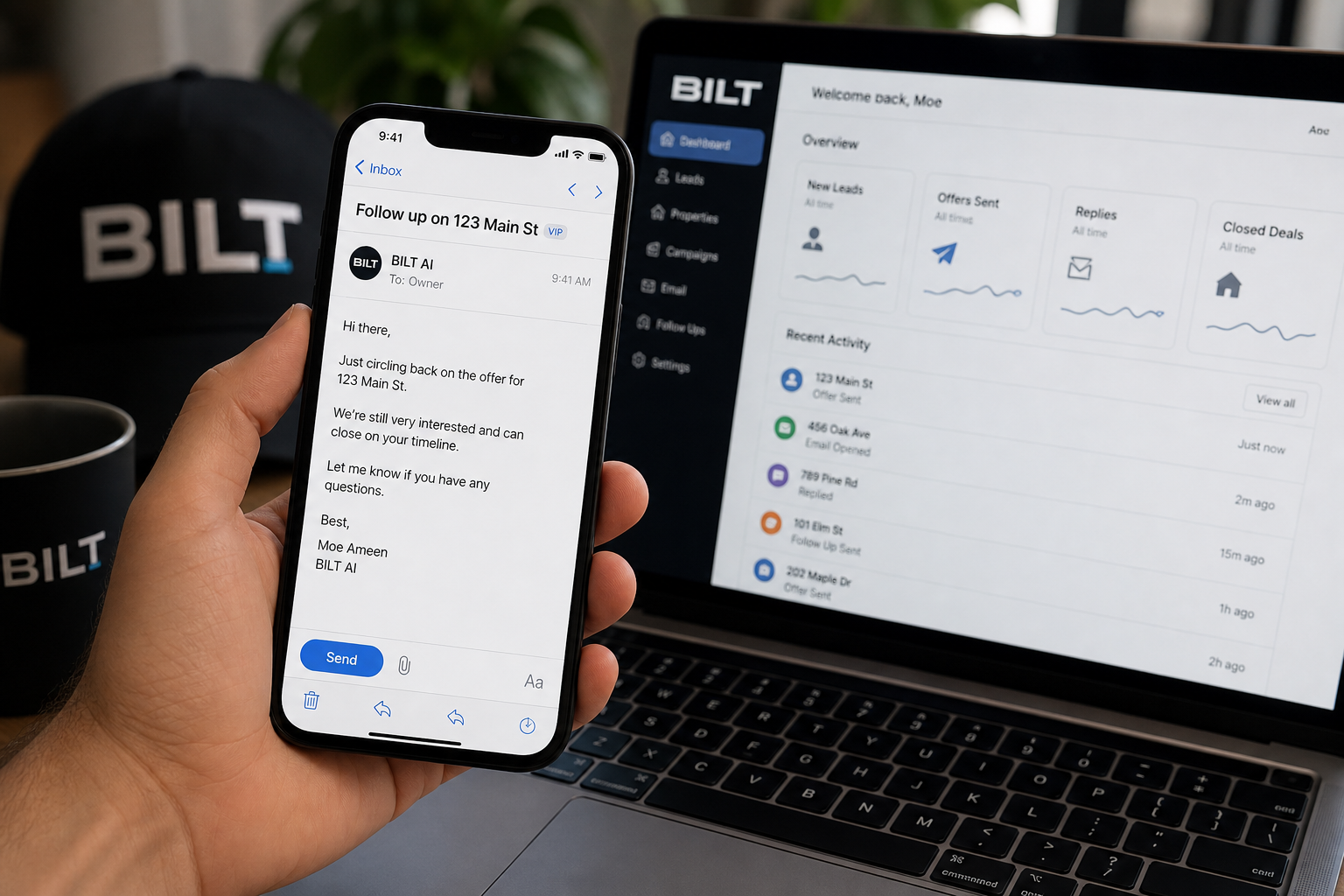
Initial sends get attention. Follow-ups close the gap.
Across multiple campaigns, a consistent pattern showed up. A large portion of total replies came from the follow-up message sent around 48 hours after the initial LOI.
The format matters. This is not a full resend. It is a shortened version that assumes familiarity.
"Just circling back on the offer I sent. Still interested in this property if timing makes sense on your end."
That line works because it removes friction. It does not restate everything. It nudges the seller to respond without forcing them to reprocess the entire message.
Email behavior backs this up. According to Statista (2024), inbox competition remains high, which means timing plays a major role in visibility. A second touchpoint increases the chance the message is actually seen.
Most wholesalers skip follow-ups because they assume silence means rejection. In reality, silence usually means the email was missed, ignored temporarily, or forwarded without a response.
That 48-hour window consistently pulls in another meaningful portion of total replies, often without changing anything about the original offer.
The contrarian truth: better copy matters less than controlled volume
There is a common belief that better writing fixes low response rates. It does not hold up in practice.
Campaign data shows that average copy sent consistently outperforms excellent copy sent inconsistently. Volume paired with structure beats creativity without discipline.
This runs against most marketing advice. People spend hours refining subject lines while sending too few emails to generate meaningful feedback.
Deliverability systems reinforce this. Platforms like Google Postmaster reward consistent sending behavior and engagement patterns. Sporadic bursts followed by silence look suspicious. Steady volume with replies signals legitimacy.
That does not mean copy does not matter. It does. But it operates within a system. Without enough sends, you cannot identify which version actually performs better.
Operators who treat LOI blasting for wholesalers as a repeatable system, not a creative exercise, end up with predictable pipelines. The rest stay stuck tweaking wording while waiting for results that never stabilize.
Where systems break and why operators switch to automation
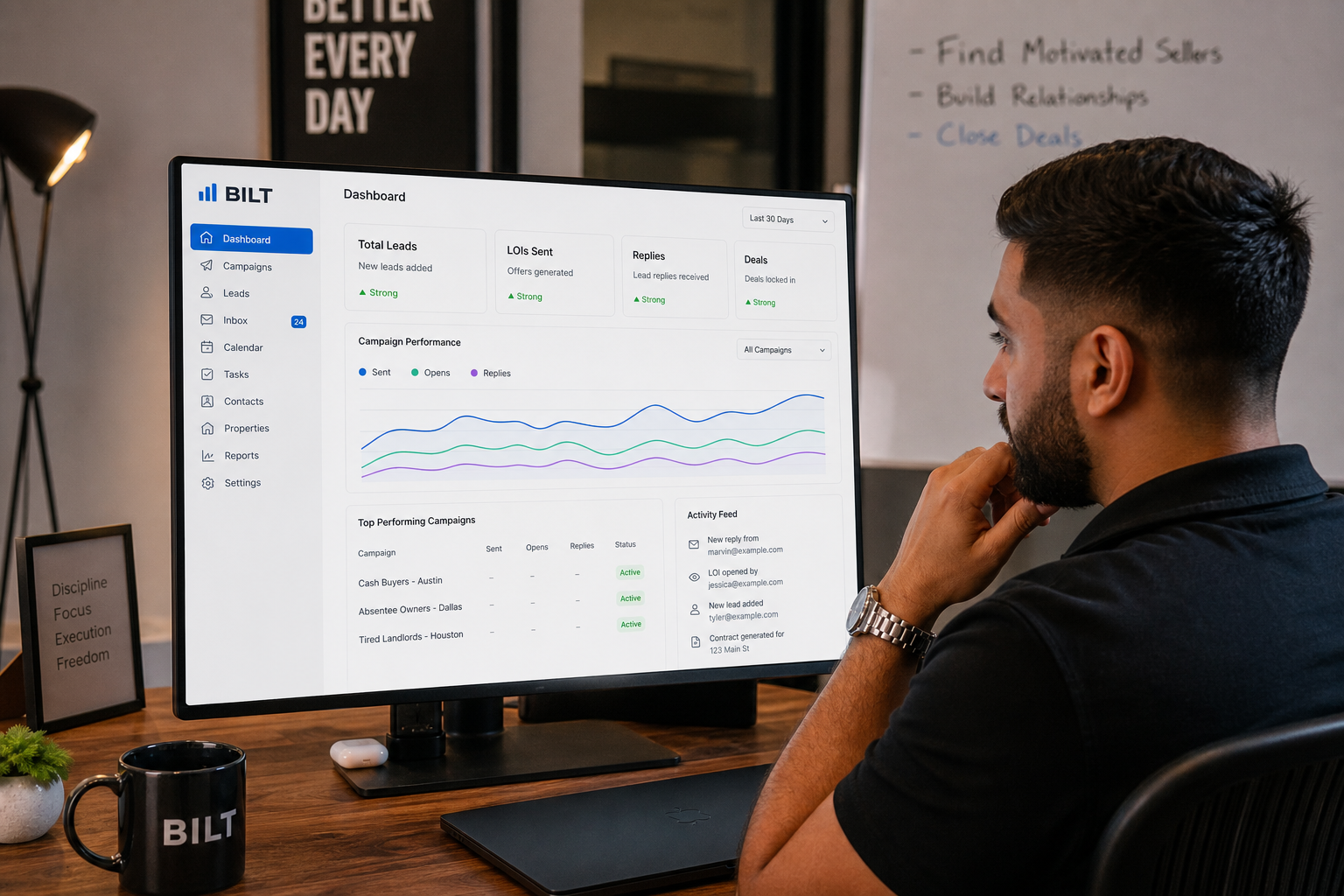
Once volume increases, manual workflows start to crack. Tracking responses in spreadsheets becomes messy. Follow-ups get missed. Variants blur together.
This is where tools start to matter. Not for convenience, but for consistency.
If you are running volume anywhere near what was described above, you will outgrow manual sending fast. That is exactly why BILT AI CRM exists. It handles LOI blasting, follow-ups, and tracking inside one system built specifically for real estate operators.
The key advantage is visibility. You can see reply rates by batch, by variant, and by market without stitching together multiple tools.
And if you are also building inbound alongside outbound, content systems like Kompozy help turn your best-performing LOIs into repeatable content pipelines across multiple platforms.
The operators scaling consistently are not doing more work. They are removing friction from the work they already know produces results.
What to do in your next 48 hours
1. Build three LOI variants using the framework above. Keep them simple. Focus on clarity over cleverness.
2. Pull a list and segment it by one zip code and one asset type. Do not mix categories.
3. Send in batches of 100 per variant and log replies immediately. Use a tool like Google Postmaster or your CRM to monitor engagement.
4. Schedule a follow-up message at 48 hours using a shortened version of your LOI.
5. Compare results after the first full cycle and double down on the top-performing variant.
If you want to see how this looks inside a system built for wholesalers, book a walkthrough of BILT AI. It is the same structure described here, just without the manual tracking.
If content is part of your outbound strategy, take a look at Kompozy to turn your campaigns into daily inbound without adding more work.
Frequently Asked Questions
How many LOIs should a wholesaler send per day?
Aim for at least 300 LOIs per day if you want reliable data. Campaigns sending at that level consistently produce measurable response patterns, while lower volumes tend to stay unpredictable.
What is a good LOI response rate in real estate?
A strong LOI response rate typically lands between 5% and 6% when batching by micro-market. Campaigns that are not segmented often sit closer to 2% based on internal campaign data.
Does follow-up really increase LOI responses?
Yes, a follow-up sent around 48 hours later can generate a significant share of total replies. Many sellers respond only after the second touch, not the first email.
What is the best way to segment a property list for LOIs?
Segment by zip code and asset type. Keeping both variables tight increases relevance and improves reply rates compared to broad mixed lists.
Do I need a CRM for LOI blasting?
Once volume increases, a CRM becomes necessary. Tracking variants, follow-ups, and response rates manually breaks down quickly at higher send levels.