LOI Blasting Strategy That Actually Gets Replies
Why most LOI blasting strategy fails before the first send
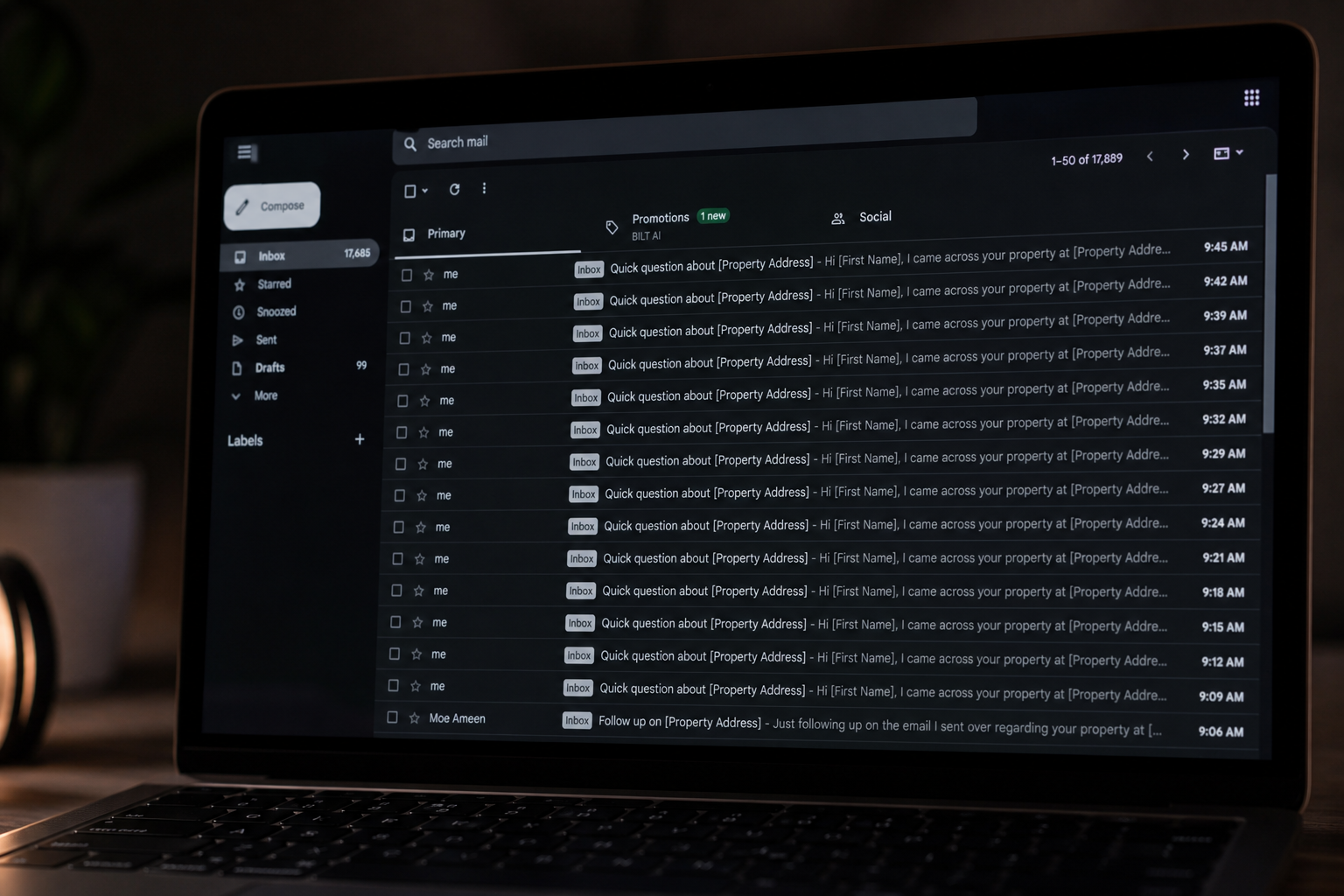
A batch of five hundred property records gets pulled, pushed into a mail tool, and sent with one generic offer. That is the standard play. It also explains why most LOI blasting strategy conversations end with “email doesn’t work.”
The issue is not volume. It is pattern recognition. Mail servers like Google and Yahoo started enforcing stricter bulk sender rules in 2024. According to Google’s sender guidelines, bulk senders must keep spam complaint rates below 0.3% to maintain inbox placement. When every message looks identical, complaints rise and placement drops.
There is also a human filter. Sellers can tell when they are part of a blast. A landlord holding a free and clear duplex reads differently than an absentee owner juggling code violations. Yet most investors send both the same sentence.
This is where most operators stall. They try to fix deliverability tools, domains, or sending volume, when the real break happens earlier. The list and the message are misaligned. Until those match, the rest of the stack does not matter.
Segment first or accept low-quality replies

The fastest lift in reply quality comes from one change. Split your list before writing a single LOI.
At minimum, three buckets should exist in any LOI blasting strategy:
- Owned free and clear — no debt pressure, decisions are slower, price sensitivity is higher.
- High equity absentee — distance creates friction, convenience sells.
- Recent code violations — urgency exists, certainty matters more than squeezing price.
Each segment wants a different angle. A free and clear owner does not respond to speed. They respond to clean terms and a straightforward exit. A code violation owner is reading for relief, not optimization.
One operator working through a five hundred record batch reworked their send this way. Instead of one message, they wrote three. Same list size, same send volume. The difference showed up in the replies. Conversations referenced the actual situation of the property instead of asking “is this a mass email?”
Tools can help here. Data providers like PropStream or batch enrichment inside your CRM make it easier to tag equity, ownership status, and violation signals before writing anything.
If the list is not segmented, the LOI is guessing. And guessing shows up instantly to the person reading it.
The 3-number LOI that actually gets read
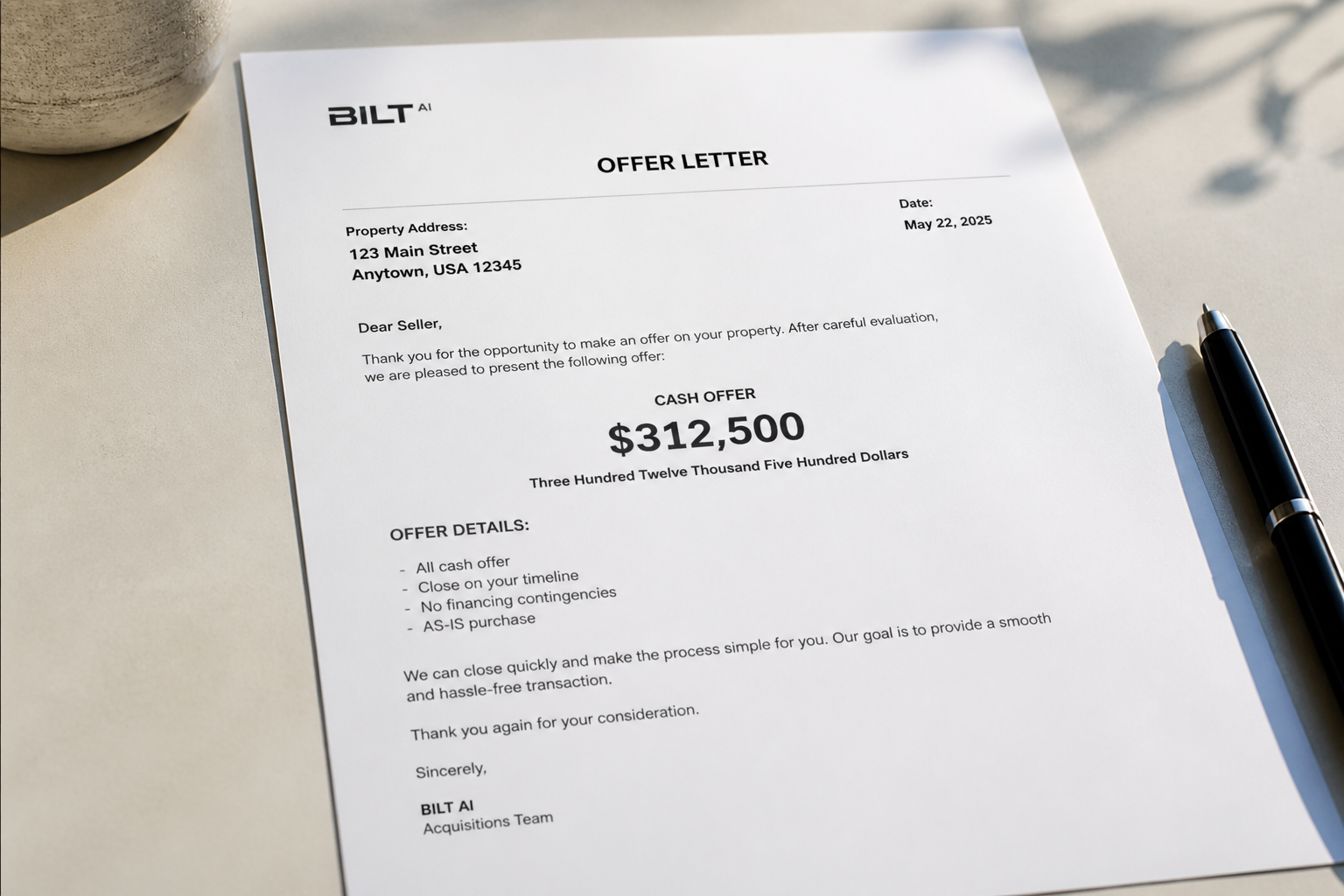
Most LOIs fail because they try to sound official. Long paragraphs, legal tone, extra clauses. The result is predictable. The seller skims or ignores it.
A tighter LOI performs better. Three numbers only:
- Purchase price
- Close timeline
- Who covers closing costs
That is enough to start a conversation. Everything else can happen after a reply.
This goes against common advice that says more detail builds trust. In practice, more detail delays response. A seller deciding whether to reply is not evaluating your contract language. They are deciding if the offer feels relevant and easy to engage with.
This is the contrarian edge. Less information in the first touch increases replies because it reduces cognitive load. You are not closing the deal in the inbox. You are earning the response.
Formatting matters too. Keep the LOI scannable. Short sentences. Clear spacing. If it looks like a wall of text, it will be treated like one.
“Price: [X]. Close: [timeline]. We cover closing. If this lines up, I can send a formal agreement.”
That level of simplicity outperforms longer documents in early outreach because it respects how quickly people decide whether to engage.
Follow-up cadence that feels human, not automated
The first send rarely closes the loop. The follow-up sequence is where most deals actually start.
A simple cadence works:
- Day 2: short nudge, “circling back on this”
- Day 5: revised angle or adjusted offer
- Day 10: final message with a small change
What matters is tone. Each message should feel like it was written after thinking about that specific property. Not like it was scheduled weeks ago.
Compliance still applies. The FTC CAN-SPAM guidelines require clear identification and opt-out options in commercial email. Ignoring this does not just hurt deliverability. It creates real risk.
Operators who treat follow-up as a continuation of the conversation see better outcomes. The second or third touch often references something small. Condition of the roof. Vacancy. A note about timing. That level of detail signals attention.
If every follow-up is identical, it trains the recipient to ignore you. If each one evolves slightly, it earns another look.
Where tools fit when volume increases
Manual segmentation and follow-up work when the list is small. Once volume increases, the system needs to carry the load without flattening personalization.
This is where most investors outgrow spreadsheets and basic mail tools. Tagging logic, sending limits, and inbox rotation all start to matter at the same time.
If you are running LOI blasting strategy at scale, the workflow needs to connect data, messaging, and follow-up in one place. That is exactly what BILT AI CRM was built for. It evaluates properties, assigns the right offer logic, sends LOIs, and handles follow-ups without turning everything into a generic blast.
The advantage is not just automation. It is consistency. Every record gets the right angle without requiring manual sorting each time.
There is a point where more effort does not produce better outcomes. Better systems do. Recognizing that point saves time and protects deliverability as volume grows.
Run this on your next 500 records
The fastest way to test this LOI blasting strategy is to apply it to a batch you already have. No new data needed.
- Segment the list using a tool like PropStream or your CRM. Create at least three buckets: free and clear, absentee with equity, and violation-driven.
- Write one LOI per segment using only three numbers. Remove any extra explanation that does not help the seller decide to reply.
- Set a follow-up sequence with messages on day two, day five, and day ten. Adjust the second touch slightly based on the segment.
This does not require a full rebuild. It requires a tighter alignment between who you are contacting and what you are saying.
If the current approach feels like sending volume and hoping something sticks, this replaces that with controlled variation. Same effort, better conversations.
For operators building content and outbound systems alongside deal flow, Kompozy helps structure and deploy messaging without losing consistency across channels.
Frequently Asked Questions
What is the best LOI blasting strategy for real estate investors?
The best LOI blasting strategy starts with segmentation, then uses a simple three-number offer and structured follow-up. Operators using segmented lists see more relevant replies because each message matches the seller’s situation instead of sending one generic offer.
How many emails should I send in an LOI blast?
Send volume should stay within deliverability limits, not max capacity. Google’s 2024 sender rules require spam complaint rates under 0.3%, so sending fewer but more relevant emails often produces better inbox placement and replies.
Why are my LOI emails going to spam?
They usually look like mass mail. Identical subject lines, no segmentation, and high complaint rates trigger filtering. Checking Google Postmaster Tools can confirm domain reputation issues tied to this pattern.
What should be included in a real estate LOI email?
Include only the essentials: price, closing timeline, and who pays closing costs. Shorter LOIs get read more often because they are easier to scan and respond to quickly.
How often should I follow up on an LOI?
Follow up at least three times with spacing across about ten days. A simple cadence of day two, day five, and day ten works because it keeps the conversation alive without overwhelming the recipient.