
Motivated Seller List Building That Converts
27 conversations in 10 days from a list that used to be ignored
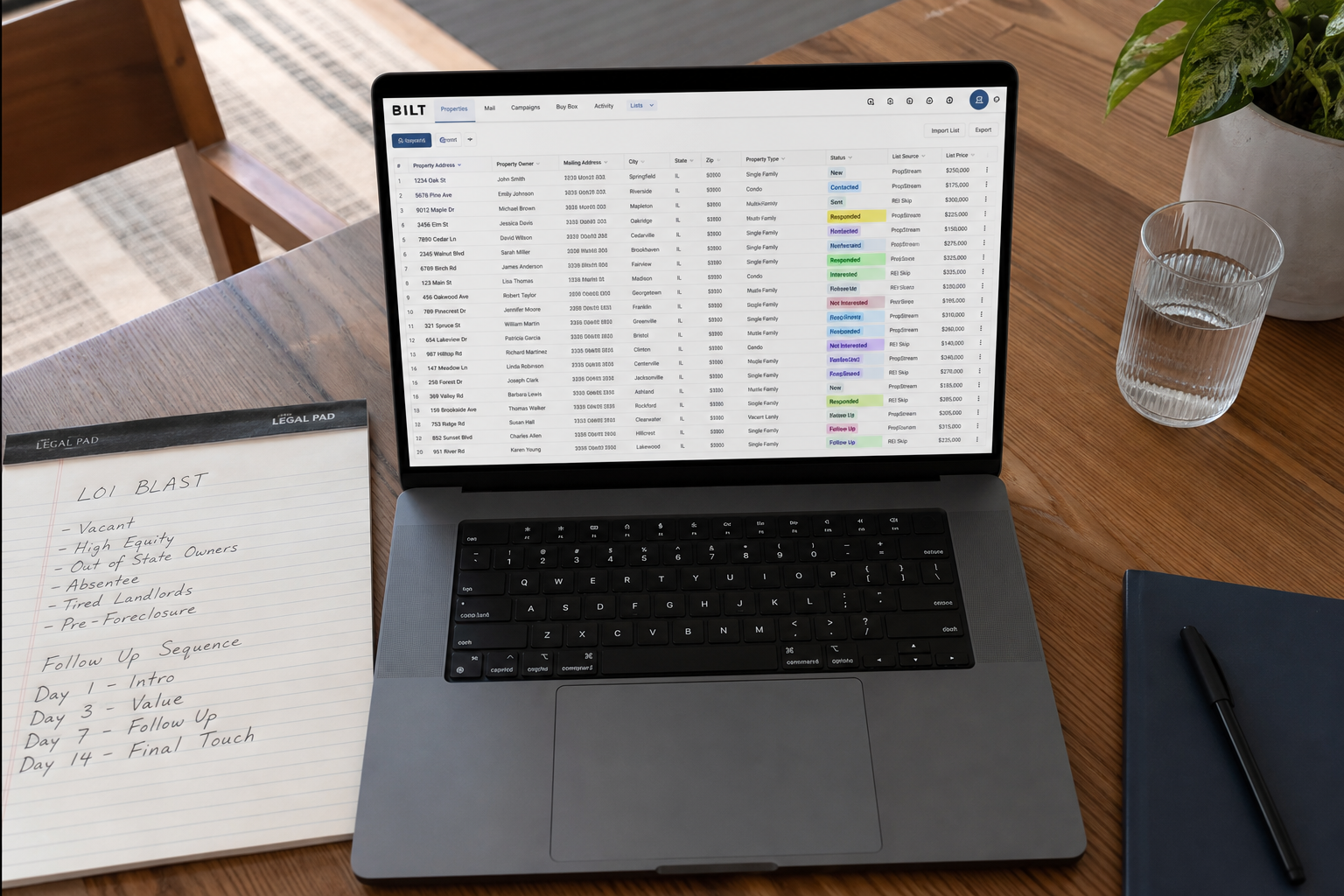
27 seller conversations in 10 days came out of a county export that had already been written off.
The list sat untouched because it looked like every other list. Same filters. Same logic. Same low response.
After restructuring how the list was built, not how outreach was written, replies started landing within days. The messaging barely changed. The targeting did.
That distinction matters more than most operators want to admit. Messaging is visible, so it gets blamed. Data quality is invisible, so it gets ignored.
Motivated seller list building is not about finding more records. It is about identifying records that are already showing movement. That means stacking signals, enforcing recency, and cleaning the data before a single message goes out.
Why stacking signals beats sorting by one filter
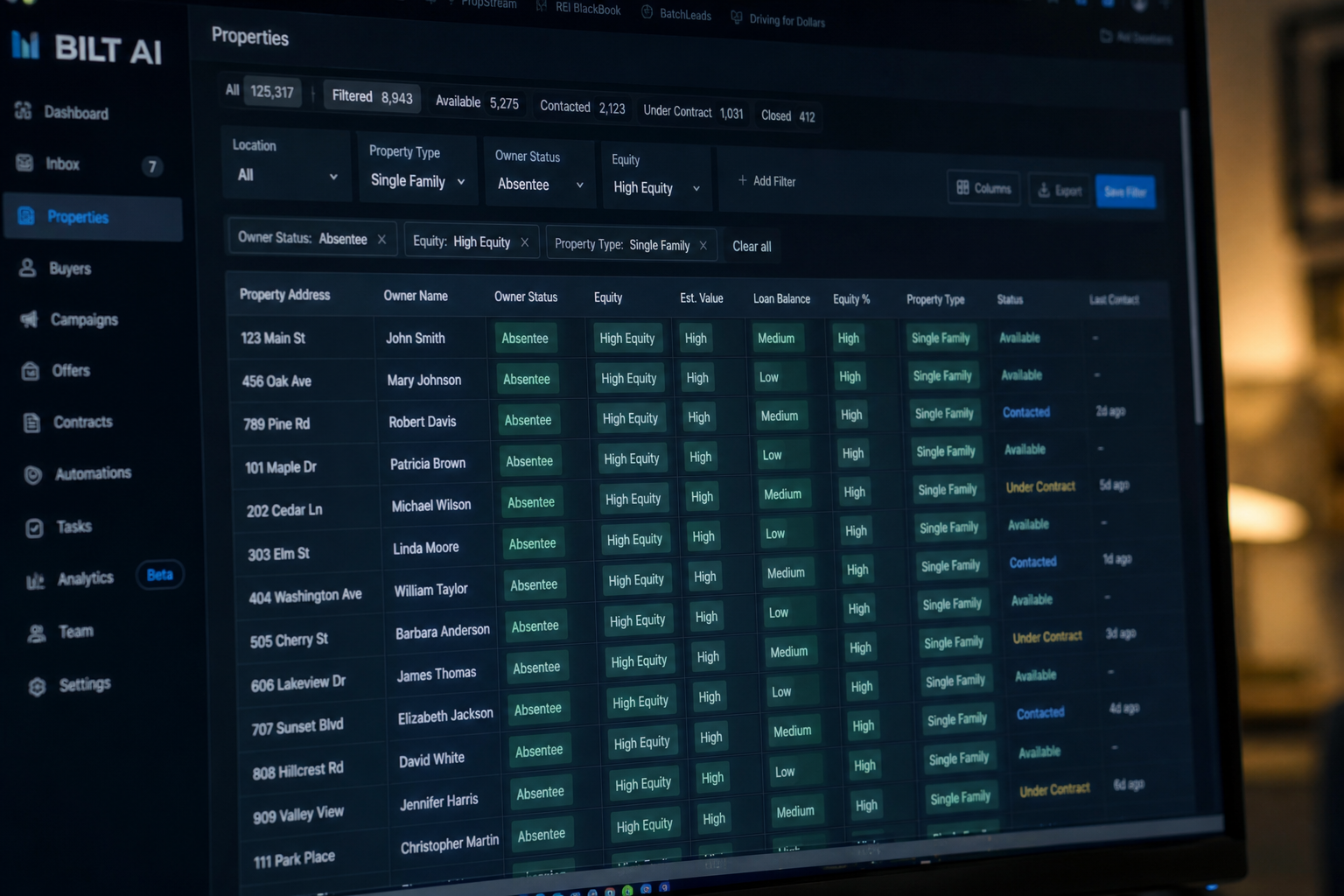
Most lists are built by sorting for one condition. Pre-foreclosure. Tax delinquent. Absentee owner. Pick one, export, send.
That approach produces volume, not intent.
Stacking signals changes the game. Instead of asking whether a property meets one condition, you look for overlap. Properties that show multiple forms of pressure at the same time.
In this case, three signals were combined:
- Pre-foreclosure status
- Tax delinquency
- Ownership longer than three years
Absentee-only filtering was removed entirely. That alone goes against common advice in wholesaling circles, but it exposed deals that were being filtered out unnecessarily.
The result was a smaller list. Roughly 42 percent smaller. But response rates increased significantly because each record carried more context.
This aligns with how data layering is used in broader analytics. The U.S. Census Bureau and platforms like Dun & Bradstreet rely on multi-variable modeling because single-variable sorting rarely predicts behavior accurately.
In real estate terms, one signal suggests potential motivation. Multiple signals suggest urgency.
That difference shows up in your inbox fast.
Recency is the constraint most operators ignore

Volume feels productive. Recency actually converts.
Most motivated seller list building processes rely on static exports. Pull once, market for weeks, then move on. The problem is that seller situations change quickly.
Instead of increasing list size, the focus shifted to tightening the time window. Only records with a new event in the last 14 days were kept.
Delinquency data was refreshed weekly. Anything outside that recency window was dropped, even if it looked promising.
This mirrors how credit and risk models operate. The Federal Reserve Small Business Credit Survey emphasizes recency of financial events as a major factor in decision-making models.
The same principle applies here. A tax delinquency from months ago is less actionable than one filed recently. A fresh notice signals a seller who is actively dealing with a problem.
When lists are filtered by time instead of size, outreach becomes more relevant. Conversations start sooner because the timing matches the seller’s situation.
The normalization step that quietly kills campaigns when skipped
Before outreach, the dataset was cleaned aggressively.
This step gets skipped more often than it should because it is not visible to prospects. But it directly impacts deliverability and personalization.
LLC names were deduplicated. Owner names were standardized. Variants were merged so that personalization tokens would not break.
Without normalization, messages read wrong. Names mismatch. Entities duplicate. That reduces trust immediately.
It also affects sending infrastructure. Platforms like Google Postmaster Tools track engagement signals closely. Poor data hygiene leads to lower engagement, which impacts inbox placement.
Clean data does not just improve messaging. It protects the channel itself.
This is where many operators assume they have a copy problem. In reality, the issue sits in the dataset.
The operator artifact: a motivated seller list build spec you can reuse
This is the exact spec used to rebuild the list. Save it and use it as your baseline before your next campaign.
Motivated Seller List Build Spec
- Signal stack: Minimum of 3 signals per record (example: pre-foreclosure + tax delinquent + ownership duration)
- Recency cap: Only include records with a new event inside a 14-day window
- Refresh cadence: Re-pull source data weekly, do not reuse old exports
- Ownership filter: Remove rigid absentee-only filters unless required by strategy
- Deduplication: Merge LLC variants and eliminate duplicate parcels
- Name normalization: Standardize owner names for consistent personalization tokens
- Segmentation: Split list into at least two personas before writing messaging
This spec does not increase workload. It reallocates effort from blasting to building.
Operators who follow this structure usually notice the same pattern. Smaller lists. Better replies. Faster deal conversations.
How Kompozy turns segmented data into daily deal conversations
Once the list is built correctly, content and outreach become easier to systematize.
Inside BILT AI Kompozy, the dataset feeds a topic pool. Each segment gets its own persona brief. For example, a tired landlord receives a different angle than a distressed owner dealing with financial pressure.
The system generates daily variations based on those inputs. Messaging stays aligned with the underlying data instead of relying on generic templates.
This matters because personalization is not just inserting a first name. It is aligning the message with the reason the seller is likely to respond.
If you are running campaigns at any meaningful scale, manual segmentation breaks down quickly. That is where a structured system becomes necessary.
Operators using BILT AI CRM alongside Kompozy typically connect list building directly to outbound execution. The same data that defines the list also drives the messaging logic.
That alignment is what turns cold records into active conversations.
What to do before your next list pull
1. Rebuild your filter logic using at least three overlapping signals. Use your county data source or a provider like PropStream, but avoid single-condition exports.
2. Apply a strict 14-day recency filter and remove older records, even if that reduces your list size.
3. Normalize your dataset before exporting. Clean names, merge duplicates, and verify ownership fields.
4. Create two clear personas based on your signals. Write messaging only after segmentation is complete.
5. Run a small batch first and monitor replies, not sends. Adjust based on conversation quality.
If your current process feels like a volume game, this resets it into a relevance game.
For operators who want this wired end to end without stitching tools together, Kompozy handles the content system that sits on top of your data.
Frequently Asked Questions
How do I build a motivated seller list that actually converts?
Stack multiple signals and enforce recency. Lists using overlapping indicators like tax delinquency and pre-foreclosure outperform single-filter exports because they reflect real-time pressure.
What is the best data source for motivated seller lists?
County records combined with platforms like PropStream or BatchLeads work well because they provide updated public data. Weekly refresh cycles help keep lists aligned with current seller situations.
How often should I refresh my motivated seller list?
Refresh weekly and limit records to recent events. Campaigns using a 14-day recency window consistently produce more replies than static lists reused over longer periods.
Why does my cold outreach get low response rates?
Poor data quality is usually the cause. Broken personalization, outdated records, and duplicate entries reduce trust and hurt deliverability, especially on platforms monitored by Google Postmaster Tools.
Do I need different messaging for different seller types?
Yes, segmentation improves relevance. A tired landlord responds to different language than an owner facing financial distress, and that difference shows up quickly in reply rates.