
Skip Tracing Data Sources That Actually Convert
The moment bulk skip tracing stopped working

A wholesaler named Marcus pulled a 10k record list and ran it through a single skip tracing provider. Coverage came back in the 60–70% range. He launched outreach the same week and expected steady replies.
By the second week, inbox placement dropped and call connects got worse. "Same list, same script, fewer conversations," he said. Nothing else had changed. The issue was not messaging. It was the data aging in real time.
This is where most operators stall out. The list feels like an asset you bought. In reality, it behaves more like inventory that expires. Phone numbers get reassigned. Emails go cold. Ownership records update. When outreach lags behind those changes, response rates follow.
Skip tracing data sources are not a one-time decision anymore. They behave like inputs in a system that needs maintenance. Treating them like a static file creates the same outcome every time. Strong first week, then diminishing returns.
Why a bigger list quietly hurts deliverability
There is a common belief that more records equals more deals. That held up when fewer people were sending outbound at scale. It breaks once inbox providers start evaluating sender behavior more aggressively.
Google and Yahoo updated sender requirements in 2024, tightening expectations around spam complaints and authentication. You can read the requirements directly from Google Postmaster guidelines. Sending to stale or low-confidence contacts increases negative signals fast.
That creates a feedback loop. Poor data leads to low engagement. Low engagement hurts inbox placement. Worse placement reduces visibility even for the good contacts in your list. Now your best opportunities never even see your message.
The contrarian take here is simple. Smaller, fresher datasets outperform larger, older ones in outbound real estate. Not by a little. By a margin that compounds over every follow-up cycle.
The Federal Trade Commission has also flagged outdated or inaccurate contact data as a contributor to unwanted outreach patterns in its consumer protection updates. See FTC business guidance for how data quality ties into compliance expectations.
The shift from lists to a living data pipeline
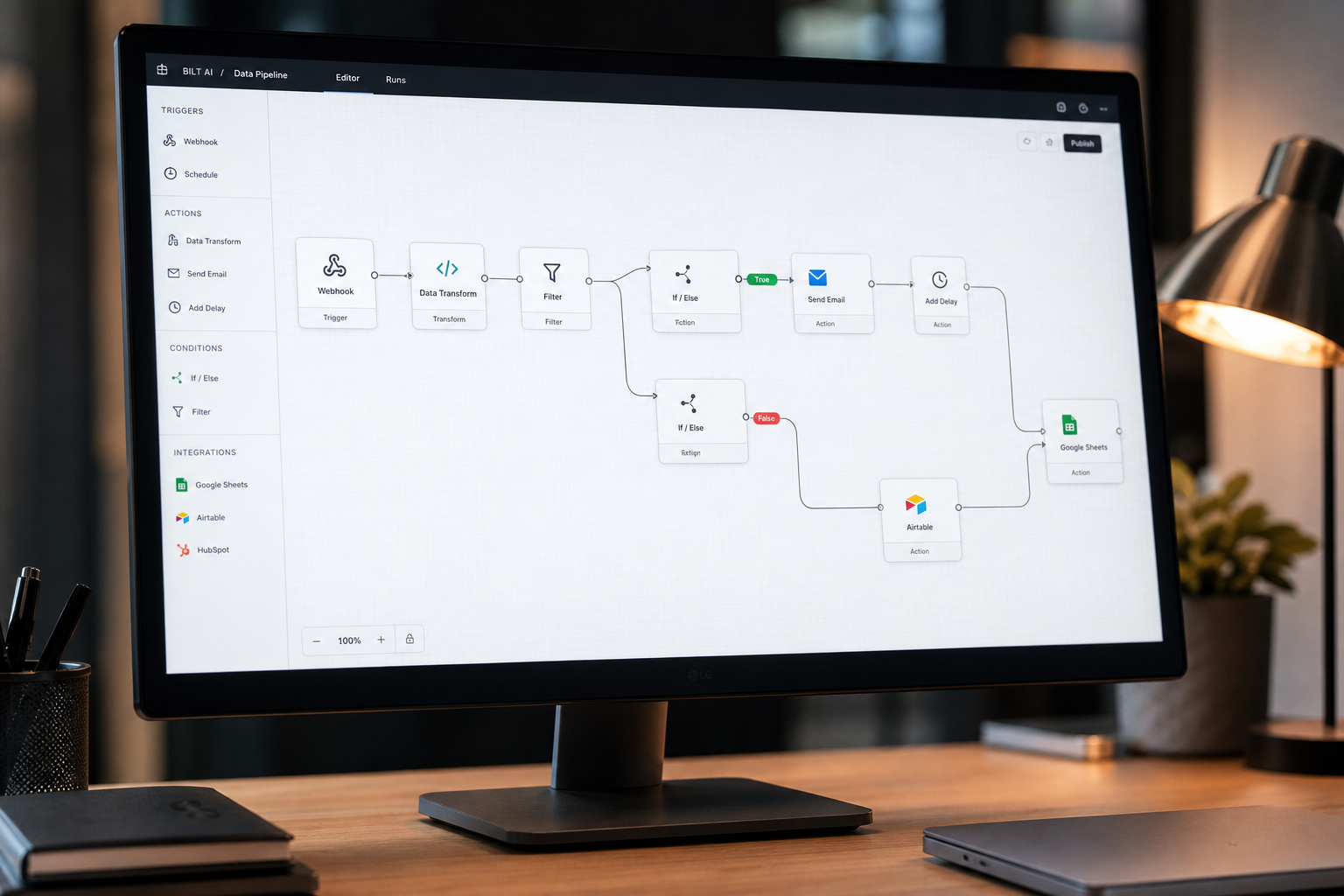
Operators who stayed consistent through the last cycle made one adjustment. They stopped thinking in terms of lists and started thinking in terms of pipelines.
A pipeline treats skip tracing data sources as rotating inputs. Instead of sending one file to one provider, you cycle multiple sources and reprocess records on a schedule.
That looks like this in practice.
- Primary batch source such as BatchData for initial enrichment
- Secondary niche feeds like county probate records or tax delinquent lists
- Normalization layer that standardizes fields across sources
- Scoring logic that ranks contact confidence
- Scheduled re-tracing cycle
Each pass improves accuracy or removes weak records. Over time, your dataset tightens instead of decaying.
This is also where segmentation becomes usable. Absentee owners, probates, inherited properties. Those buckets behave differently and deserve different messaging. When your data is fresh, those segments actually respond differently too.
Kompozy handles this as a continuous system. Records move from ingestion to cleaning to enrichment to scoring, then into a content pipeline. Segments feed outbound angles across multiple channels without manually rebuilding lists each time.
The 72-hour re-trace rule that changes response rates
If there is one rule worth implementing immediately, it is this. Re-trace your data every 72 hours and attach a confidence score to every record before outreach.
Most operators delay re-tracing because it feels redundant. It is not. It is the difference between sending to a valid contact and sending to a dead endpoint.
Here is a practical scoring model you can apply without overthinking it.
Freshness and confidence checklist
- Re-trace interval: every 72 hours for active outreach pools
- Confidence threshold: suppress anything below 0.6
- Source diversity: minimum of 2 providers before outreach
- Email validation: run through a verifier before first send
- Phone verification: confirm line type where possible
- Record tagging: label by last enrichment timestamp
- Segment assignment: tag by property type or situation
This is the piece most people skip. They score once and move on. Scores decay as fast as the data does. If your system does not update the score, it is lying to you.
Marcus applied this exact loop. Same market, same messaging. After re-tracing on a rolling basis, his engagement stabilized instead of falling off after week one. "It stopped feeling like I was burning through lists," he said.
How better data turns into better outbound angles

Fresh data does more than improve contact rates. It changes what you can say.
An absentee owner record pulled from a current county feed gives you a real context hook. A probate record that was updated recently gives you timing relevance. Those details shape your opening line and your follow-ups.
This is where most outbound falls flat. The message is generic because the data behind it is generic. When your dataset includes recent signals, your outreach sounds like it came from someone paying attention.
In Kompozy, Persona Frames take these segments and generate daily outbound angles across multiple platforms. Instead of rewriting from scratch, you are iterating on a system that already understands the segment.
The end result is not just better deliverability. It is conversations that start faster because the message matches the moment.
What to do before your next outreach cycle
You do not need a full rebuild to fix this. You need a tighter loop.
- Audit your current list. Remove any record that has not been enriched recently. If you cannot verify when it was last updated, treat it as stale.
- Add a second data source. Run the same records through it and compare coverage. Keep both inputs in your system.
- Set a 72-hour re-trace schedule. Automate it if possible so it runs without manual effort.
- Apply a confidence score. Suppress anything below 0.6 before sending a single message.
- Segment your records. At minimum, separate absentee owners and probate leads so your messaging can match context.
If you are already sending at scale, a spreadsheet will not hold this together for long. That is exactly why we built BILT AI CRM. It handles LOI blasting, follow-ups, and outbound on top of data that stays fresh. If you want to see how that system looks in your market, book a demo here.
And if content is part of your outbound engine, Kompozy keeps your pipeline organized so every segment turns into usable angles without starting from scratch. You can explore that at Kompozy.io.
Frequently Asked Questions
What are the best skip tracing data sources for real estate investors?
The best skip tracing data sources combine a primary batch provider and niche public records like county probate or tax data. Operators using multiple sources see better coverage because each provider fills different gaps.
How often should you refresh skip tracing data?
Refresh skip tracing data every 72 hours for active outreach lists. Data decays quickly, and re-tracing on a rolling schedule keeps contact information accurate enough for outbound.
Why does stale data hurt cold email deliverability?
Stale data increases bounce rates and lowers engagement, which signals inbox providers to filter your emails. Google’s 2024 sender requirements emphasize low spam complaints and proper authentication.
What is a good confidence score for skip traced data?
A confidence score of 0.6 or higher is a practical cutoff for outreach. Records below that threshold tend to produce more failed contacts and should be re-traced or suppressed.
Can you rely on one skip tracing provider?
No, relying on one provider limits coverage and accuracy. Using at least two sources improves match rates because each provider pulls from different underlying datasets.